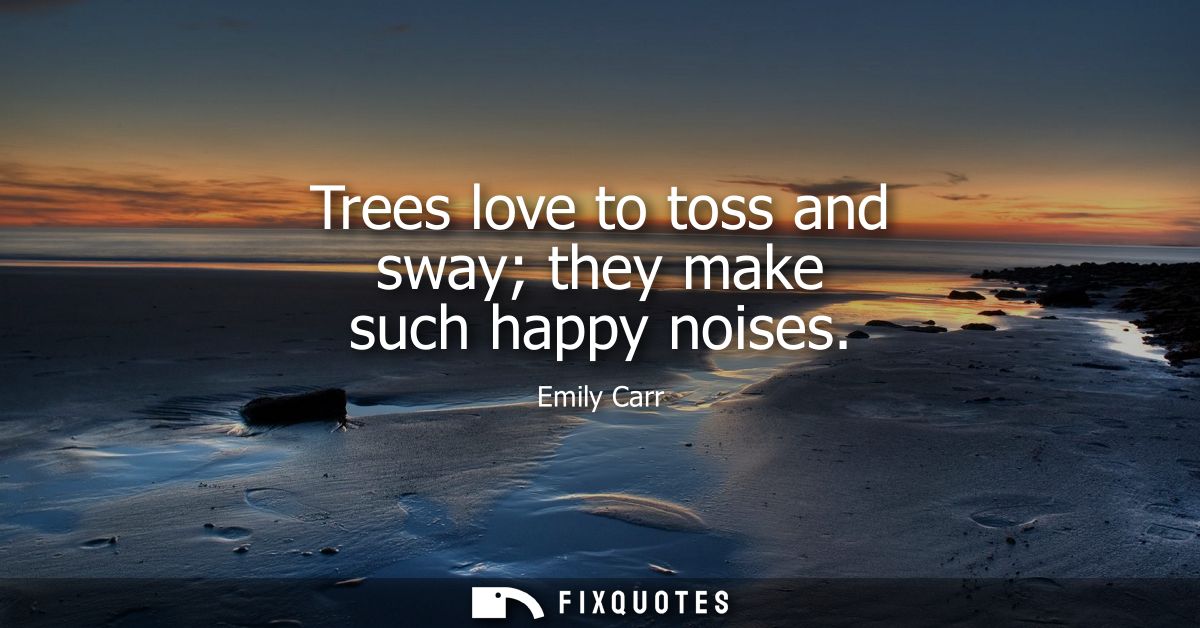
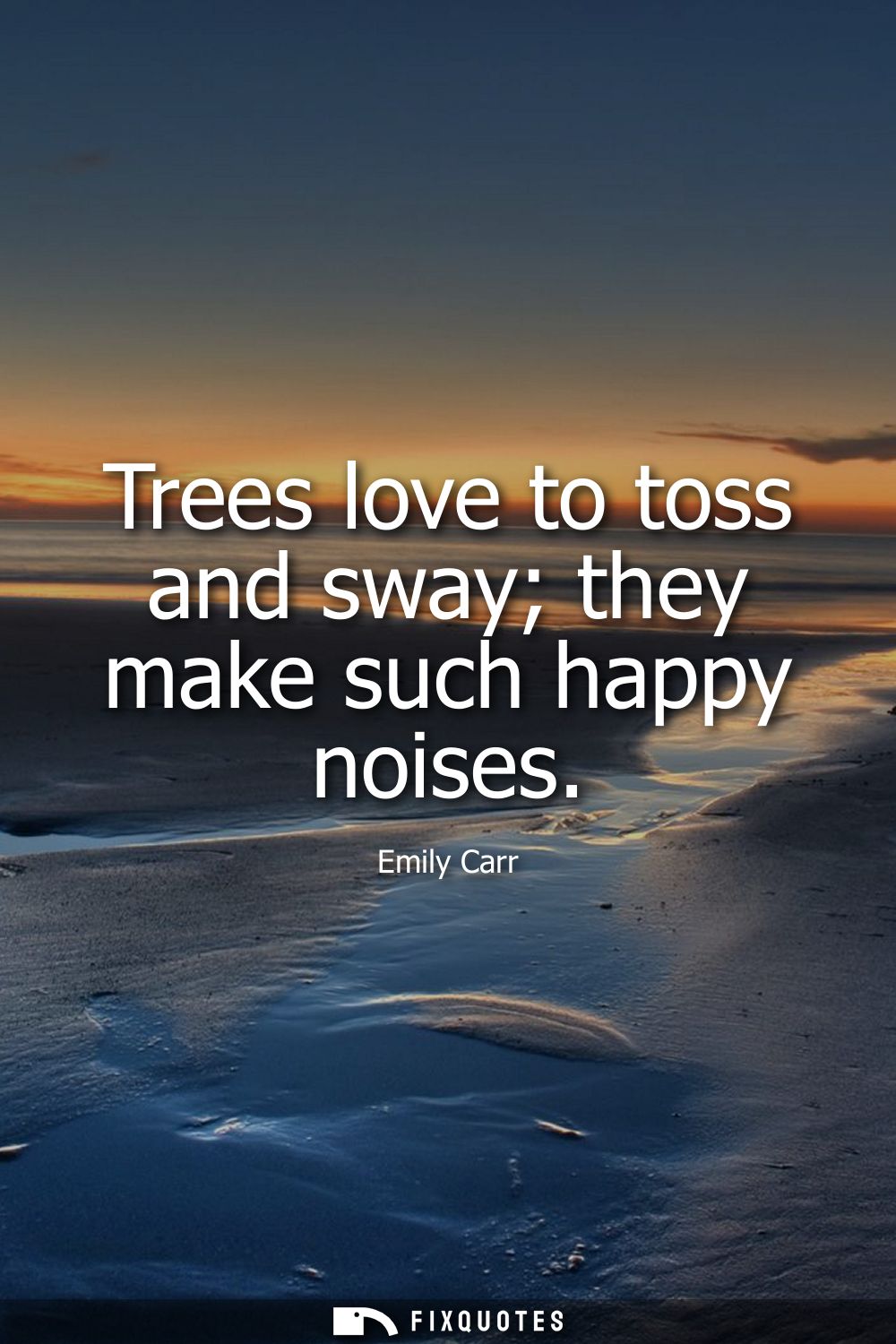
"Trees love to toss and sway; they make such happy noises"
About this Quote
In this expressive quote, Emily Carr records the intrinsic connection in between trees and motion, imbuing them with a sense of spiritedness and delight. The phrase "Trees love to toss and sway" suggests that trees have a balanced presence, as if they engage voluntarily and joyously with the natural aspects surrounding them. This images personifies trees, giving them feelings and feelings. By attributing love to their actions, Carr indicates that trees have an inherent interest for their existence and role in nature.
The choice of words such as "toss" and "sway" indicates gentleness and versatility, highlighting trees' resilience and versatility to their ever-changing environment. These verbs likewise resonate with the idea of dance, as if the trees are performers, swaying gracefully to the symphony of the wind. This motion represents liberty and the uninhibited delight of being alive and part of the natural world.
Carr's referral to "happy noises" even more contributes to the auditory images, suggesting that the rustling leaves and creaking branches produce a tune that shows satisfaction. This soundscape signifies consistency, both in the literal sounds of the forest and in the metaphorical balance that trees bring to the ecosystem. The concept of trees producing pleased sounds highlights how nature interacts and expresses itself in ways that may not constantly be immediately evident to people.
In essence, Emily Carr's quote invites readers to appreciate the subtle yet profound interactions within the natural world. It requires a deeper awareness of the interconnectedness between living beings and their environment. By recognizing the joy trees find in their symbiotic dance with the aspects, we are encouraged to cultivate a sense of mindfulness and appreciation towards nature. This acknowledgment eventually promotes a more detailed relationship with our surroundings, inspiring us to safeguard and cherish the natural world and its inherent appeal.
More details
About the Author