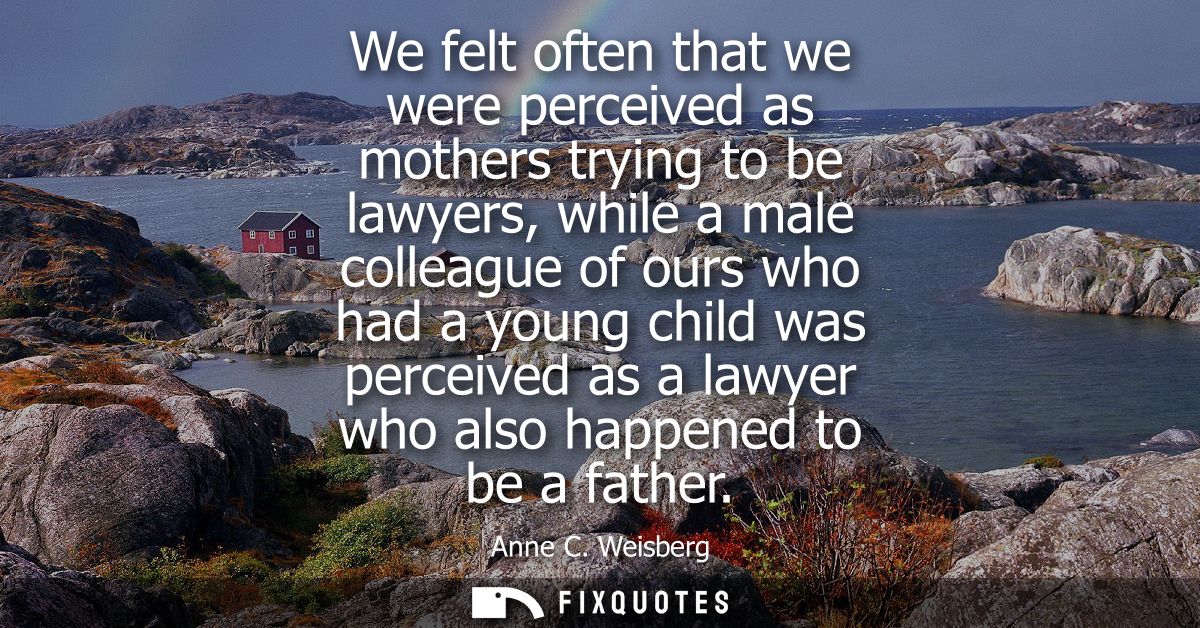
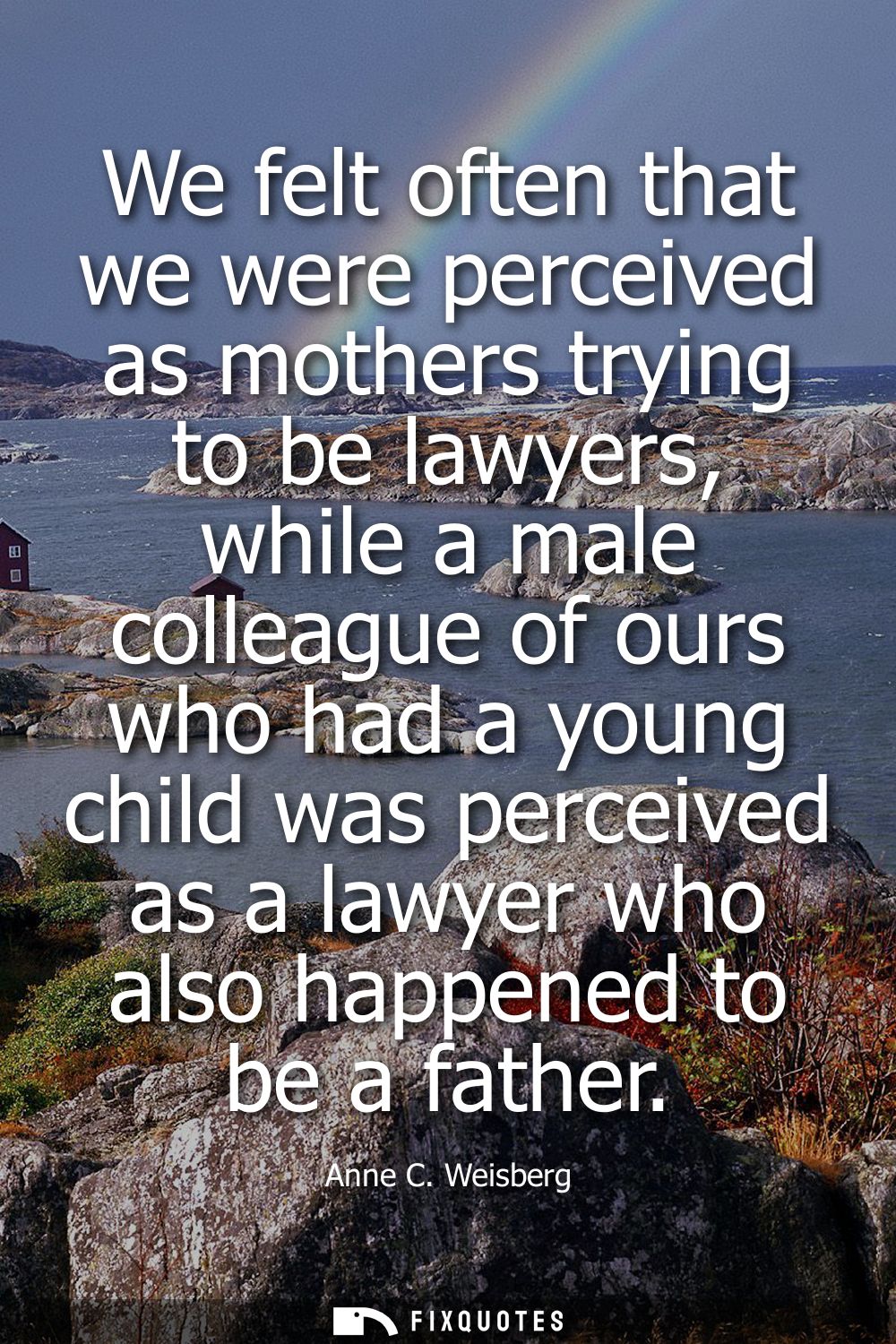
"We felt often that we were perceived as mothers trying to be lawyers, while a male colleague of ours who had a young child was perceived as a lawyer who also happened to be a father"
About this Quote
Anne C. Weisberg's quote sheds light on a pervasive issue within professional environments, especially in how gender functions and adult duties converge with career perceptions. The quote contrasts the experiences of ladies and men in the work environment, stressing a double standard that frequently exists due to standard gender functions.
In this context, Weisberg highlights the understanding of ladies who are mothers as mainly being specified by their motherhood, with their expert identity, in this case as attorneys, becoming secondary. This reflects a social stereotype where women are viewed as caregivers first, and their professions are seen nearly as an extension or a secondary part of their identity. The phrase "mothers attempting to be lawyers" suggests the battle and the social skepticism about their expert authenticity or devotion, as if motherhood inherently interferes with or disputes with their capability to carry out in a demanding occupation.
On the other hand, the male coworker is depicted as a "legal representative who also occurred to be a dad". This records the default understanding of males being defined by their profession, with parenthood seen as an additional, rather than primary, identity. It subtly points to an underlying assumption that men's expert abilities or commitments are unaffected by their parental status. This distinction in perception might manage guys more leeway and assistance in their careers, as their parenting duties are not viewed as interfering with their professional functions.
The quote brings attention to how gender predispositions and stereotypes affect work environment dynamics and profession development. It requires a more equitable understanding that acknowledges both females and guys as capable professionals and parents without one role eclipsing the other. It recommends the need for a cultural shift in how parenthood is integrated into professional identities, promoting for environments where being a parent, no matter gender, does not diminish one's professional identity or perceived capabilities.
More details
About the Author