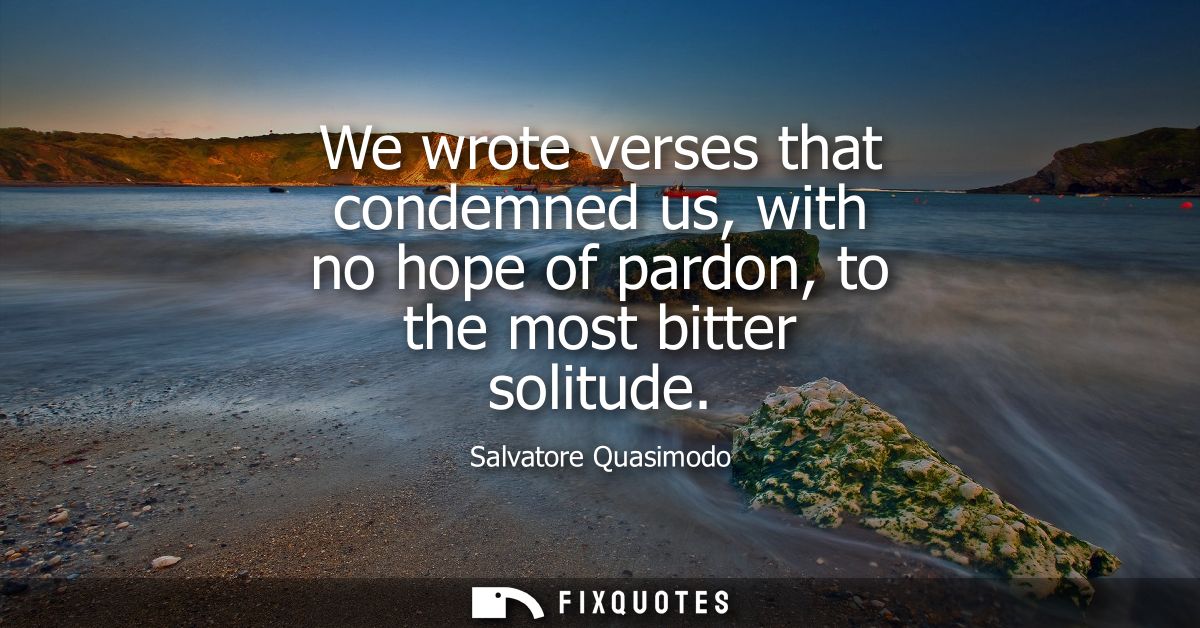
"We wrote verses that condemned us, with no hope of pardon, to the most bitter solitude"
About this Quote
Salvatore Quasimodo's quote, "We composed verses that condemned us, with no hope of pardon, to the most bitter solitude", talks to the extensive and frequently separating nature of creative and poetic expression. Quasimodo, an influential figure in 20th-century Italian literature, regularly checked out themes of existential suffering, isolation, and the human condition.
In this quote, the act of composing verses symbolizes a deep internal expedition and expression of one's inner ideas and feelings. Poetry becomes an automobile for conveying the raw truth of one's experiences and feelings. However, this act of production is paradoxically both a freedom and a condemnation. The verses written are a truthful reflection of the self, revealing vulnerabilities, inner turmoil, and maybe, social reviews that set the poet apart from others. The idea of being "condemned", suggests a lack of understanding or acceptance from the outdoors world, signifying that the credibility found in poetry can cause alienation.
The phrase "no hope of pardon" indicates that the poet expects no forgiveness for this raw honesty. In a world that often demands conformity and happiness, those who speak unpleasant realities or reveal a deeper, perhaps darker truth, may discover themselves unwelcomed or misconstrued. This lack of pardon suggests that as soon as these truths are revealed, there's no reversing; the poet is dedicated to bearing the effects of their honesty.
"The most bitter privacy" encapsulates the privacy that emerges from such an unvarnished exposition of self. It resonates with the idea that true authenticity typically separates people from the collective convenience of societal standards and shallow connections. This solitude is "bitter" due to the fact that while the freedom to reveal one's reality is liberating, the resultant seclusion can be deeply agonizing.
In summary, Quasimodo's quote poignantly catches the dichotomy of creative expression-- its possible to both brighten the human soul and isolate the artist from the rest of society. Through this lens, the poet ends up being a solitary figure, simultaneously enlightened and strained by the facts they expose.
More details
About the Author