
Book: Altered States
Overview
Paddy Chayefsky's "Altered States" centers on Edward Jessup, a brilliant and obsessive Harvard psychiatrist whose research seeks to pierce the boundaries of human consciousness. Driven by a desire to map the primal origins of mind, Jessup uses sensory deprivation and potent psychoactive compounds to induce deep altered states. The screenplay blends clinical rigor with fevered hallucination, mounting scientific curiosity into an escalating personal crisis.
The Central Experiment
Jessup's work relies on a flotation tank that isolates the senses and a carefully calibrated chemical cocktail that amplifies internal experience. Sessions in the tank are depicted as both laboratory procedure and ritual, where hypothesis meets mythic regression. As experiments continue, Jessup pushes beyond controlled conditions, using himself as subject to pursue an ever more radical encounter with the mind's earliest forms.
Descent and Consequences
The experiments begin to yield unpredictable effects: shifts in perception harden into profound alterations in behavior, memory, and physiology. Colleagues grow alarmed as Jessup displays episodes of violence, fugue, and a destabilizing loss of identity. His marriage to Emily, strained by secrecy and obsession, becomes the emotional anchor of the story; she moves between support, fear, and attempts to hold him back from self-destruction. Scientific ambition collides with human cost as professional reputation, family safety, and the integrity of the research are jeopardized.
Psychological and Physical Regression
Chayefsky's script stages a harrowing regression that reads like a dark parable about the costs of probing forbidden knowledge. Jessup's journeys into the depths of consciousness manifest not only as visionary insight but as a literal devolution, where the boundaries between human and pre-human begin to blur. The film's set-piece sequences, surreal, violent, and often grotesque, translate internal transformation into startling visual terms, forcing characters and audience to confront the raw, elemental forces beneath civilized thought.
Climax and Resolution
The climax tightens into a confrontation between scientific control and existential unraveling. Jessup's supporters attempt containment and explanation even as the phenomena he has provoked outstrip their frameworks. Rescue, reversal, and reconciliation are all on the table, but Chayefsky resists a neat moralizing conclusion. Instead, the resolution emphasizes uncertainty and a tempered humility: whether Jessup is redeemed, irrevocably altered, or both, the ending leaves questions about the nature of identity and the limits of experimentation.
Themes and Tone
"Altered States" interrogates the arrogance of scientific mastery, the porous line between myth and method, and the human hunger to know origins. The screenplay juxtaposes clinical language with vivid mythic imagery, producing a tone that is at once cerebral and visceral. Chayefsky examines how the quest for foundational truth can dissolve meaning even as it yields profound insight, suggesting that the most dangerous experiments are those that remake not only knowledge but the knower.
Sources
Citation Formats
APA Style (7th ed.)
Altered states. (2026, February 5). FixQuotes. https://fixquotes.com/works/altered-states/
Chicago Style
"Altered States." FixQuotes. February 5, 2026. https://fixquotes.com/works/altered-states/.
MLA Style (9th ed.)
"Altered States." FixQuotes, 5 Feb. 2026, https://fixquotes.com/works/altered-states/. Accessed 26 Mar. 2026.
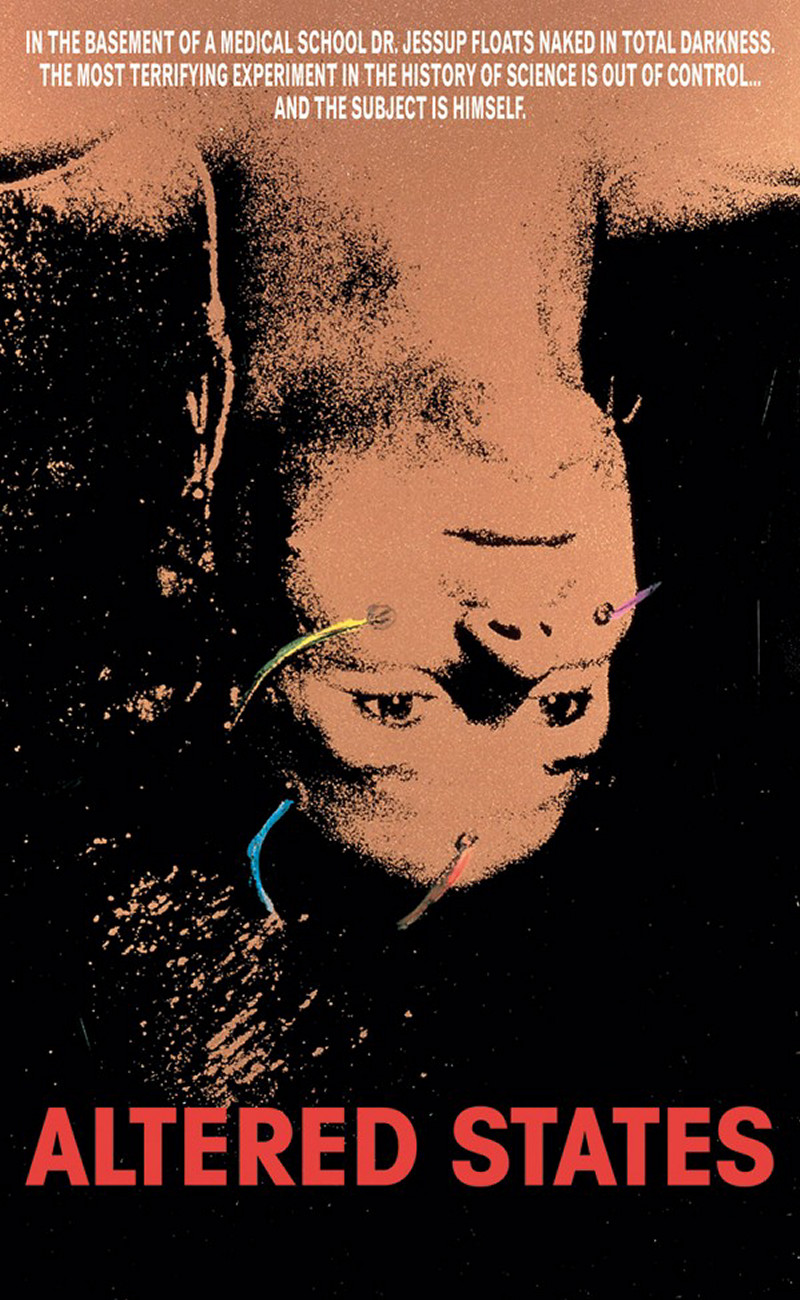
Altered States
Altered States is a science-fiction drama that follows a Harvard psychiatrist and researcher, Edward Jessup, who undergoes sensory deprivation experiments in an attempt to explore altered states of consciousness. However, his experiments take a dark turn when he starts experiencing bizarre physical and mental side effects.
- Published1978
- TypeBook
- GenreScience Fiction, Drama
- LanguageEnglish
- CharactersEdward Jessup, Emily Jessup, Mason Parrish, Dr. Rosenberg
About the Author

Paddy Chayefsky
Paddy Chayefsky, renowned screenwriter and playwright known for Academy Award-winning works like Network and Marty.
View Profile- OccupationPlaywright
- FromUSA
-
Other Works
- Marty (1953)
- Middle of the Night (1954)
- The Hospital (1971)
- Network (1976)