
Book: In Defense of Women
Overview
H. L. Mencken’s 1918 polemic distills his view of the sexes into a rapid-fire sequence of aphorisms, sketches, and provocations. The title promises advocacy, and Mencken delivers a defense by inversion: women, he argues, are not the sentimental, irrational dependents of male myth but the realists of the species, cooler, shrewder, more competent in the practical business of living. The result is a bracing mix of satire and sociology that both flatters and needles, turning chivalry inside out and exposing the vanities that underwrite it.
Romanticism versus Realism
Mencken’s central contrast sets male romanticism against female realism. Men chase abstractions, honor, glory, metaphysics, and pay for them in folly; women keep their eyes on tangible goods, security, comfort, workable arrangements. Where men oscillate between genius and idiocy, women cluster closer to the capable mean. He relishes paradox: the sex often accused of irrationality, he says, is less deluded by ideals and better at sizing up motives, costs, and likely outcomes. Female skepticism, not female credulity, is his leitmotif.
Sex, Courtship, and Power
Much of the book anatomizes the erotic marketplace. Female modesty, coquettishness, and moral strictures appear as negotiating tools rather than innate virtues. Mencken contends that women wield strategic power in courtship because they better understand desire, supply, and demand; they manage the terms of exchange while letting men cherish the fiction of mastery. He suggests that many male codes and taboos originate in fear of this leverage, an effort to hedge against female judgment and bargaining strength.
Marriage, the Home, and the Husband
Marriage emerges as a practical contract more beneficial to men than to women. Mencken credits wives with civilizing husbands, disciplining their extravagances, steering their careers, and maintaining domestic economies. The much-maligned “nag” becomes a manager of male weaknesses; the widow, having mastered the role, is portrayed as especially formidable. Divorce appears less as moral catastrophe than as a mechanism by which women escape bad bargains and reassert control over their fortunes.
Intellect, Work, and Achievement
On intellect, Mencken insists on difference rather than deficiency. Women, he claims, are less enamored of grand theory and more adept at applied intelligence, medicine and schoolrooms over laboratories and metaphysics. He attributes the relative scarcity of female “towering” achievements to both social conditions and a temperamental disinterest in abstraction. At the same time, he taunts male vanity by noting how often men’s greatest constructions rest on illusions that women see through and tolerate for the sake of peace.
Morality, Law, and Politics
Mencken’s attack on Puritanism dovetails with his gender thesis. He predicts that enfranchised women will prove conservative in public life, favoring order, safety, and moral regulation rather than radical change. Yet he also argues that female influence already permeates politics informally through the home and the purse, making the ballot less revolutionary than advertised. Law, ostensibly a masculine system, is portrayed as something women understand instinctively in its human workings, bending it with tact rather than challenging it with principle.
Style, Contradictions, and Legacy
The book’s epigrammatic style invites both amusement and recoil. Mencken praises women by assigning them superiority in practical reason, then frustrates modern readers by confining that superiority largely to private spheres. His “defense” often lands as a double-edged tribute, indebted to stereotypes even as it overturns them. What endures is the vigor of the paradox: men as sentimentalists, women as skeptics; public male pomp set against private female governance. As a snapshot of early twentieth-century gender argument, and as a provocation designed to sting, it remains sharp, slippery, and unmistakably Mencken.
Citation Formats
APA Style (7th ed.)
In defense of women. (2025, August 21). FixQuotes. https://fixquotes.com/works/in-defense-of-women/
Chicago Style
"In Defense of Women." FixQuotes. August 21, 2025. https://fixquotes.com/works/in-defense-of-women/.
MLA Style (9th ed.)
"In Defense of Women." FixQuotes, 21 Aug. 2025, https://fixquotes.com/works/in-defense-of-women/. Accessed 12 Feb. 2026.
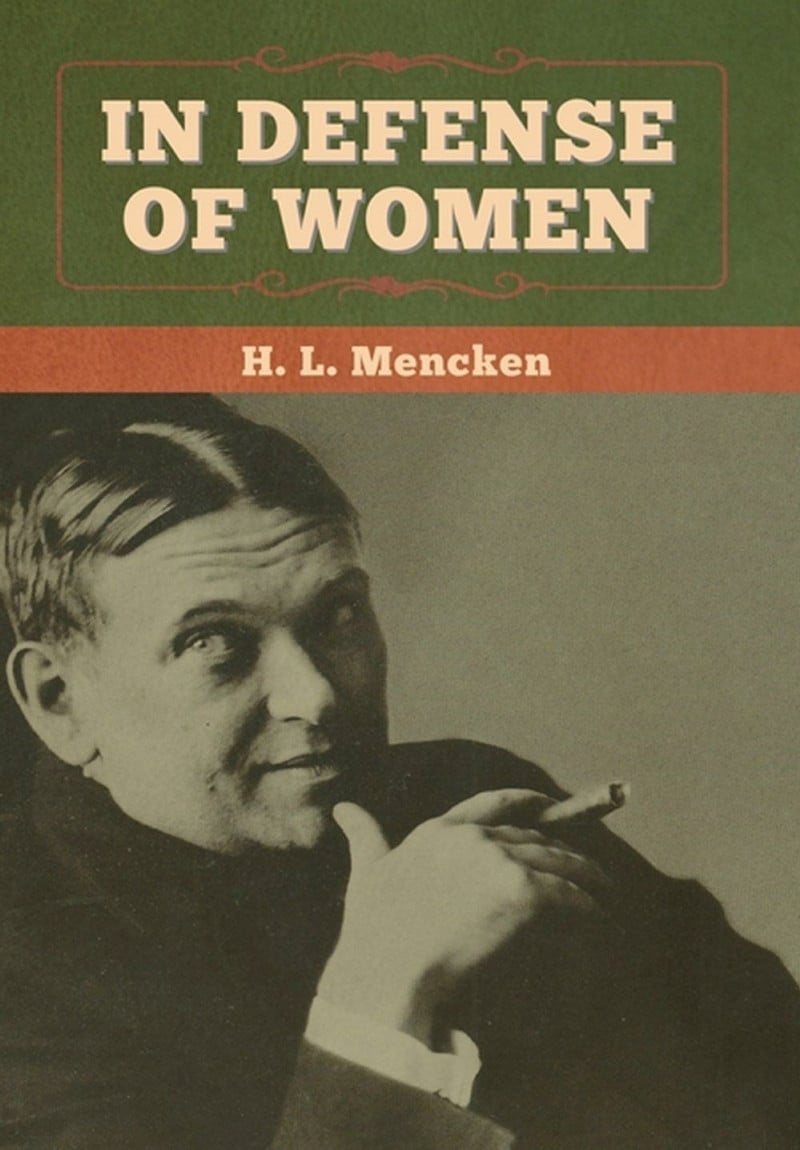
In Defense of Women
A collection of essays defending and analyzing the perspective and experiences of women in modern society.
About the Author

H. L. Mencken
H. L. Mencken, an influential American critic and writer, with insights into his life, works, and memorable quotes.
View Profile- OccupationWriter
- FromUSA
-
Other Works
- A Book of Prefaces (1917)
- The American Language (1919)
- Prejudices: First Series (1919)
- Prejudices: Second Series (1920)
- Notes on Democracy (1926)