
Victor Cousin Biography Quotes 6 Report mistakes
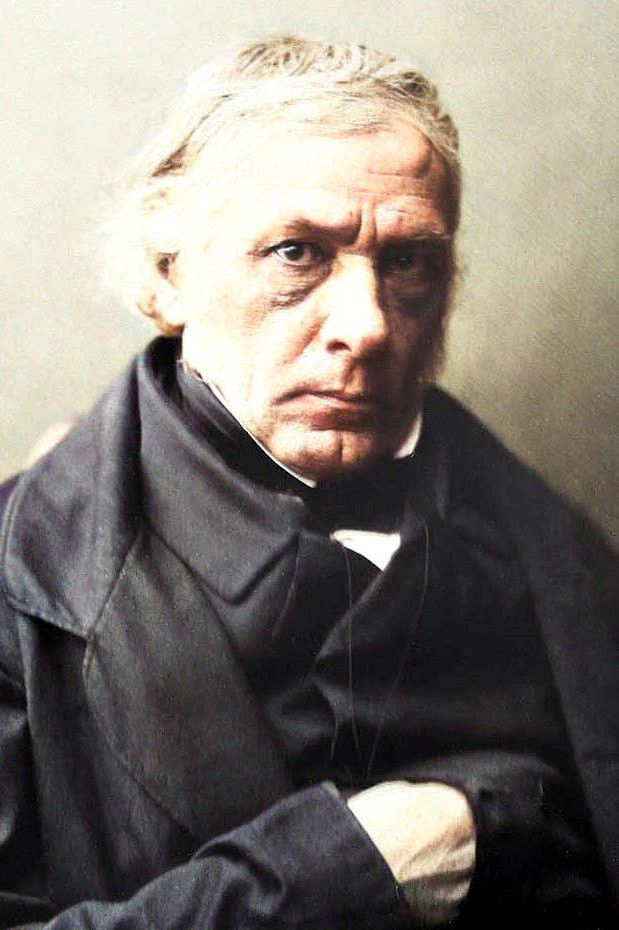
| 6 Quotes | |
| Known as | V. Cousin |
| Occup. | Philosopher |
| From | France |
| Born | November 28, 1792 Paris, France |
| Died | January 13, 1867 Cannes, France |
| Aged | 74 years |
| Cite | |
Citation Formats
APA Style (7th ed.)
Victor cousin biography, facts and quotes. (2026, February 11). FixQuotes. https://fixquotes.com/authors/victor-cousin/
Chicago Style
"Victor Cousin biography, facts and quotes." FixQuotes. February 11, 2026. https://fixquotes.com/authors/victor-cousin/.
MLA Style (9th ed.)
"Victor Cousin biography, facts and quotes." FixQuotes, 11 Feb. 2026, https://fixquotes.com/authors/victor-cousin/. Accessed 12 Feb. 2026.
Early Life and Background
Victor Cousin was born in Paris on November 28, 1792, as the French Revolution hardened from civic upheaval into a remaking of institutions, calendars, and consciences. He grew up amid the aftershocks of terror, the brittle stabilizations of the Directory, and the disciplined centralization of Napoleon. That environment mattered: Cousin would later treat politics as the arena where ideas demand embodiment, and he retained a lifelong belief that regimes rise and fall not only by force but by the moral and intellectual legitimacy they can project.His family was modest, and his early ascent depended less on inheritance than on the competitive meritocracy of French schooling. In the capital, the culture of examinations and public lectures trained a talent for synthesis and oratorical command. The young Cousin learned to read the nation itself as a text - scarred by faction, hungry for order, and still searching for a post-revolutionary philosophy that could reconcile liberty with authority and faith with reason.
Education and Formative Influences
Cousin excelled at the Lycee Charlemagne and entered the Ecole Normale (later the Ecole Normale Superieure), where he absorbed the legacy of Descartes and the eighteenth century but also the newer psychological and spiritual currents then circulating in Paris. A decisive influence was Pierre Paul Royer-Collard and the so-called Scottish school of common sense, which offered a sober alternative to sensationalism; Cousin also drew from Maine de Biran's introspective analysis of will. Frequent travel and study in Germany deepened the turning: he encountered Kant, Jacobi, and especially Hegel and Schelling, returning convinced that France needed a disciplined metaphysics capable of organizing history, ethics, and institutions into one intelligible picture.Career, Major Works, and Turning Points
Brilliant as a lecturer, Cousin rose quickly in the Parisian university world, then became a public figure as regimes changed from Empire to Restoration to July Monarchy. His political visibility carried risk: he was arrested under the Restoration and, on another occasion, detained while traveling in German lands, episodes that sharpened his sense that philosophy is never merely academic when the state fears its teachers. Under Louis-Philippe he reached his peak as an administrator and minister of public instruction (1840), shaping curricula and teacher formation, and making philosophy a pillar of the lycee. His major works include the influential lecture courses later collected as Du vrai, du beau et du bien and the multi-volume Histoire de la philosophie, alongside editions and studies of Descartes and of French seventeenth-century thinkers, and translations that helped naturalize German idealism in France. The revolution of 1848 and the Second Empire narrowed his political role, but he remained a symbolic authority - a philosopher of institutions, and an institution in himself.Philosophy, Style, and Themes
Cousin called his method "eclecticism": not a casual borrowing, but a claim that the history of philosophy is a progressive revelation in which each great system captures a partial truth. This stance fit the post-revolutionary need for reconciliation - to avoid the fanaticism of single-principle politics and the skepticism of mere negation. It also revealed his temperament: a mind that sought equilibrium, classification, and public reason. His lectures moved from psychological analysis of consciousness to the triad of the true, the beautiful, and the good, and then outward to history and the state, a trajectory that mirrored his own ambition to make inner life legible to civic life.Behind the synthesis lay a moral urgency about education and social order. "Ignorance is the primary source of all misery and vice". In that sentence Cousin condensed his lifelong faith in schooling as political medicine and his suspicion of both demagogy and reaction: the people must be raised, not merely flattered or coerced. His realism about thought was equally telling: "True philosophy invents nothing; it merely establishes and describes what is". The line signals a psychology wary of metaphysical bravado; Cousin preferred to present himself as an arbiter who recognizes truths already inscribed in consciousness, history, and moral experience. Yet his realism did not prevent hierarchy. He defended equal civil protection while rejecting radical egalitarian conclusions, insisting that universal rights coexist with the unequal outcomes of faculties and vocations - a position that aligned with the July Monarchy's liberal conservatism and with his own role as guardian of a meritocratic elite.
Legacy and Influence
Cousin's most enduring influence was institutional: he helped make philosophy a central, examinable discipline in French secondary education, shaping generations of teachers, civil servants, and writers. Intellectually, his eclectic system later drew fire from Auguste Comte's positivism and from renewed Catholic thought, and his reputational arc shifted as the nineteenth century turned toward sociology, science, and more radical politics. Still, by importing German philosophy, canonizing a national narrative from Descartes to the moderns, and modeling the philosopher as a public educator, Cousin stabilized a distinctive French ideal: that ideas belong not only to books but to classrooms, ministries, and the moral self-understanding of the state.Our collection contains 6 quotes written by Victor, under the main topics: Wisdom - Truth - Equality - Servant Leadership - War.
Victor Cousin Famous Works
- 1853 Madame de Longueville: A Historical Biography (Book)
- 1835 Lectures on the True, the Beautiful, and the Good (Book)
- 1828 Introduction to the History of Philosophy (Book)
Source / external links