
Mark Russell Biography Quotes 17 Report mistakes
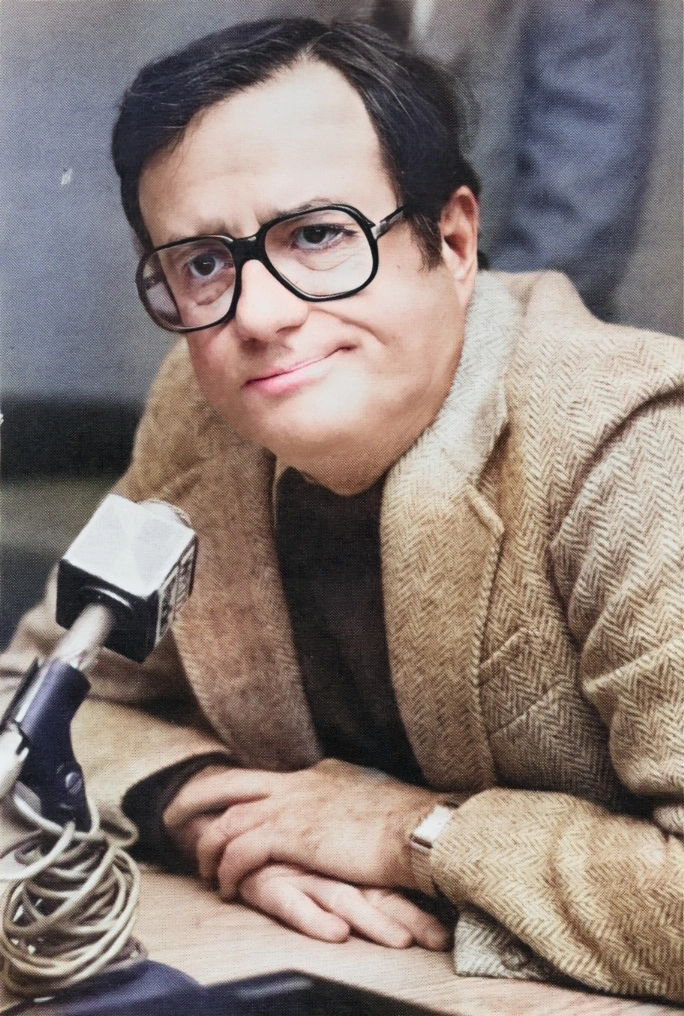
| 17 Quotes | |
| Born as | Joseph Marcus Ruslander |
| Occup. | Writer |
| From | USA |
| Born | August 23, 1932 Buffalo, New York, USA |
| Died | March 30, 2023 Washington, D.C., USA |
| Aged | 90 years |
| Cite | |
Citation Formats
APA Style (7th ed.)
Mark russell biography, facts and quotes. (2026, February 11). FixQuotes. https://fixquotes.com/authors/mark-russell/
Chicago Style
"Mark Russell biography, facts and quotes." FixQuotes. February 11, 2026. https://fixquotes.com/authors/mark-russell/.
MLA Style (9th ed.)
"Mark Russell biography, facts and quotes." FixQuotes, 11 Feb. 2026, https://fixquotes.com/authors/mark-russell/. Accessed 13 Feb. 2026.
Early Life and Background
Mark Russell was born Joseph Marcus Ruslander on August 23, 1932, in Buffalo, New York, into a Jewish family shaped by the anxieties and improvisations of Depression-era America. He grew up hearing the language of public life - radio news, campaign slogans, wartime speeches - alongside the punchline logic of vaudeville holdovers and neighborhood wisecracks. That double exposure mattered: Russell would spend his career translating power into something you could laugh at without surrendering your intelligence.His inner life was marked early by a performer-writer's split: the wish to be accepted and the need to stand apart. The United States he came of age in demanded conformity - postwar prosperity, Cold War suspicion, civic pieties - yet it also rewarded the sharp observer who could puncture cant. Russell's later stage persona, genial but precise, can be read as a survival strategy learned young: disarm first, then tell the truth.
Education and Formative Influences
Russell attended Williams College, where he began to fuse literary craft with show-business timing, absorbing the traditions of American satire from campus humor to Broadway revue. In the 1950s, as television accelerated politics into spectacle and the Red Scare disciplined public speech, he gravitated toward forms that could smuggle criticism past defenses - monologue, musical parody, and topical verse - and he learned that technique, not rage, sustains a long career.Career, Major Works, and Turning Points
After moving toward performance in the 1960s, Russell built a distinctive act: political satire delivered at the piano, mixing song, monologue, and tightly written commentary that made Washington feel both absurd and intimately human. He became a familiar figure on national television and in live venues, eventually anchoring a long-running PBS presence that brought weekly political humor into living rooms during eras of intense ideological churn - from Watergate's hangover through the Reagan years, the Clinton boom-and-scandal cycle, and the polarized 2000s. A turning point was his decision to be topical without becoming partisan - to treat politicians as characters in a civic comedy rather than mascots in a tribal war - which kept him relevant even as the media ecosystem shifted from consensus broadcasting to fragmented outrage.Philosophy, Style, and Themes
Russell's style depended on a writer's discipline disguised as ease. The piano was not merely accompaniment but a device for structure: it gave his satire musical hinges, softened the attack, and let him move from wit to judgment without sounding like a lecturer. He treated politics as theater - entrances, heckles, applause lines - and he understood the crowd as part of the script. "You know that a given in life in human nature, is that at a sporting event, a baseball game, a football game, you never introduce a politician, is because he'll be booed. I don't care if he's the most beloved person in the world, its part of the game". That observation reveals his psychology as much as his sociology: he saw public life as ritualized emotion, and he positioned himself as the interpreter who could name the ritual without sneering at the people inside it.His themes were consistency, hypocrisy, and the ordinary hunger for someone to blame. He resisted the modern temptation to satirize only the other side, insisting that comedy is an x-ray rather than a badge: "I do jokes about what's funny, and both sides are funny". The line is not a dodge but a method - an attempt to protect satire from becoming propaganda, and to protect the audience from the comfort of righteous laughter. Yet he also acknowledged the hardening of public appetite, the shift from irony to anger, and the pressure on performers to match the national mood: "The thing that you're faulted on today is not that you are too tough, or not that you aren't careful. It's that you might have been too soft. People want that red meat now because you have to keep up with the mood and the mood today is harsh. It really is". In that tension - between civility and carnivorous partisanship - Russell built his late-career voice: rueful, still funny, increasingly concerned with what politics was doing to character.
Legacy and Influence
Russell died on March 30, 2023, leaving a model of political comedy rooted in writing, musical craft, and a belief that ridicule can be a civic service when it stays tethered to fairness. He helped normalize the idea that a satirist could be a serious weekly commentator, not just a late-night jester, and his PBS-era work anticipated the later boom in political comedy while resisting its most corrosive incentives. For audiences who wanted to laugh without abandoning complexity, and for performers seeking a path between entertainment and responsibility, Russell remains a benchmark: the piano-playing writer who made the Republic's noise sound briefly like music.Our collection contains 17 quotes written by Mark, under the main topics: Witty One-Liners - Funny - Wisdom - Art - Sarcastic.
Source / external links