
Book: Sundial of the Seasons
Overview
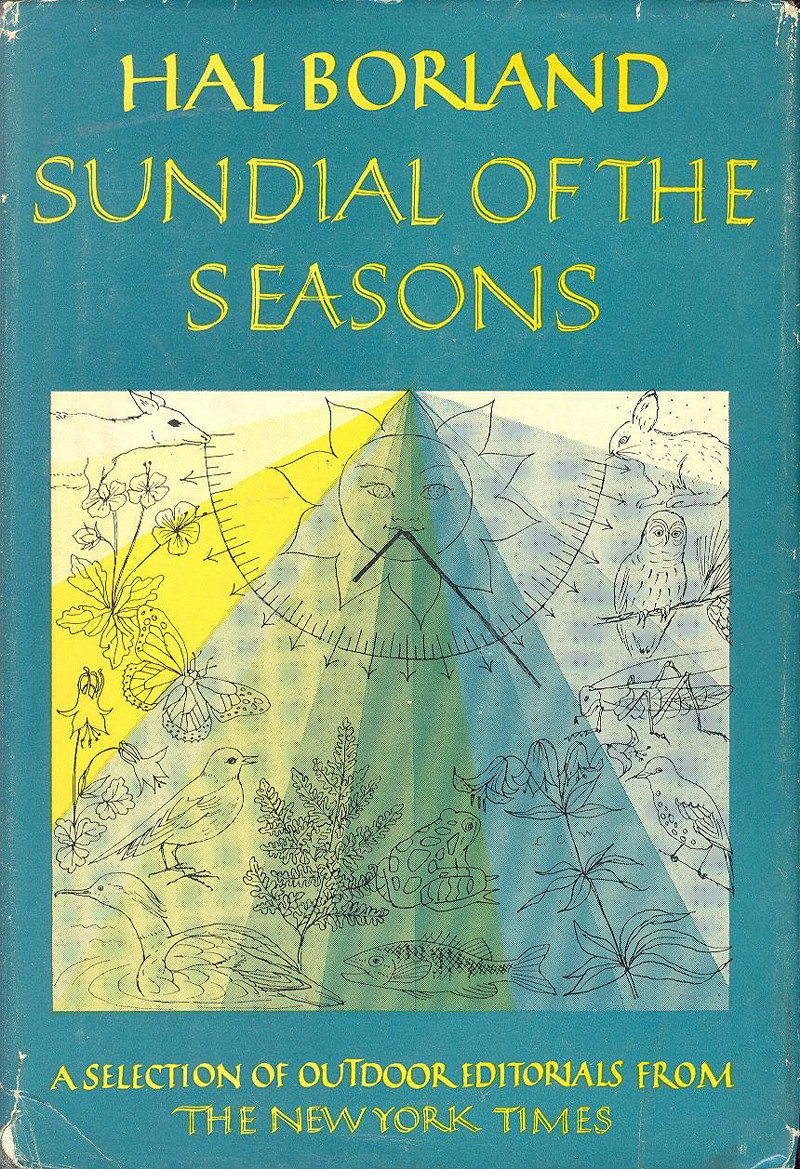
Hal Borland’s Sundial of the Seasons is a calendar of attentiveness, a yearlong sequence of brief essays that track the natural world’s rhythms from midwinter through the lushness of summer and back into frost and quiet. Drawn from Borland’s longstanding practice as a newspaper nature columnist and rooted in his daily walks and chores on a New England farmstead, the book offers an intimate atlas of weather, wildlife, sky, and soil. Each piece stands as a compact meditation, yet together they accumulate into a portrait of cyclical time that makes the sundial an apt emblem: sunlight and season mark the hours more meaningfully than the clock.
Structure and Approach
The book progresses through the calendar, with entries keyed to the turning year rather than to topical events. Borland watches for first signs, the phoebe’s return, a skiff of ice on the pond, the maple’s sap rising, and uses those markers as doorways to reflection. He honors exactness, naming species, noting wind directions, and remembering the feel of certain days in his bones, but he never lapses into mere catalog. Observation is the path to understanding, and understanding is as much moral and emotional as it is factual. Human holidays and chores appear only as they intersect with the fields, woods, and weather: haying shares the page with thunderheads; Thanksgiving with migrating geese; New Year’s with lengthening light.
Themes
A central theme is the constancy of change. Borland returns to the idea that no day repeats itself, yet the arc of the year is reassuringly familiar. This paradox, of reliability within flux, becomes a way of thinking about patience, humility, and belonging. He writes of thresholds: the March moment when snow softens and the brook talks again; the October day when a single hard frost alters every scent; the hush after first snow when sound carries differently across fields. The book also gently advocates stewardship. Rather than polemic, it offers affection: for hedgerows that shelter birds, for old orchards and woodlots, for the wild edges where fox and rabbit leave readable stories in mud or snow. Knowing names is a form of care, and care begets a wish to preserve.
Style and Tone
Borland’s prose is spare, clear, and lyrical without sentimentality. He favors plain words and precise images, the cadence of a person who has walked a path enough times to know every tilt and shadow. He can be quietly humorous, a groundhog’s timidity becomes a lesson in caution, and he is consistently humble about human time. The voice is companionable, inviting readers to look up from the page and out the window, to match what they read against what they see.
Enduring Appeal
Sundial of the Seasons endures because it teaches a way of seeing that resists hurry. It is not a field guide, though it sharpens field craft; not a memoir, though it reveals a life; not a sermon, though it suggests an ethic. It is a habit of attention bound between covers. By anchoring meaning in the ordinary, the shadow of a hawk on snow, the peppery smell of leaf mold, the first peepers threading evening, Borland gives readers a durable refuge. The book becomes a companion to the year, a reminder that time is richer when measured by the returning redwing and the angle of light.
Citation Formats
APA Style (7th ed.)
Sundial of the seasons. (2025, August 25). FixQuotes. https://fixquotes.com/works/sundial-of-the-seasons/
Chicago Style
"Sundial of the Seasons." FixQuotes. August 25, 2025. https://fixquotes.com/works/sundial-of-the-seasons/.
MLA Style (9th ed.)
"Sundial of the Seasons." FixQuotes, 25 Aug. 2025, https://fixquotes.com/works/sundial-of-the-seasons/. Accessed 22 Mar. 2026.
Sundial of the Seasons
A collection of nature essays that document the ebb and flow of the seasons, offering keen observations in various aspects of the Earth's rhythm.
- Published1964
- TypeBook
- GenreNature writing, Non-Fiction
- LanguageEnglish
About the Author

Hal Borland
Hal Borland's life, influential nature writings, and his legacy in American literature and environmental awareness.
View Profile