
Book: The Art of Thinking
Overview
Ernest Dimnet’s The Art of Thinking argues that genuine thought is rarer than it seems. Most people, he contends, recycle opinions absorbed from their surroundings and mistake quick reactions for insight. The book urges readers to recover the dignity of personal thinking by cultivating a deliberate inner life, disciplining attention, and developing a mind that belongs to them rather than to fashion or public opinion. Written in a lucid, aphoristic style, it blends moral reflection with practical counsel, aligning modern readers with the older tradition of the essayists and moralists.
The problem of secondhand minds
Dimnet’s starting question is unsettling: do we truly think, or merely respond? He diagnoses the modern mind as distracted, hurried, and timid, more eager to conform than to see. Newspapers, ephemera, and the cult of speed flood attention and erode the capacity to dwell on a subject. Vanity and fear, fear of being original, fear of being wrong, encourage imitation. Even education, with its examinations and accumulation of facts, may produce the learned without producing thinkers. A mind that lives on borrowed judgments, he argues, cannot discover, create, or even fully know itself.
Forming a personal mind
To think is first to wake up to oneself. Dimnet asks readers to observe their own inner movements and to dare sincerity: what do I truly care about, and what is merely habit? The germ of thought is a genuine interest, a governing question or passion around which attention gathers. From there, the practical conditions of thinking are simple but exacting: quiet, solitude, and a regular rhythm that allows ideas to appear, linger, and ripen. He emphasizes patience and incubation; the mind works below the surface if given time, and forced production yields clichés. Keeping a notebook, returning to an idea over days, and refusing to rush are part of forming a mind that is alive rather than mechanical.
Reading, memory, and writing
Dimnet distinguishes assimilation from accumulation. Reading becomes fruitful when slow, selective, and personal, guided by living books that provoke reflection rather than by a hunger for quantity. He advises reading with a pencil, interrogating arguments, and letting a few strong pages nourish thought more than many volumes skimmed. Memory should be trained not as a warehouse of facts but as a network of vivid associations and images, so that knowledge is ready for use. Writing, for Dimnet, is thinking made visible; what cannot be written clearly has not been understood. Style is not ornament but the signature of a formed personality.
Conversation and society
The solitude of thinking is balanced by conversation. Dimnet cherishes encounters with minds stronger than one’s own, where questioning clarifies, opposition sharpens, and sympathy encourages. Yet he warns against the waste of trivial talk that dissipates attention. A thinker should be a citizen among friends, art, and travel, all of which broaden perception, but must guard inner independence. The aim is not eccentricity but the courage to see for oneself and to accept the cost of dissent when truth demands it.
Education and the age
Dimnet calls for education that awakens rather than stuffs. The great teacher kindles a personal vocation for truth, replacing cramming with formation, rules with models, and anxiety with intellectual courage. Against the tyranny of the new and the press of public opinion, he proposes slowness, meditation, and character. The modern conveniences that shrink time also flatten depth if allowed to dominate attention; the antidote is a chosen center of life that orders the day.
Promise of the discipline
The art of thinking is not a technique so much as a way of living: reverent attention to reality, loyalty to one’s best questions, and habits that protect interior freedom. The reward is clarity, originality, and effectiveness in action, because decisions grow from convictions, not from borrowed noise. Dimnet’s invitation is deceptively simple: recover your mind, and you recover your life.
Citation Formats
APA Style (7th ed.)
The art of thinking. (2025, August 27). FixQuotes. https://fixquotes.com/works/the-art-of-thinking/
Chicago Style
"The Art of Thinking." FixQuotes. August 27, 2025. https://fixquotes.com/works/the-art-of-thinking/.
MLA Style (9th ed.)
"The Art of Thinking." FixQuotes, 27 Aug. 2025, https://fixquotes.com/works/the-art-of-thinking/. Accessed 1 Apr. 2026.
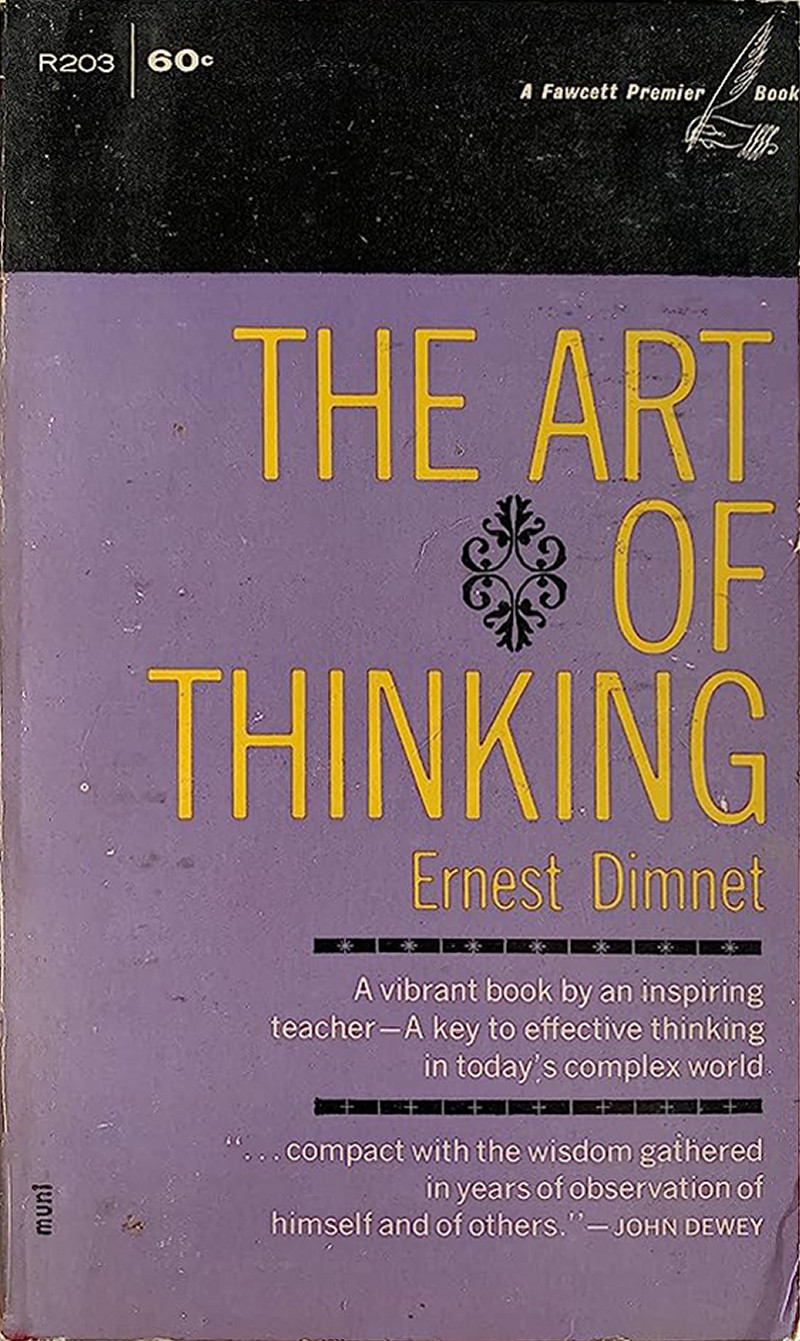
The Art of Thinking
A guide for readers to improve their thinking processes and cultivate the habit of reflective and attentive thinking, enhancing their intellectual capabilities.
- Published1928
- TypeBook
- GenreNon-Fiction, Self-help
- LanguageEnglish
About the Author

Ernest Dimnet
Ernest Dimnet, a notable French priest whose writings inspire intellectual and spiritual growth globally.
View Profile- OccupationPriest
- FromFrance
-
Other Works
- What We Live By (1932)