
Book: The College Blue Book
Overview
"The College Blue Book" (1995) by Anthony J. D'Angelo is a practical, student-centered guide aimed at helping prospective and current college students make smarter choices about higher education. It frames college not as an automatic next step, but as a major personal investment of time, money, and identity. The book's central message is that a "good" college experience is the result of intentional decisions: understanding what you want, choosing an environment that supports it, and actively shaping your academic and personal life once you arrive.
Rather than selling a single "best path", the book emphasizes fit. It encourages readers to think beyond reputation and rankings and to look at how a school's culture, academic expectations, and support systems align with their learning style, goals, and temperament.
Choosing a College with Purpose
A major portion of the book focuses on the pre-college decision process. D'Angelo urges students to begin with self-assessment: interests, strengths, values, and the kind of setting where they tend to thrive. He treats the college search as a series of questions that uncover priorities, such as how much structure you want, what size community feels manageable, what level of competition motivates rather than overwhelms you, and how important factors like location, diversity, campus life, and religious or philosophical orientation are to you.
The book also argues that families and counselors can be helpful, but the student must remain the primary decision-maker. It cautions against choosing a school mainly to satisfy someone else's expectations or to chase prestige, since the day-to-day realities of workload, social fit, and campus culture matter far more over four years than a name on a sweatshirt.
Understanding the Academic Experience
D'Angelo presents academics as the core of what college is supposed to deliver, but he stresses that "academics" includes more than classes and grades. He highlights the importance of selecting a major thoughtfully, exploring interests early, and using general education requirements as an opportunity rather than a hurdle. The book encourages readers to seek strong teaching, clear advising, and opportunities for research, writing, presentations, or hands-on learning, depending on the institution.
A recurring theme is that students get more from college when they behave like active participants rather than passive consumers. That means asking questions, going to office hours, building relationships with faculty, and learning how departments and requirements work. The book underscores that good planning prevents common problems: wasted credits, delayed graduation, and drifting into a major by default rather than choice.
Managing Time, Money, and Independence
The book treats independence as one of college's biggest challenges and rewards. It discusses the everyday disciplines that determine success: time management, balancing work and social life, and building routines that support sleep, study, and health. It presents college as a transitional period where students learn to run their own lives, and it emphasizes that freedom without structure can quickly become stress, missed deadlines, and avoidable academic trouble.
Financial reality is also treated as part of responsible decision-making. The book encourages students to think about cost, financial aid, and value with clear eyes, and to understand how financial pressure can shape choices about work hours, course load, and even persistence to graduation. It promotes making a plan that is sustainable rather than heroic.
Building a Meaningful Campus Life
Beyond coursework, D'Angelo frames involvement as essential to learning and satisfaction. He highlights the role of friendships, residence life, student organizations, and campus events in shaping identity and community. The book suggests that students should be deliberate about how they spend their "out of class" time, because it can either reinforce growth or derail it.
It also addresses common social and emotional realities of college life, including homesickness, stress, and the difficulty of finding the right peer group. The emphasis is on choosing environments and habits that encourage positive development, and on seeking support when needed through advising, counseling, tutoring, or mentoring.
Overall Takeaway
"The College Blue Book" is ultimately an argument for intentionality: choose carefully, engage deeply, and take ownership of the experience. D'Angelo portrays college as a place where opportunities are plentiful but not automatic; students benefit most when they understand themselves, select a school that matches their needs, and then actively use the resources around them. The book's lasting value lies in its focus on practical decision-making and personal responsibility, aiming to help students turn college from a vague milestone into a purposeful, growth-oriented chapter of life.
Citation Formats
APA Style (7th ed.)
The college blue book. (2026, February 15). FixQuotes. https://fixquotes.com/works/the-college-blue-book/
Chicago Style
"The College Blue Book." FixQuotes. February 15, 2026. https://fixquotes.com/works/the-college-blue-book/.
MLA Style (9th ed.)
"The College Blue Book." FixQuotes, 15 Feb. 2026, https://fixquotes.com/works/the-college-blue-book/. Accessed 25 Mar. 2026.
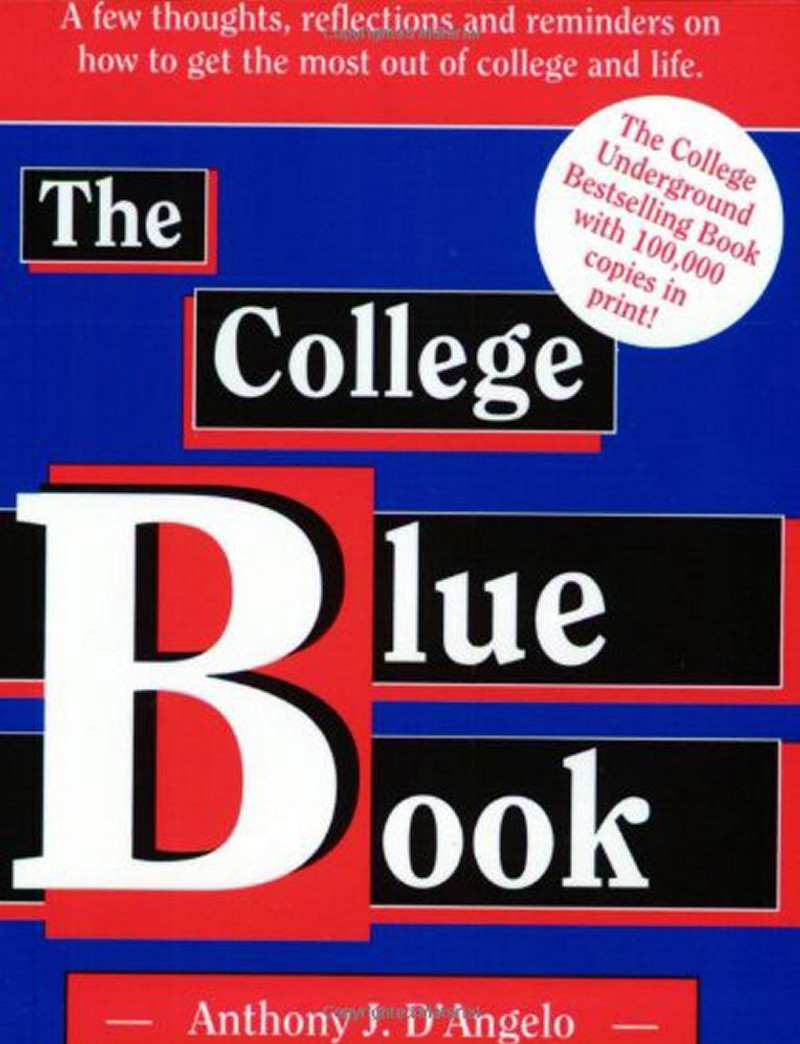
The College Blue Book
The College Blue Book is a comprehensive guide for students to navigate the complex college admissions process. This book contains valuable insights and tips on a wide range of topics, including standardized tests, writing effective essays, selecting schools, and much more.
About the Author

Anthony J. D'Angelo
Anthony J. DAngelo, a plainspoken motivator focused on education, living a life worth living and intentional design.
View Profile