
Non-fiction: The First Stone
Overview
Helen Garner's The First Stone (1995) is a compact but provocative account of a sexual harassment case that unfolded at a university residential college in Melbourne. Garner, known for her plainspoken, observational style, approaches the episode as an investigative writer and moral commentator, moving between reportage, courtroom-style detail, and personal reflection. The book centers on the tensions that arise when questions of consent, power, and institutional authority collide with the demands of solidarity and the appetite for moral certainty.
Central events
The narrative traces how an allegation against a male student at the college escalated from a private complaint into a public controversy involving college authorities, student groups, police inquiries, and the media. Garner attended meetings, interviewed participants, read documents, and reconstructed conversations, trying to piece together what had actually happened and why different witnesses remembered it differently. Rather than presenting a single definitive chronology, she focuses on the social processes that turned an intimate interaction into a contested public fact, and on the ways institutional procedures and activist interventions shaped outcomes.
Garner's perspective
Garner resists easy categorization of protagonists into victims and villains, arguing that moral clarity is often unavailable in situations framed by conflicting motivations and imperfect memory. She is sharply critical of what she sees as performative responses by institutions and some feminist activists, which she believes sometimes prioritize symbolic condemnation over careful inquiry and fair procedure. At the same time, she does not dismiss the reality of sexual harassment or the seriousness of its effects; rather, she insists on the need to preserve humanity and nuance when passing judgment.
Themes and questions
The book interrogates power in multiple registers: the gendered power dynamics between men and women in a cloistered college environment, the institutional power of disciplinary bodies, and the cultural power of language and narrative to define truth. Garner probes how ideas about consent, shame, and reputation are negotiated in small communities and public forums, and how the rhetoric of victimhood and accountability can sometimes obscure as much as it reveals. A persistent concern is how to balance empathy for potential victims with safeguards for those accused.
Style and tone
Garner writes in a lean, intimate prose that privileges attention to speech and gesture as much as to formal evidence. Her voice is candid and often confrontational, willing to name discomfort and contradiction rather than smooth them over. This stylistic frankness contributes to the book's vivid immediacy but also underpins much of the controversy it provoked, since readers encounter an author who interrogates received narratives rather than endorsing them.
Reception and legacy
At publication, The First Stone ignited fierce debate in Australia and beyond, drawing sharp criticism from many feminist activists who accused Garner of undermining survivors and excusing perpetrators, while others praised her for raising difficult questions about due process and the politics of accusation. The controversy itself became part of the book's subject matter, prompting wider reflection on how communities, universities, and the media handle allegations of sexual misconduct. Decades later, the book remains a touchstone for discussions about the ethical complexities of listening, believing, and adjudicating in cases where gender, power, and memory collide.
Citation Formats
APA Style (7th ed.)
The first stone. (2025, September 18). FixQuotes. https://fixquotes.com/works/the-first-stone/
Chicago Style
"The First Stone." FixQuotes. September 18, 2025. https://fixquotes.com/works/the-first-stone/.
MLA Style (9th ed.)
"The First Stone." FixQuotes, 18 Sep. 2025, https://fixquotes.com/works/the-first-stone/. Accessed 1 Apr. 2026.
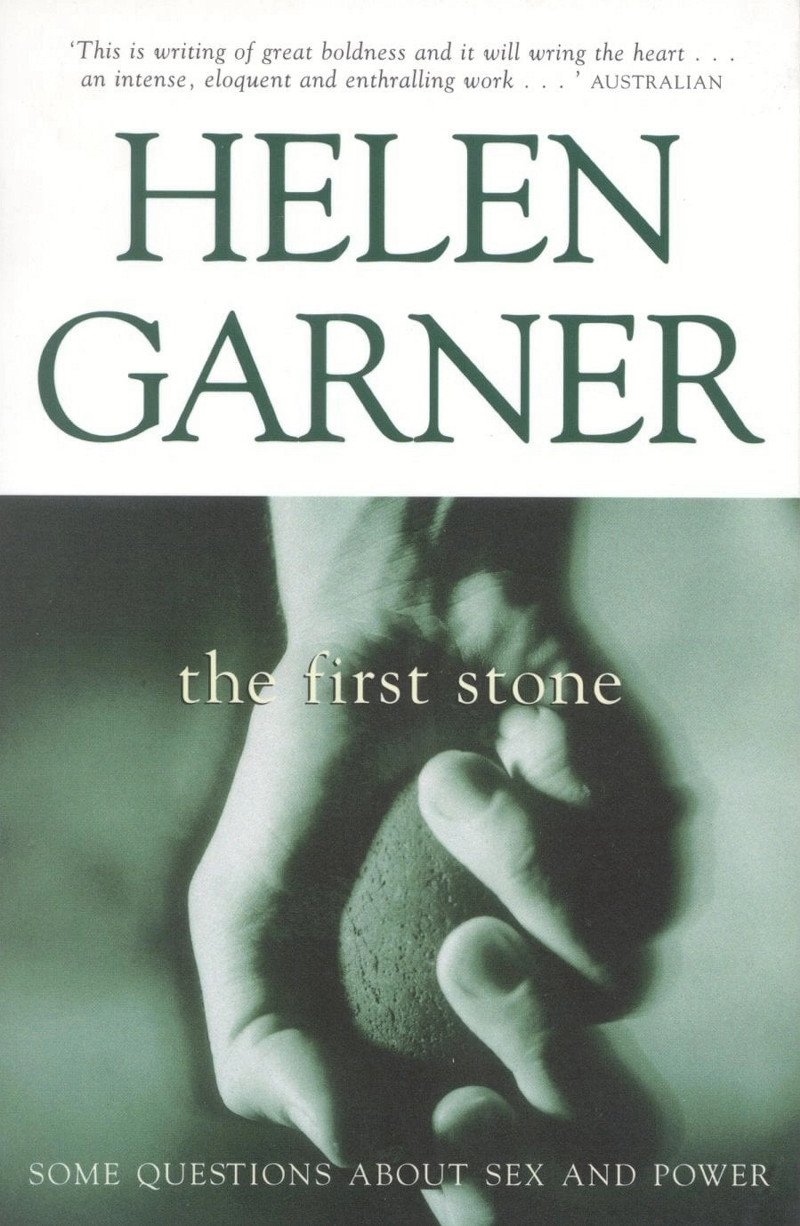
The First Stone
A true account of a sexual harassment case in a university college, where Garner explores the intricate issues of gender, power, and sexuality.
- Published1995
- TypeNon-fiction
- GenreNon-Fiction
- LanguageEnglish
About the Author

Helen Garner
Helen Garner, a renowned Australian author celebrated for her compelling fiction and insightful nonfiction writings.
View Profile- OccupationNovelist
- FromAustralia
-
Other Works
- Monkey Grip (1977)
- The Children's Bach (1984)
- Cosmo Cosmolino (1992)
- Joe Cinque's Consolation (2004)
- This House of Grief (2014)
- Everywhere I Look (2016)