
Play: The Government Inspector
Overview
Nikolai Gogol's "The Government Inspector" is a darkly comic five-act satire that skewers the venality and self-deception of provincial Russian administration. Set in a small unnamed town, the play unfolds as a tightly constructed farce whose escalating misunderstandings expose the moral bankruptcy of officials who care more for appearances and personal gain than for the public good. Gogol blends broad comedy with piercing social critique, producing laughter that quickly turns uneasy.
Plot
A rumor circulates that an incognito government inspector is traveling incognito through the provinces to expose corruption. When a penniless, boastful young clerk named Ivan Alexandrovich Khlestakov arrives by chance, the town's officials mistake him for the feared inspector. The mayor and his circle, convinced of imminent discovery, attempt to bribe and flatter the supposed inspector with gifts, honors and invented civic improvements.
Khlestakov, bewildered but eager, takes advantage of their panic and accepts their courtesies while spinning outlandish fabrications about his supposed importance. As deception multiplies, private hypocrisies and petty cruelties are dragged into the open. The masquerade collapses when Khlestakov departs with the spoils, only to be followed by the far darker announcement that the real government inspector is indeed on his way, leaving the town to face the consequences.
Characters
Khlestakov is a charming opportunist whose vanity and cowardice make him both ridiculous and dangerous; his presence exposes character rather than creating it. The mayor, Anton Antonovich, and his wife, Anna Andreevna, personify official complacency and social pretension, while a parade of municipal officials, the judge, the postmaster, the schoolteacher and others, display various mixtures of greed, cowardice and self-justifying rhetoric.
Secondary figures, such as Khlestakov's loyal servant Osip and the honest, aggrieved townspeople, provide counterpoints that heighten the satire. None of the characters escapes Gogol's eye for caricature, but the ensemble functions as a social cross-section rather than as isolated targets, emphasizing systemic rot over individual failings.
Themes and Style
The play interrogates appearance versus reality, the corrosive effects of bureaucracy, and the human capacity for self-deception when reputation is at stake. Gogol uses the mechanics of farce, mistaken identities, escalating lies, and ludicrous gestures, to reveal how institutional corruption thrives on fear and vainglory. Humor and grotesque imagery coexist with an undercurrent of moral urgency, so that the laughter often turns cruel.
Stylistically, Gogol mixes rapid-fire dialogue, vivid comic set pieces and sharply observed detail. His language can be at once colloquial and barbed, and structural precision keeps the tempo brisk until the final, unsettling reversal. The result is comedy that functions as indictment: the joke lands, but its echo remains.
Reception and Legacy
From its first performances the play provoked strong reactions, both rapturous and uneasy, because it named and mocked failings widely recognized in Russian society. Censors and officials bristled, yet audiences embraced the humor and the truth it revealed. Over time the play became one of Gogol's most enduring works and a touchstone for political satire.
"The Government Inspector" has influenced playwrights and satirists across cultures and eras, its archetypal mistaken-identity device serving as a model for exposing hypocrisy. Its mixture of farce and moral seriousness keeps it relevant: the laughter it draws remains inseparable from a lingering sense of civic alarm.
Citation Formats
APA Style (7th ed.)
The government inspector. (2026, February 5). FixQuotes. https://fixquotes.com/works/the-government-inspector/
Chicago Style
"The Government Inspector." FixQuotes. February 5, 2026. https://fixquotes.com/works/the-government-inspector/.
MLA Style (9th ed.)
"The Government Inspector." FixQuotes, 5 Feb. 2026, https://fixquotes.com/works/the-government-inspector/. Accessed 26 Mar. 2026.
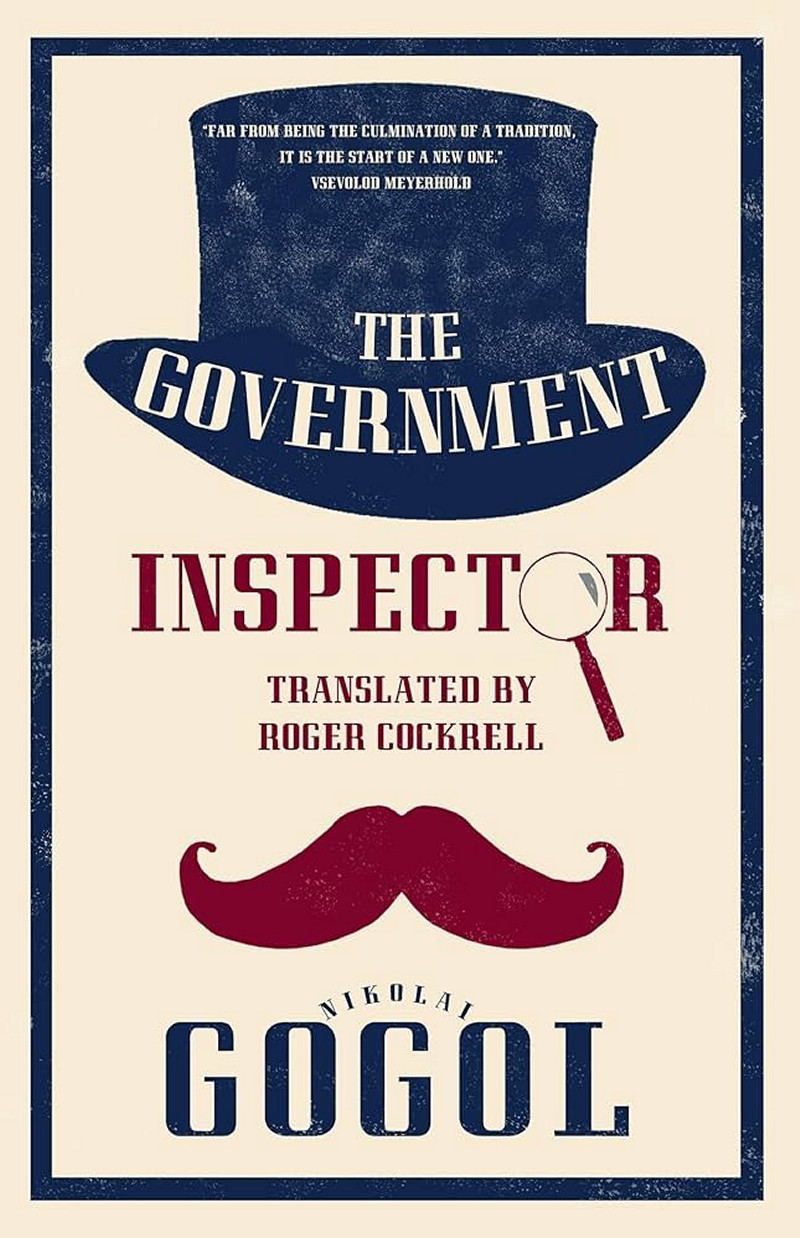
The Government Inspector
Original: Ревизор
The Government Inspector is a satirical play set in a small provincial Russian town, ruled by corruption and fear, where the arrival of a rumored government inspector sends the local officials into a panic.
About the Author

Nikolai Gogol
Nikolai Gogol. Discover his influence on literature through his unique storytelling and satirical style.
View Profile- OccupationWriter
- FromRussia
-
Other Works
- Viy (1835)
- Diary of a Madman (1835)
- The Nose (1836)
- The Overcoat (1842)
- Dead Souls (1842)