
Novel: The Tragedy of Pudd'nhead Wilson
Overview
Mark Twain’s The Tragedy of Pudd’nhead Wilson (1894) is a mordant satire set in a small Missouri river town whose genteel surface hides a rigid racial hierarchy and corrosive social pretenses. It braids a baby-swapping melodrama with a courtroom mystery, using the then-novel science of fingerprinting to expose a murder and, more unsettlingly, the fragility of identity when it rests on race, status, and reputation. The title figure, David “Pudd’nhead” Wilson, begins as a ridiculed outsider and ends as the instrument of revelation, while those who seemed secure in their place are stripped bare.
Setting and Premise
Dawson’s Landing, on the Mississippi in the antebellum era, prides itself on honor and pedigree. Into this world comes Wilson, a bright young lawyer from the North whose inaugural wisecrack, “If I owned half of that dog, I’d kill my half”, brands him a “pudd’nhead.” Ostracized professionally, he retreats into hobbies, notably the systematic collection of fingerprints and the keeping of aphoristic calendar entries that puncture local pieties.
At the town’s margins stands Roxy, an enslaved woman of such light complexion that she can pass for white. To save her infant son from the threat of being sold “down the river, ” she secretly exchanges him with her master’s white baby. The boys, each indistinguishable in appearance, grow up with traded identities: the true master’s son is raised as a slave called Chambers, and Roxy’s child, renamed Tom Driscoll, is raised as an aristocratic heir.
Plot
Time vindicates neither nature nor nurture. “Tom” grows into a spoiled, cowardly, and unscrupulous young man, addicted to gambling and adept at deceit. “Chambers, ” by contrast, is diligent and loyal but confined by servility drilled into him from birth. When Tom’s guardian, Judge Driscoll, tires of his misdeeds and hints at disinheritance, Tom’s desperation sharpens.
A pair of visiting Italian twins, Angelo and Luigi Capello, captivate Dawson’s Landing and stir jealousies. A scuffle between Tom and the twins, and the twins’ exotic notoriety, make them convenient targets when a crime shocks the town: Judge Driscoll is found murdered in his home. Circumstances point toward the foreigners, and they are arrested. The case seems a foregone conviction, until Pudd’nhead Wilson offers to defend them.
Wilson has quietly collected fingerprints for years, including those of the two babies on the day of their christening. In court, he demonstrates that bloody prints on the murder weapon and in the house match Tom Driscoll’s fingers, not the twins’. He then delivers a second, deeper disclosure: the infant fingerprints taken long ago prove that Tom is in fact Roxy’s son, and that Chambers is the true Driscoll heir. The town’s laughter at Wilson’s “pudd’nhead” pursuits turns to awe as science dismantles their assumptions in a public unmasking.
Themes and Aftermath
The revelations bring a grim reordering. Tom is convicted and, under the one-drop rule that governed the town’s moral arithmetic, is sold down the river into slavery, a fate determined not by character but by a hidden sliver of ancestry. Chambers inherits the Driscoll estate and legal status, yet cannot shed a lifetime’s conditioning; he is lonely in privilege and awkward among his new peers, stranded between worlds. Wilson, newly respected, has solved a puzzle but cannot repair the human wreckage it uncovers.
Twain uses the switch to interrogate the arbitrariness of racial categories and the performative nature of class. Identity appears as a costume enforced by law and custom; remove the label and the person does not magically change, but society’s treatment does, often cruelly. The town’s fetish for honor and bloodlines is lampooned by Wilson’s empirical method, which cares nothing for reputation and everything for traceable fact. The novel’s tragedy lies not just in a murder or a downfall, but in the exposure of a community built on fragile fictions that, once shattered, leave no one whole.
Citation Formats
APA Style (7th ed.)
The tragedy of pudd'nhead wilson. (2025, August 20). FixQuotes. https://fixquotes.com/works/the-tragedy-of-puddnhead-wilson/
Chicago Style
"The Tragedy of Pudd'nhead Wilson." FixQuotes. August 20, 2025. https://fixquotes.com/works/the-tragedy-of-puddnhead-wilson/.
MLA Style (9th ed.)
"The Tragedy of Pudd'nhead Wilson." FixQuotes, 20 Aug. 2025, https://fixquotes.com/works/the-tragedy-of-puddnhead-wilson/. Accessed 13 Feb. 2026.
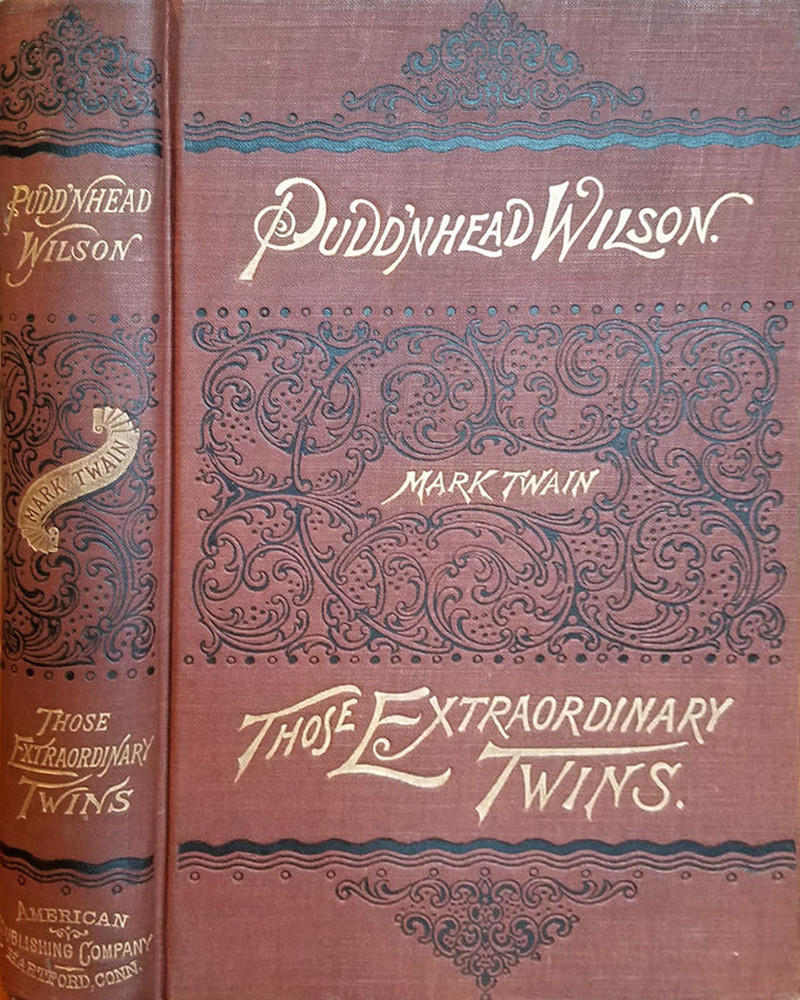
The Tragedy of Pudd'nhead Wilson
Pudd'nhead Wilson tells the story of two boys, one white and one black, who were switched at birth and are raised in the antebellum South, showcasing issues of race, identity, and the consequences of societal norms.
About the Author

Mark Twain
Mark Twain, an iconic American author known for his wit, humor, and influential works like Tom Sawyer and Huckleberry Finn.
View Profile- OccupationAuthor
- FromUSA
-
Other Works
- The Innocents Abroad (1869)
- The Adventures of Tom Sawyer (1876)
- The Prince and the Pauper (1881)
- Life on the Mississippi (1883)
- Adventures of Huckleberry Finn (1884)
- A Connecticut Yankee in King Arthur's Court (1889)