
Poetry Collection: Transformations
Overview
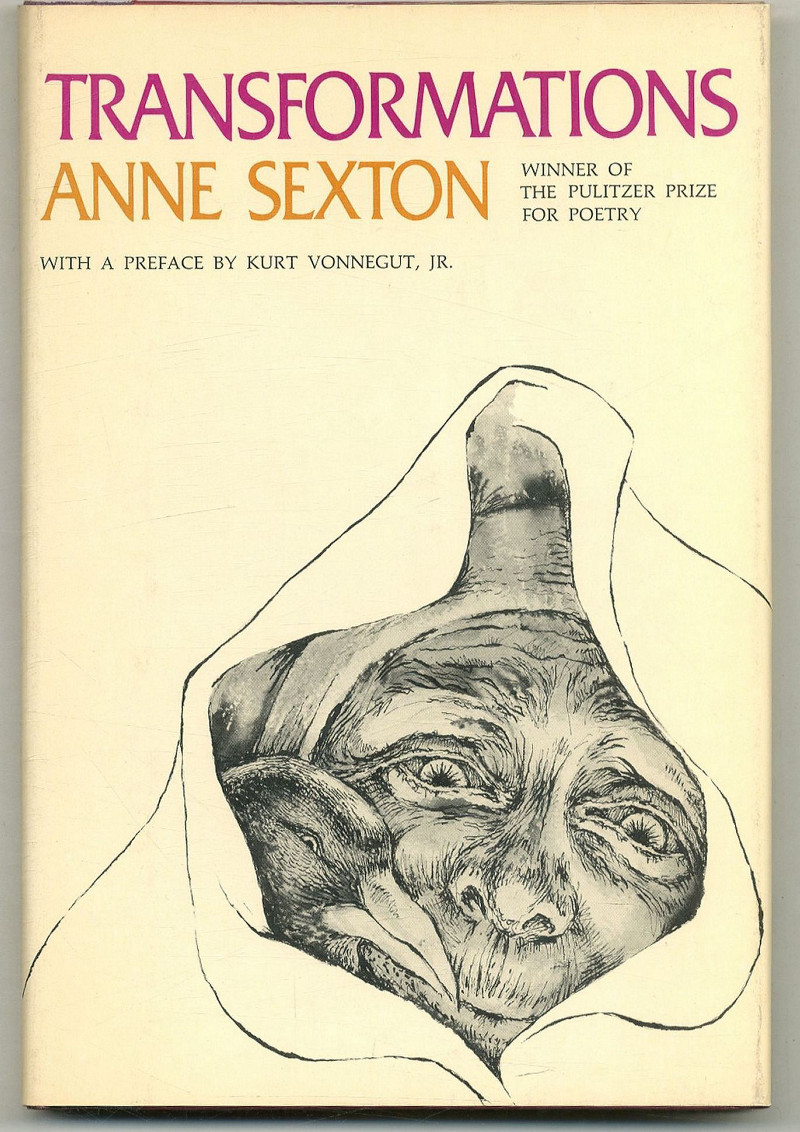
Anne Sexton's Transformations (1971) reimagines seventeen of the Grimm Brothers' fairy tales through a fiercely personal, contemporary lens. Each poem compresses and explodes a familiar folk narrative, shifting the focus from moral fable to raw human experience. The title operates on two levels: Sexton transforms the stories themselves and models how the narratives transform the speaker's inner life.
The collection pairs a scholarly-sounding reprint of a Grimm tale with Sexton's own poem, creating a dialogue between the canonical text and a confessional countervoice. The result is often comic, frequently brutal, and persistently unsettling, as cultural myth meets private neurosis and suburban reality.
Themes and Motifs
Power, sex, violence, and shame run like leitmotifs through each retelling. Fairy-tale archetypes are stripped of their insulation and recast as psychological states: the wicked stepmother becomes familial cruelty, the prince's kiss reads as coercion, and transformational magic is recast as either liberation or erasure. Motherhood, marriage, and female desire are investigated without sentimentality, revealing how domestic roles can wound as effectively as they shelter.
Sexton repeatedly turns the tales into feminist critique, exposing how patriarchal structures are embedded in narratives that had historically taught girls obedience. Yet the poems resist simple moralizing; they are ambivalent and paradoxical, allowing sympathy for villains and discomfort with easy redemption. Transformation often means mutilation or madness as much as metamorphosis.
Voice and Style
The voice alternates between sardonic, confessional, and theatrical. Sexton adopts a speaker who is at once intimate and performative, using colloquial diction that punctures the fairy-tale veneer. Her lines are muscular, plainspoken, and at times baroque, deploying wit and shock to unsettle readers' expectations.
Formal variety is a key technique: some poems run like litany; others employ ironic epigraphs, lists, or abrupt shifts in tone. Sexton's use of the first person collapses narrator and reader into complicity, turning myth into a mirror for contemporary anxieties about body, identity, and agency.
Selected Poems
"Bluebeard" reworks the murderous husband tale into a study of curiosity, secrecy, and the female body as forbidden territory. Sexton's narrator both sympathizes with and condemns her own urge to look, making the discovery of the bloody chamber a revelatory, destructive rite. In "The Red Shoes, " the compulsion to perform and the danger of spectacle become metaphors for the destructive demands placed on women to perform beauty and virtue.
"Cinderella" and "Briar Rose" (Sleeping Beauty) receive treatments that emphasize the stasis and erotic passivity often coded as feminine virtue. Sexton converts passive idyll into active complaint, revealing the violence that undergirds narratives of rescue. Even lighter poems carry an undertow of grief and an awareness of precarious survival.
Reception and Legacy
Transformations provoked strong reactions on publication, admired for its audacity and linguistic energy and criticized by some as crude or sensational. Over time it has come to be seen as a pivotal work in Sexton's oeuvre and in late-20th-century American poetry, notable for how it marries confessional intimacy with mythic reworking. The book opened lines of influence for poets and writers who would revisit folklore and fairy tales from feminist, queer, and psychological perspectives.
The collection remains striking for its insistence that stories given to children carry adult histories and desires. Sexton's poems demand that myth be read not as innocent moral tale but as a living archive of human longing, violence, and transformation.
Citation Formats
APA Style (7th ed.)
Transformations. (2026, February 5). FixQuotes. https://fixquotes.com/works/transformations/
Chicago Style
"Transformations." FixQuotes. February 5, 2026. https://fixquotes.com/works/transformations/.
MLA Style (9th ed.)
"Transformations." FixQuotes, 5 Feb. 2026, https://fixquotes.com/works/transformations/. Accessed 13 Feb. 2026.
Transformations
This collection of acclaimed poetry retells and reinterprets seventeen Grimm’s fairy tales through the lens of a contemporary, feminist perspective.
- Published1971
- TypePoetry Collection
- GenrePoetry
- LanguageEnglish
About the Author

Anne Sexton
Anne Sexton, a celebrated poet known for her confessional style, addressing themes of mental illness and women's experiences.
View Profile- OccupationPoet
- FromUSA
-
Other Works
- To Bedlam and Part Way Back (1960)
- All My Pretty Ones (1962)
- Live or Die (1966)
- Love Poems (1969)
- The Book of Folly (1972)
- The Death Notebooks (1974)
- The Awful Rowing Toward God (1975)