
Stone Gossard Biography Quotes 23 Report mistakes
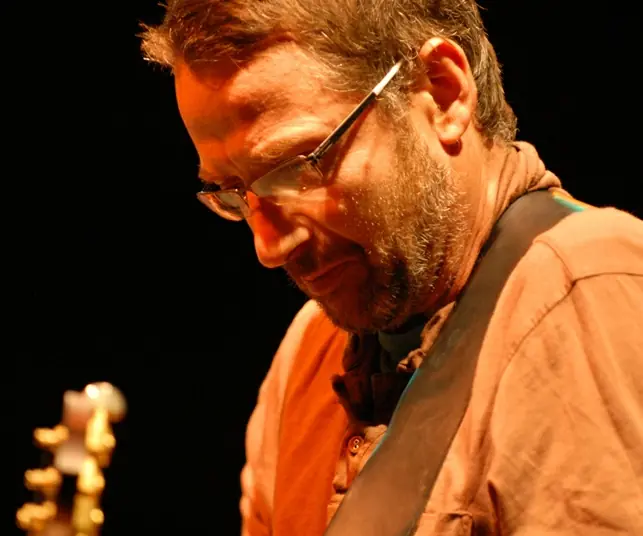
| 23 Quotes | |
| Born as | Stone Carpenter Gossard |
| Occup. | Musician |
| From | USA |
| Born | July 20, 1966 Seattle, Washington, U.S. |
| Age | 59 years |
Stone Carpenter Gossard was born July 20, 1966, in Seattle, Washington, and came of age alongside the Pacific Northwest's wet, working-city beauty and its late-1970s to 1980s do-it-yourself music underground. The region's relative isolation from the coastal industry centers helped form a scene that prized bands as communities rather than ladders, a sensibility that would later underpin his reputation as a steadying presence in turbulent groups.
Before fame, his life was defined less by spectacle than by long rehearsals, shared basements, and the intimate geography of Seattle neighborhoods, practice spaces, and clubs. That local ecosystem - KISW radio, all-ages venues, and a circuit of peers who traded members and ideas - shaped him into a musician for whom collaboration and continuity mattered as much as virtuosity.
Education and Formative Influences
Gossard attended Northwest School in Seattle and then enrolled at Bennington College in Vermont, but he soon returned home, drawn back to the momentum of the local rock community. Like many in his generation, he absorbed classic rock structure (riff craft, verse-chorus clarity) while being pulled by punk's economy and hardcore's urgency; the synthesis he and his peers built in Seattle would become a new mainstream grammar in the early 1990s.
Career, Major Works, and Turning Points
He first became widely known through Green River (mid-1980s), a foundational Seattle band whose breakup foreshadowed the scene's constant recombination; he then played in Mother Love Bone, where ambition and melody met a glam-informed swagger, until singer Andrew Wood's death in 1990 abruptly ended the project. Out of that loss, Gossard and bassist Jeff Ament helped spark Temple of the Dog and then formed Pearl Jam with Mike McCready and Eddie Vedder; their 1991 debut Ten turned regional chemistry into global scale, with Gossard's riffs and arrangements anchoring "Alive", "Even Flow", and "Jeremy". His role evolved with the band: from early co-primary writer to a long-game architect who helped keep Pearl Jam functional through lineup shifts (including drummer conflicts), stylistic expansions (Vitalogy, Yield, and later eclectic records), and the famous battles over ticketing and industry control. Parallel to Pearl Jam, he explored side work such as Brad and released solo material that highlighted his interest in groove and song texture outside the arena-rock frame.
Philosophy, Style, and Themes
Gossard's playing is often described as muscular and efficient, but its deeper signature is structural empathy - writing parts that leave room for a singer's phrasing, a drummer's pocket, and a second guitar's counterweight. He thinks in layers and push-pull, not just hooks; "I like rhythmic things that butt up against each other in a cool kind of way". That sensibility explains why his best riffs are rarely isolated feats: they are load-bearing beams that make a song feel inevitable, while still letting it breathe.
Psychologically, he tends to frame art as a human system under stress, and that honesty has helped Pearl Jam outlast the era that birthed them. When he reflects on internal conflict, he does not cast villains so much as acknowledge fragility and shared responsibility - "It's a very complex scenario, and certainly Dave was, and is, not the only person in Pearl Jam with personality flaws. Everybody in this band exhibits some form of neurotic behavior. And we couldn't find a balance, a mutual respect for each other". That sentence reads like a bandleader's private ethics: diagnose the problem, admit the group's complicity, and keep the work from collapsing into resentment. Underneath is a family model of music-making, where endurance is an artistic value in itself - "We may take breaks and do other things, but we feel we'll ultimately have Pearl Jam as a family". In an industry that rewards rupture, his recurring theme is continuity: stay present, keep writing, and let the collective identity mature.
Legacy and Influence
Gossard is a central architect of Seattle's hard-rock vocabulary and one of the key bridge figures from the pre-grunge underground to the 1990s mainstream, shaping not only Pearl Jam's catalog but the expectations of what a major rock band could be: principled, self-critical, and built to last. His influence is audible in generations of guitarists who favor weight, rhythm, and arrangement over flash, and in bands that treat longevity as a craft - not a default. In biographies of the era, he often appears as the quiet constant; in the music, that constancy is the point, turning personal loss, group friction, and changing fashion into a body of work that still feels lived-in rather than manufactured.
Our collection contains 23 quotes who is written by Stone, under the main topics: Music - Friendship - Leadership - Nature - Change.
Source / external links