
Alexandre Auguste Ledru-Rollin Biography Quotes 1 Report mistakes
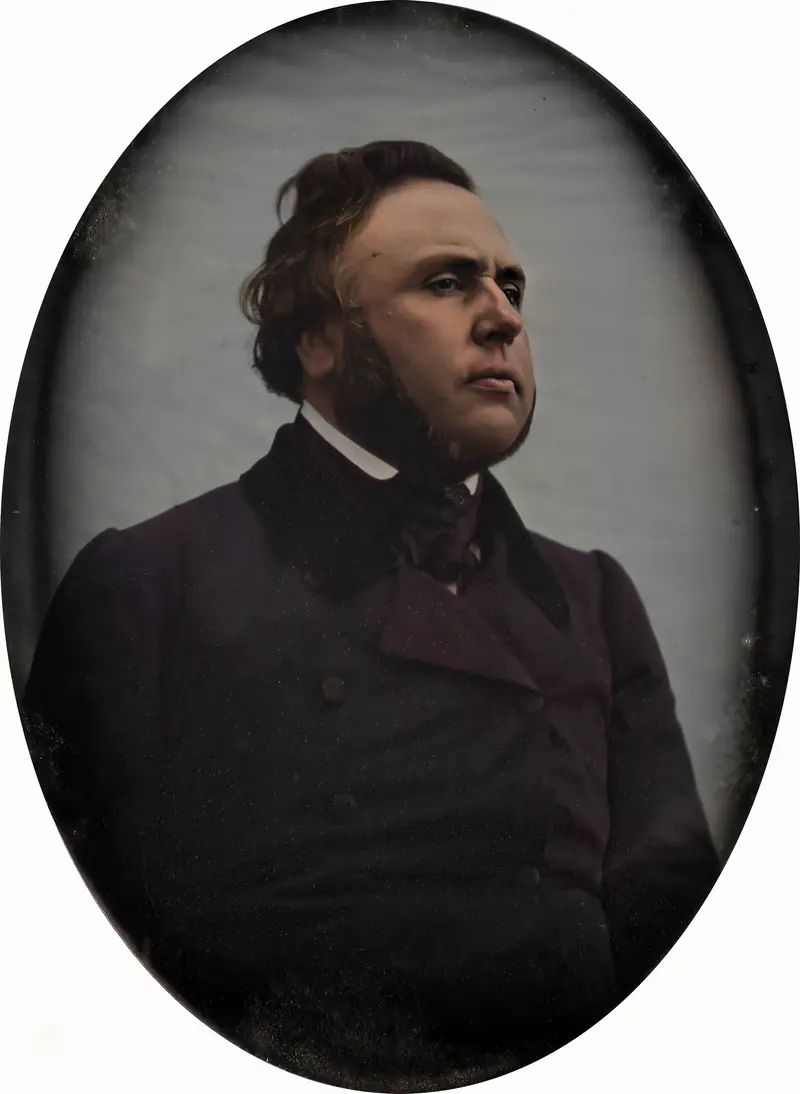
Attr: Musée Carnavalet
| 1 Quotes | |
| Occup. | Revolutionary |
| From | France |
| Born | February 2, 1807 |
| Died | December 31, 1874 |
| Aged | 67 years |
Alexandre Auguste Ledru-Rollin was born in 1807 and emerged from the world of law to become one of the defining French republicans of the nineteenth century. Educated in Paris and trained as a lawyer, he entered the bar in the 1830s, a decade shaped by the tensions of the July Monarchy. His early career was marked by defense work in political and press cases, where his eloquence, combative temperament, and command of procedure brought him public attention. From the outset he cultivated a reputation not as a conspirator but as a legal and parliamentary democrat, determined to widen political rights through institutions rather than through secret societies.
From the Bar to the Chamber: Republican Opposition under the July Monarchy
As the July Monarchy consolidated itself after 1830, Ledru-Rollin became a leading figure in the radical opposition that pressed for universal suffrage, civil liberties, and social protections. He spoke and wrote for a democratic current that found a voice in the republican press, including the circle around La Reforme, where figures like Ferdinand Flocon helped translate street energy into a platform. In the Chamber of Deputies, to which he was elected in the early 1840s, he stood out for vigorous critiques of laws that restricted the press and public association. His republican stance positioned him between moderate constitutionalists such as Alphonse de Lamartine and the more insurrectionary networks associated with Louis-Auguste Blanqui and Armand Barbes. Ledru-Rollin chose the parliamentary road, cultivating ties with journalists and activists while arguing that the franchise, not violence, was the fulcrum of change.
February 1848 and the Provisional Government
When the February Revolution of 1848 overthrew the Orleans monarchy, Ledru-Rollin moved quickly into the center of events. At the Hotel de Ville in Paris, amid negotiations and crowds, he worked with Lamartine, Armand Marrast, Louis Blanc, and others to shape a provisional government under the moral presidency of the elder jurist Dupont de l'Eure. Ledru-Rollin took the pivotal post of Minister of the Interior. From that vantage point he replaced many prefects and subprefects with republicans, reorganized the administration to accept the new regime, and, crucially, helped implement the decree that established universal male suffrage. He supported the creation of forums that gave workers a voice, including the Luxembourg Commission associated with Louis Blanc and the worker-leader Albert, while insisting that the new republic must maintain order through the National Guard and civil authority rather than through street revolts.
Balancing Clubs, Administration, and the Ballot
As minister, Ledru-Rollin sought to channel the ardor of popular clubs and societies into legal politics. He defended the right of assembly yet tried to ensure that electoral competition, not force, would decide the republic's direction. His circulars to commissaires and prefects reflected this balancing act, encouraging mobilization for the constitutional assembly while warning against provocations that might alienate rural voters or fracture the coalition that had made February possible. Supporters on the left praised him for opening political space; critics on the right accused him of using the Interior Ministry to favor radicals. The first nationwide elections by universal male suffrage in the spring of 1848, an unprecedented exercise in French history, were the outcome of this administrative and democratic push.
The Executive Commission and the June Crisis
Once the Constituent Assembly convened, the provisional government gave way to an Executive Commission composed of noted republicans: Lamartine, Arago, Garnier-Pages, Marie, and Ledru-Rollin. The Commission faced rising unemployment, pressure from the provinces for stability, and from Parisian workers for social guarantees. The National Workshops, a product of the February moment, became a flashpoint. When the Assembly moved against them, Paris erupted in the June Days of 1848. Ledru-Rollin favored social conciliation and political inclusion, while the Assembly vested power in General Eugene Cavaignac to suppress the uprising. The violence of June marked a turning point that weakened the left and deepened divisions among republicans. Ledru-Rollin, who had tried to reconcile order with social progress, saw his influence decline as conservative forces gained the upper hand.
The Presidential Election of 1848
At the end of 1848, France elected its first president by universal male suffrage. Ledru-Rollin stood as the candidate of the democratic and social republican current. He campaigned on the continuity of February's promises: expanded rights, respect for popular sovereignty, and reforms to address poverty. He was outpaced by General Cavaignac, the standard-bearer of order within the republic, and overwhelmingly defeated by Louis-Napoleon Bonaparte, whose name and promises of national glory and reconciliation appealed across classes. The result consigned the radical left to a minority and confronted Ledru-Rollin with a hostile Legislative Assembly.
June 13, 1849 and the Road to Exile
In 1849, the Assembly authorized a French expedition against the Roman Republic, where Giuseppe Mazzini and his allies had proclaimed a republic in Rome. Ledru-Rollin and fellow left deputies denounced the intervention as a betrayal of national self-determination and a violation of constitutional principles. On 13 June 1849, he helped lead a political protest against the expedition. The demonstration failed, the government moved decisively, and Ledru-Rollin was placed under accusation. Choosing liberty over imprisonment, he fled into exile, first seeking refuge on the continent and then in England.
Exile in England and International Democratic Networks
London became a crossroads of the European democratic diaspora. There Ledru-Rollin joined discussions and committees that sought to knit together republicans from different nations. He associated with Mazzini and other continental exiles, while maintaining ties with French compatriots such as Louis Blanc and, at times, Victor Hugo, who sustained the moral campaign against the Second Empire. Through pamphlets, speeches, and correspondence he argued that universal suffrage and civil liberties were not uniquely French but European imperatives. He rejected conspiratorial coups in favor of mass politics and international solidarity, anticipating strategies that would shape democratic movements later in the century. His name continued to surface in debates at home, where supporters held him up as a consistent republican and opponents represented him as a symbol of dangerous radicalism.
Return after the Fall of the Second Empire
The collapse of Napoleon III in 1870 opened the door for amnesties and the return of republican exiles. Ledru-Rollin came back to a France under the Government of National Defense, soon wracked by siege and civil war. In the electoral contests of the early Third Republic he gained a seat in the National Assembly and took his place among the radical and democratic left. In a chamber dominated for a time by monarchists and conservatives under the leadership of Adolphe Thiers, he defended universal suffrage, press freedom, and municipal liberties. He argued for a republic anchored in institutions rather than personalities and pressed for reconciliation that would knit the country back together after the trauma of war and internal conflict, even as he remained wary of any rollback of the gains made since 1848.
Ideas, Style, and Historical Reputation
Ledru-Rollin stood for a blend of political democracy and social concern. He championed universal male suffrage long before it became law and insisted that the republic should speak to workers as citizens with rights, not as subjects in need of discipline. His oratory was expansive and passionate, suited to mass meetings as well as to parliamentary debate. Moderates such as Lamartine sometimes found him too bold; social revolutionaries around Blanqui and others deemed him too cautious. Critics, including Karl Marx in later analyses, faulted him for oscillating between street and chamber. Yet even hostile observers acknowledged his steadfast commitment to the franchise and to the principle that administration could be an engine of democratization. The early months of 1848, when he helped organize the first national elections by universal male suffrage, remained the high-water mark of that program.
Final Years and Legacy
Alexandre Ledru-Rollin died in 1874 after witnessing the rebirth of the republic he had advocated since youth. His trajectory, from lawyer to minister, exile, and elder of the radical left, traced the arc of nineteenth-century French republicanism itself: legalist but insistent, social in its sympathies yet anchored in political rights. He worked alongside and against some of the era's most consequential figures, from Lamartine and Louis Blanc to Louis-Napoleon and Cavaignac, and across borders with Mazzini and other European democrats. Remembered for his role in 1848 and for his defense of universal suffrage, he helped establish the political vocabulary of republican France. Streets and institutions bearing his name testify to a legacy that, while contested in his lifetime, settled into the durable memory of a statesman who believed that citizens, organized and enfranchised, could govern themselves.
Our collection contains 1 quotes who is written by Alexandre, under the main topics: Servant Leadership.
Source / external links