
Antonio Porchia Biography Quotes 27 Report mistakes
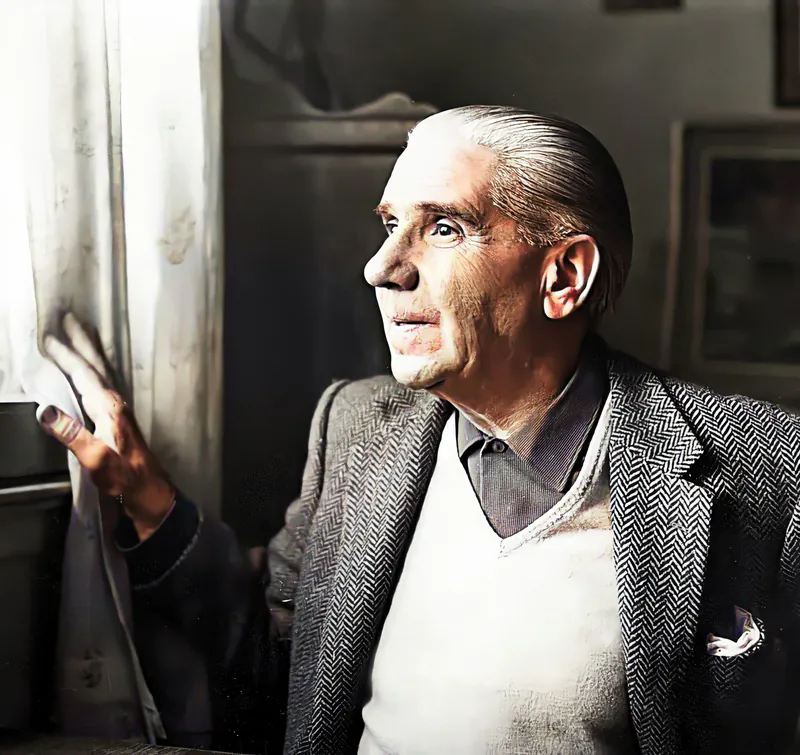
| 27 Quotes | |
| Occup. | Poet |
| From | Italy |
| Born | November 13, 1886 Conflenti, Calabria, Italy |
| Died | November 9, 1968 Buenos Aires, Argentina |
| Cause | Natural causes |
| Aged | 81 years |
Antonio Porchia was born on 13 November 1886 in Conflenti, a hill town in Calabria, in the newly unified Kingdom of Italy, where emigration, rural poverty, and the aftershocks of national consolidation shaped daily life as much as church bells and seasonal labor. He grew up in a household that prized endurance over display; the tight economies of the south taught him early how much could be carried in silence, and how quickly the future could be cancelled by circumstance.
A decisive break came with migration. After his father died, Porchia left Italy with his mother and siblings and settled in Buenos Aires, joining the vast Italian diaspora that remade Argentine streetscapes and politics in the early 20th century. The move did not simply change language and scenery - it set the inner coordinates of his work: a man living between homes, alert to the way identity can be both inherited and improvised, and to the loneliness that can survive even inside a crowd.
Education and Formative Influences
Porchia had little formal schooling, and his real education arrived through work, deprivation, and self-directed reading in the immigrant city. In Buenos Aires he supported himself with manual and practical jobs (at times linked to printing and commerce) while absorbing the currents of Spanish-language modernismo and the metaphysical strain of European aphoristic writing, from moralists and mystics to the terse paradoxes of Nietzschean and symbolist aftermath. The combination of limited institutional training and intense inward study helped form his distinctive discipline: he distrusted rhetorical flourish, trimmed thought down to its nerve, and treated each sentence as an event that had to earn its existence.
Career, Major Works, and Turning Points
Porchia published sparingly and slowly, as if publication were a secondary act to the long labor of distillation. His life in Argentina coincided with wars, coups, and cultural ferment; yet his major intervention was quiet: the creation of "Voces" ("Voices"), the book of brief, unclassifiable utterances he issued in Buenos Aires in the early 1940s and expanded in later editions. "Voces" was not a diary or a manifesto but a lifelong workshop of conscience, built from fragments that read like proverbs after a crisis of belief. Recognition arrived gradually, then widened through translation and advocacy by writers who sensed in Porchia a rare severity - a poet who could make a single line carry the weight of an autobiography.
Philosophy, Style, and Themes
Porchia's interior life can be read as an ethics of renunciation that is not decorative but diagnostic: he watched desire, pride, and grief as if they were weather systems crossing the self, and he preferred the precise wound to the consoling story. His aphorisms turn repeatedly to the psychology of loss, not as romantic misery but as a method of perception. "I keep my hands empty for the sake of what I have had in them". The sentence is both confession and technique: an insistence that emptiness can be chosen, and that memory, when held too tightly, becomes a form of theft from the present.
His style is built from compression, paradox, and a kind of moral listening - hence the title "Voices", which suggests not an ego performing, but an ear receiving. He distrusts the linear confidence of explanations and instead writes from the fracture lines where a person discovers what survives their own undoing. "The chains that bind us the most closely are the ones we have broken". Here freedom is not clean; it leaves residue, and the past can tighten precisely where one thought it ended. Even his reflections on language are psychological: "What words say does not last. The words last. Because words are always the same, and what they say is never the same". The remark exposes his belief that the self is perpetually revised by repetition - that we return to the same vocabulary, but with altered wounds, altered courage, altered capacity to mean.
Legacy and Influence
Porchia died on 9 November 1968 in Buenos Aires, having lived long enough to see his century fracture and reassemble itself into new forms of exile and uncertainty. His influence endures less through schools or programs than through the peculiar authority of his brevity: poets, translators, and readers across Spanish and beyond have treated "Voces" as a portable conscience, a book that can be opened anywhere and still feel intimate. In an age of overexplanation, Porchia's work remains a reminder that the deepest biography is sometimes a sentence that refuses to lie about what it cost to become true.
Our collection contains 27 quotes who is written by Antonio, under the main topics: Wisdom - Truth - Love - Meaning of Life - Deep.
Antonio Porchia Famous Works
- 1943 Voces (Book)
Source / external links