
Benjamin Rush Biography Quotes 4 Report mistakes
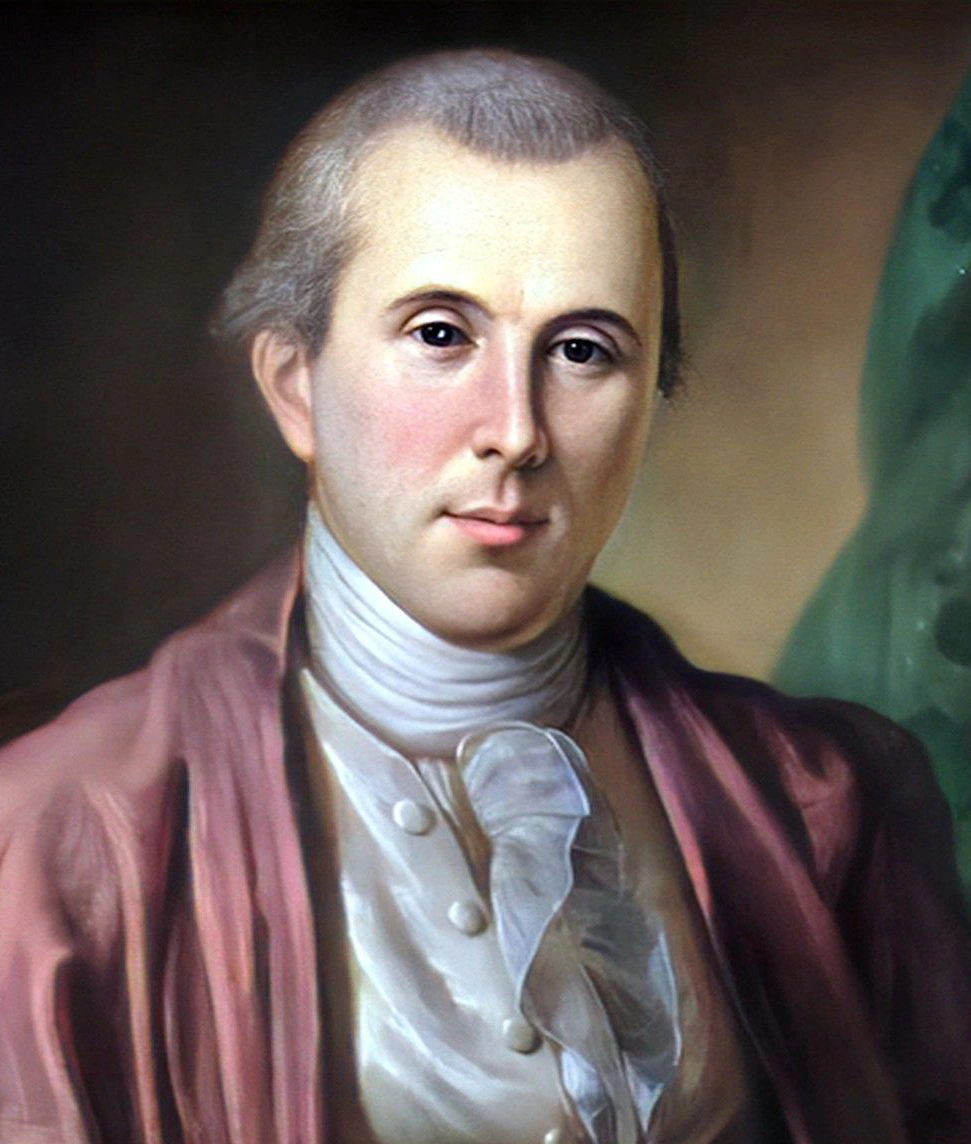
| 4 Quotes | |
| Occup. | Scientist |
| From | USA |
| Born | December 24, 1745 Byberry, Province of Pennsylvania, British America |
| Died | April 19, 1813 Philadelphia, Pennsylvania, USA |
| Aged | 67 years |
| Cite | |
Citation Formats
APA Style (7th ed.)
Benjamin rush biography, facts and quotes. (2026, February 11). FixQuotes. https://fixquotes.com/authors/benjamin-rush/
Chicago Style
"Benjamin Rush biography, facts and quotes." FixQuotes. February 11, 2026. https://fixquotes.com/authors/benjamin-rush/.
MLA Style (9th ed.)
"Benjamin Rush biography, facts and quotes." FixQuotes, 11 Feb. 2026, https://fixquotes.com/authors/benjamin-rush/. Accessed 12 Feb. 2026.
Early Life and Background
Benjamin Rush was born on December 24, 1745, in Byberry Township outside Philadelphia, in the British colony of Pennsylvania. He entered a world where Quaker influence, frontier anxieties, and the Atlantic trade all shaped daily life, and where epidemics could thin families as quickly as politics could divide them. His father, John Rush, a gunsmith and farmer, died when Benjamin was young, leaving the household under the guidance of his mother, Susanna Hall Rush, whose piety and discipline helped form his lifelong habit of moral accounting.Philadelphia, the nearest metropolis and one of North America's intellectual capitals, offered Rush a paradox he never stopped trying to resolve - a city of commerce and refinement that also suffered poverty, alcoholism, and recurring outbreaks of disease. Early exposure to illness and civic ferment drew him toward medicine not only as a craft but as a public calling, setting the pattern for a life in which private practice, political activism, and moral reform were rarely separable.
Education and Formative Influences
Rush was educated at the College of New Jersey (later Princeton), graduating in 1760, and then apprenticed in medicine under the eminent Philadelphia physician John Redman; he took an M.D. at the University of Edinburgh in 1768, where Scottish Enlightenment ideas about civic virtue, empiricism, and improvement blended with rigorous clinical training. Further study in London and Paris exposed him to European hospitals and to debates over inoculation, contagion, and the physician's social obligations - lessons he carried back to Pennsylvania when he began lecturing and writing with the confidence of a man who believed medicine could help remake society.Career, Major Works, and Turning Points
Returning to Philadelphia, Rush became a leading physician and professor (including at the College of Philadelphia and later the University of Pennsylvania), helped found institutions and causes, and moved steadily into revolutionary politics; he signed the Declaration of Independence in 1776 and served as Surgeon General of the Middle Department of the Continental Army, resigning amid disputes over military medical administration. In the new republic he wrote prolifically on public health and social reform, supported abolition and gradual emancipation, advocated temperance, and became a prominent voice in early American psychiatry at the Pennsylvania Hospital. His most famous and controversial professional turn came during the 1793 yellow fever epidemic in Philadelphia, when he championed aggressive bleeding and purging as lifesaving measures; the crisis made him both celebrated and attacked, and his clashes with fellow physicians and newspaper critics helped define the early republic's noisy, politicized medical culture.Philosophy, Style, and Themes
Rush understood science as a moral enterprise and the republic as a fragile experiment in character. He insisted that politics required ethical ballast, warning that "Liberty without virtue would be no blessing to us". That conviction linked his medical writings to his reform campaigns: disease, in his view, was not merely biological misfortune but also a social signal - intensified by filth, intemperance, despair, and inequality. His mind sought unifying principles, sometimes to the point of overconfidence, and he could translate complex suffering into a brisk program of correction.His style was combative, candid, and didactic, reflecting both Enlightenment disputation and a preacher's urgency. He defended argument as a tool of purification rather than a threat, declaring, "Controversy is only dreaded by the advocates of error". Yet he also studied the mind's vulnerabilities with a clinician's tenderness, especially in melancholy and "low spirits", where he cautioned that forced gaiety could worsen injury: "Mirth, and even cheerfulness, when employed as remedies in low spirits, are like hot water to a frozen limb". Taken together, these lines show a psychology split between certainty and sympathy - a man driven to set things right, but attentive to how easily the human spirit can be damaged by blunt remedies, whether social or medical.
Legacy and Influence
Rush died in Philadelphia on April 19, 1813, leaving a legacy that is simultaneously foundational and contested: a pioneering American physician-educator, an early reformer of mental health care and public hygiene, and a revolutionary statesman who tied medicine to republican virtue. His therapeutic methods, especially during yellow fever, are now frequently criticized, but his larger imprint endures in the idea that health is public, that hospitals and schools are civic instruments, and that scientific authority must answer to moral scrutiny. In biographies and medical history alike, Rush remains emblematic of the early United States - ambitious, argumentative, reform-minded, and convinced that the fate of bodies and the fate of the republic were inseparable.Our collection contains 4 quotes written by Benjamin, under the main topics: Wisdom - Truth - Freedom - Sadness.
Other people related to Benjamin: William Henry Harrison (President), William Cobbett (Politician), James McHenry (Politician)
Benjamin Rush Famous Works
- 1811 Sixteen Introductory Lectures (Book)
- 1810 Observations on the Diseases of the Army in Camp and Garrison (Book)
- 1798 Essays, Literary, Moral & Philosophical (Book)
- 1789 Medical Inquiries and Observations (Book)
- 1786 A Plan for the Establishment of Public Schools and the Diffusion of Knowledge in Pennsylvania (Book)
- 1773 An Address to the Inhabitants of the British Settlements in America, Upon Slave-Keeping (Book)
Source / external links