
Billy Wilder Biography Quotes 26 Report mistakes
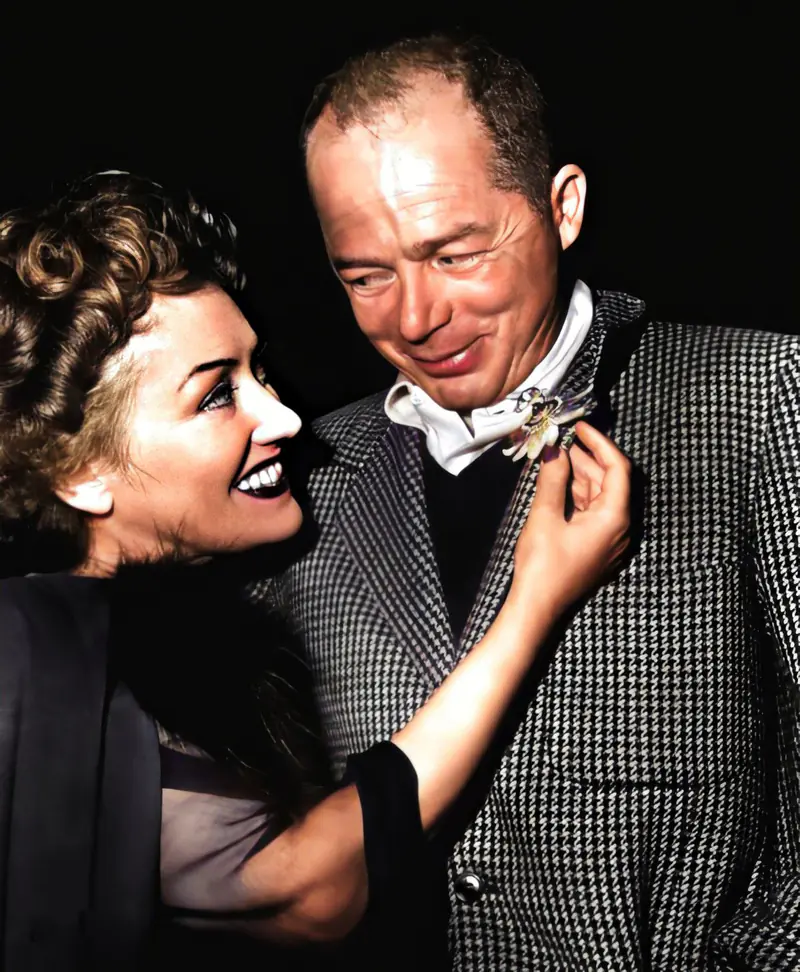
| 26 Quotes | |
| Occup. | Director |
| From | USA |
| Born | June 22, 1906 |
| Died | March 27, 2002 |
| Aged | 95 years |
Billy Wilder was born in 1906 in a part of the Austro-Hungarian Empire that is now Poland. Raised in a Jewish family and educated in Vienna, he found early work as a reporter and feuilletonist before moving to Berlin, where the film industry and a lively press culture offered wider opportunity. In Berlin at the end of the silent era he shifted from journalism to screenwriting, contributing to sophisticated comedies and city stories. His early landmark was the semidocumentary feature People on Sunday (1929), made in the German capital with fellow up-and-comers Robert Siodmak, Edgar G. Ulmer, and a young Fred Zinnemann participating. The rise of Nazism ended this phase. Wilder left Germany for Paris, then, in the mid-1930s, emigrated to the United States, part of a broad exodus of European talent that reshaped Hollywood.
Hollywood Apprenticeship and the Brackett Years
Arriving in Hollywood with limited English, Wilder built a career through collaborative screenwriting. A decisive partner was Charles Brackett, a patrician novelist and critic whose sensibility complemented Wilder's sharper, more sardonic edge. Together they wrote urbane comedies and dramas, contributing to films with leading directors and stars. Their sophistication meshed perfectly with Ernst Lubitsch, whose light touch Wilder revered; Wilder and Brackett co-wrote Ninotchka, directed by Lubitsch and headlined by Greta Garbo. Work for Mitchell Leisen on Midnight and Hold Back the Dawn honed their narrative craft but also convinced Wilder that to protect his scripts he had to direct.
Becoming a Director
Wilder's Hollywood directing career began with The Major and the Minor (1942), starring Ginger Rogers and Ray Milland. He followed with the World War II thriller Five Graves to Cairo (1943), featuring Erich von Stroheim. Double Indemnity (1944), adapted with Raymond Chandler from James M. Cain, established Wilder as a master of film noir. Barbara Stanwyck and Fred MacMurray embodied the film's hard edges, while Wilder's collaboration with cinematographer John F. Seitz and composer Miklos Rozsa helped crystallize the look and feel of American screen fatalism. The Lost Weekend (1945), again with Milland and co-written with Brackett, tackled alcoholism with an unsparing modernity, winning major Academy Awards and the top prize at Cannes, an extraordinary double that announced Wilder's international stature.
Sunset Boulevard and the Close of a Partnership
Sunset Boulevard (1950) fused Wilder's caustic wit with Hollywood self-scrutiny. Written with Brackett and D. M. Marshman Jr., and starring Gloria Swanson, William Holden, and von Stroheim, it dissected fame, delusion, and the industry's changing tides. The film's success coincided with the Wilder-Brackett split, ending one of Hollywood's most fruitful writing teams. Wilder continued with Stalag 17 (1953), a POW drama that earned Holden an Oscar, and Sabrina (1954), which paired Audrey Hepburn with Humphrey Bogart and Holden, blending romance with social observation.
The Diamond Collaboration and Comedic Mastery
In the late 1950s Wilder formed a new, defining partnership with I. A. L. Diamond. Their first apex was Some Like It Hot (1959), produced with Walter Mirisch's independent company and released through United Artists. With Marilyn Monroe, Jack Lemmon, and Tony Curtis, the film balanced farce with social playfulness and razor-sharp structure. The Apartment (1960), with Lemmon, Shirley MacLaine, and Fred MacMurray, deepened Wilder's mix of comedy and melancholy, capturing postwar corporate life with tenderness and bite; it brought him Oscars for Best Picture (as producer), Best Director, and Best Screenplay with Diamond. The pair sustained momentum with One, Two, Three (James Cagney), Irma la Douce (Lemmon and MacLaine), and The Fortune Cookie (Lemmon and Walter Matthau), the last giving Matthau an Academy Award. Their later run included Avanti!, The Front Page, Fedora, and Buddy Buddy, films that kept faith with Wilder's voice even as audience tastes shifted.
Methods, Themes, and Collaborators
Wilder's work combined clean, classical staging with dialogue that revealed character through irony and precise rhythm. He prized preparation and collaborated closely with actors, eliciting career-defining work from Holden, Swanson, Milland, Lemmon, MacLaine, Monroe, and others. Behind the camera he relied on trusted artisans, notably John F. Seitz in the 1940s and early 1950s, whose shadow-rich images anchored Wilder's darker tales. Wilder applied a journalist's curiosity to American life, exposing self-deception, ambition, and romantic longing without losing sight of human vulnerability.
Personal Life and Perspective
Wilder became an American citizen and made Los Angeles his home, while events in Europe left lasting scars; members of his family, including his mother, were murdered in the Holocaust. He married twice; his first marriage ended in divorce, and in 1949 he married actress Audrey Young, a steady presence in his life and career. An admirer of Lubitsch's elegance, Wilder carried that influence into every genre he touched, from noir to romantic comedy. Away from the set he was known for a collector's eye and a precise, unsentimental wit that shaped his interviews and public persona.
Honors and Legacy
Over a long career Wilder accumulated numerous honors, including multiple Academy Awards and major guild and festival prizes. He received lifetime accolades in the United States and abroad, cementing his status as a central figure of classical Hollywood. His scripts with Charles Brackett and I. A. L. Diamond remain models of structure and tone; his collaborations with Raymond Chandler, Walter Mirisch, and stars such as Marilyn Monroe, Jack Lemmon, Shirley MacLaine, William Holden, and Gloria Swanson defined popular cinema for generations. Wilder died in Los Angeles in 2002, closing the career of an Austrian-born American filmmaker whose blend of sharp intelligence, moral clarity, and entertainment craft still shapes the way movies are written and directed.
Our collection contains 26 quotes who is written by Billy, under the main topics: Witty One-Liners - Motivational - Wisdom - Puns & Wordplay - Writing.
Other people realated to Billy: Audrey Hepburn (Actress), Humphrey Bogart (Actor), Robert Benchley (Comedian), Marlene Dietrich (Actress), Walter Reisch (Scientist), Howard Hawks (Director), Otto Friedrich (Writer), Christopher Hampton (Playwright), Dean Martin (Actor), Barbara Stanwyck (Actress)
Source / external links