
Fanny Kaplan Biography Quotes 1 Report mistakes
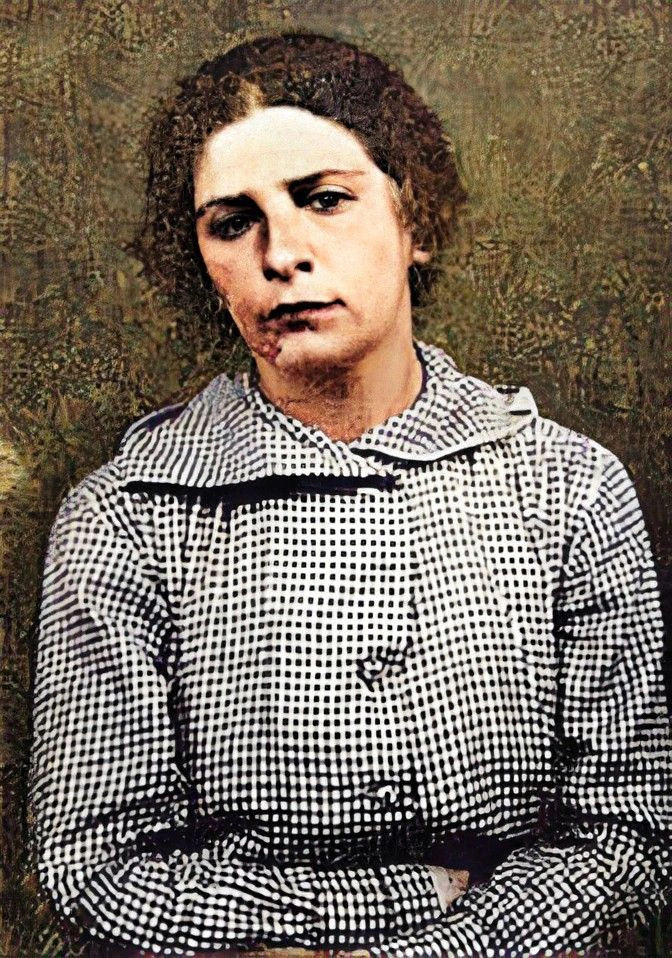
| 1 Quotes | |
| Born as | Fanny Yefimovna Kaplan |
| Occup. | Activist |
| From | Russia |
| Born | February 10, 1890 Volhynian Governorate, Russian Empire (now Ukraine) |
| Died | September 3, 1918 Moscow, Russian SFSR |
| Aged | 28 years |
| Cite | |
Citation Formats
APA Style (7th ed.)
Fanny kaplan biography, facts and quotes. (2026, February 11). FixQuotes. https://fixquotes.com/authors/fanny-kaplan/
Chicago Style
"Fanny Kaplan biography, facts and quotes." FixQuotes. February 11, 2026. https://fixquotes.com/authors/fanny-kaplan/.
MLA Style (9th ed.)
"Fanny Kaplan biography, facts and quotes." FixQuotes, 11 Feb. 2026, https://fixquotes.com/authors/fanny-kaplan/. Accessed 12 Feb. 2026.
Early Life and Background
Fanny Yefimovna Kaplan was born Feiga Roydman on 1890-02-10 in the Russian Empire, into the constrained world of the Pale of Settlement, where Jewish families lived under legal restrictions, periodic violence, and limited educational and professional routes. Her early years unfolded against the background of late-tsarist repression and an accelerating revolutionary underground, with Odessa and other southern cities serving as magnets for radical youth, clandestine printing, and political circles that mixed idealism with fatalism.As a teenager she gravitated toward revolutionary milieus that promised both justice and self-transformation. Like many young radicals of her generation, she encountered the state first as surveillance and punishment rather than as civic life. This pattern - the dream of liberation colliding with coercion - became the inner rhythm of her biography and set the stage for the event by which she is chiefly remembered: the attempted assassination of Vladimir Lenin in 1918.
Education and Formative Influences
Kaplan did not follow a conventional educational path; her education was largely political and experiential, shaped by underground activism, pamphlets, and the ethics of sacrifice common among Socialist-Revolutionary (SR) circles. She was drawn to the SR tradition of revolutionary populism, which valorized the peasantry, the Constituent Assembly, and a moralized idea of political violence, and she learned the discipline of secrecy and the costs of failure through arrest and punishment under the tsarist system.Career, Major Works, and Turning Points
Her key turning points were not publications but arrests and the hardening of convictions under confinement. In the pre-1917 underground she became associated with militants connected to SR and anarchist currents; an early attempt involving explosives led to arrest and a severe sentence, after which imprisonment and hard labor damaged her health and eyesight. The February Revolution of 1917 brought amnesty and release, but the Bolshevik seizure of power in October deepened her antagonism to one-party rule. On 1918-08-30 in Moscow, after Lenin spoke at the Michelson (Mikhelson) Factory, Kaplan shot him; he survived, while she was quickly detained, interrogated, and executed on 1918-09-03. The act became a hinge in Soviet political history, rapidly folded into a narrative that justified intensified repression during the Red Terror.Philosophy, Style, and Themes
Kaplan is best understood less as a lone conspirator than as a product of competing revolutionary legitimacies. The SR imagination treated representative institutions as the revolution's moral anchor, while the Bolsheviks treated party power as the revolution's engine. Her own retrospective claim - "After the Revolution I was freed. I favoured the Constituent Assembly and am still for it". - reveals a psychology organized around a single standard of political legitimacy. Freedom, in this frame, was not personal comfort but the ability to recommit, publicly and inwardly, to an elected assembly as the measure of authority.That same sentence also exposes a tragic rigidity. The words "am still for it". are the cadence of someone who experienced history as a narrowing corridor: the more the Bolshevik state consolidated, the more she interpreted compromise as betrayal. In that moral architecture, violence could appear not as cruelty but as a grim corrective, a way to reopen a political future that seemed to be closing. Kaplan's style, such as it can be reconstructed, was austere and declarative - not literary but confessional - and it suggests a self that turned pain, disability, and years of captivity into a stern entitlement to judge the revolution by its promises.
Legacy and Influence
Kaplan's legacy is inseparable from the uses made of her: in Soviet memory she was a villainous symbol of counterrevolution, while in other accounts she appears as an emblem of SR resistance and the doomed defense of the Constituent Assembly. The historical record remains contested in details, but the central fact endures: her attempt on Lenin's life became a powerful political instrument, cited to legitimize expanded security powers and mass arrests. As a biographical figure, she endures as a case study in how revolutionary hope can fracture into competing moral absolutes - and how an individual, convinced that legitimacy has been stolen, can become both actor and pretext in the making of a new state.Our collection contains 1 quotes written by Fanny, under the main topics: Freedom.
Source / external links