
Fernand Braudel Biography Quotes 2 Report mistakes
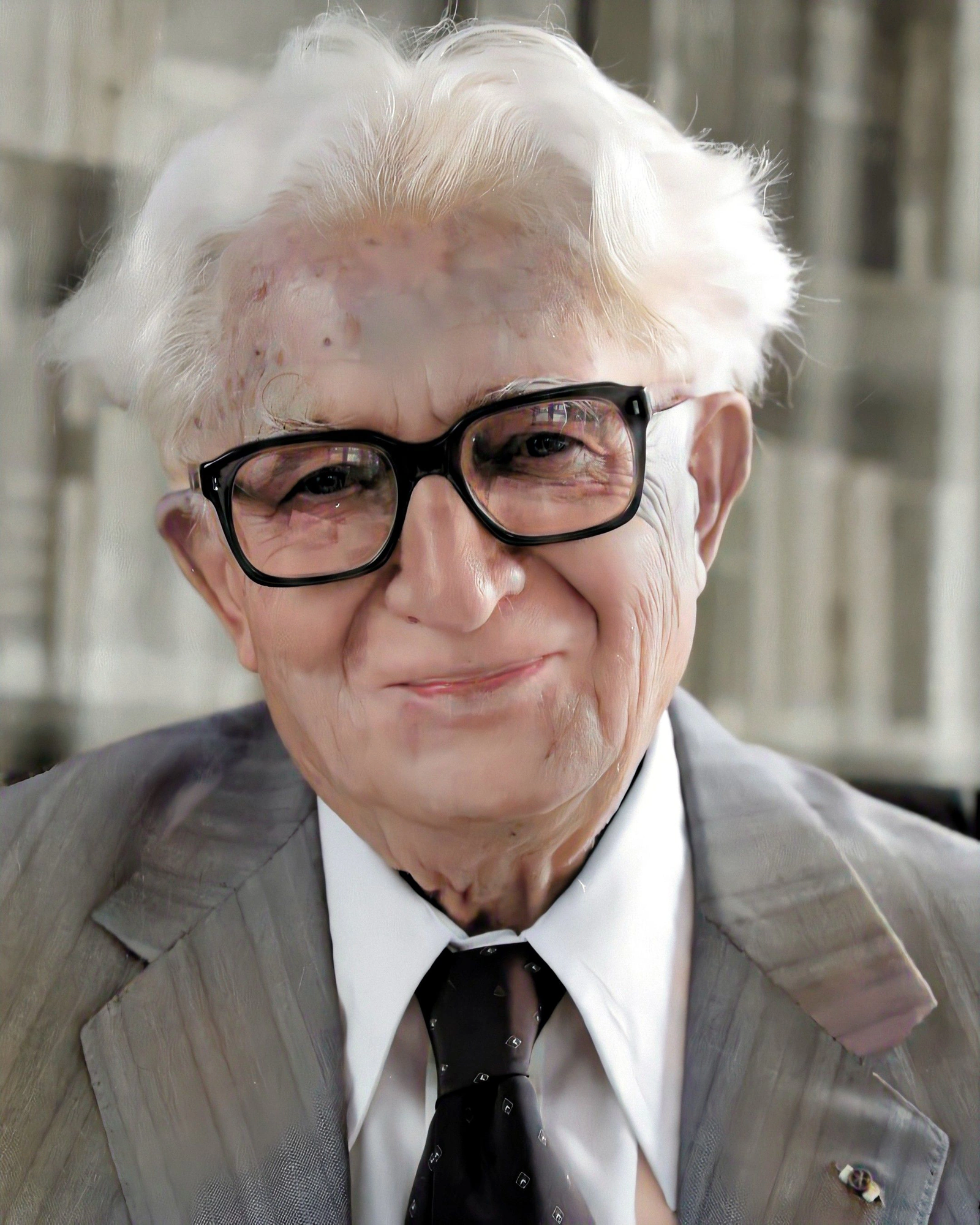
| 2 Quotes | |
| Occup. | Historian |
| From | France |
| Born | August 24, 1902 France |
| Died | November 27, 1985 France |
| Cause | Natural Causes |
| Aged | 83 years |
| Cite | |
Citation Formats
APA Style (7th ed.)
Fernand braudel biography, facts and quotes. (2026, February 11). FixQuotes. https://fixquotes.com/authors/fernand-braudel/
Chicago Style
"Fernand Braudel biography, facts and quotes." FixQuotes. February 11, 2026. https://fixquotes.com/authors/fernand-braudel/.
MLA Style (9th ed.)
"Fernand Braudel biography, facts and quotes." FixQuotes, 11 Feb. 2026, https://fixquotes.com/authors/fernand-braudel/. Accessed 17 Feb. 2026.
Early Life and Background
Fernand Braudel was born on August 24, 1902, in Lumeville-en-Ornois, a rural village in the Meuse department of northeastern France. He grew up in a landscape marked by fields, small market towns, and the deep time of agricultural routines, an environment that would later resonate with his insistence that geography, material life, and inherited constraints shape human possibilities as surely as events and leaders. His family background was modest and provincial; the cadence of village life and the awareness of borders in a region long contested by European powers quietly trained his eye toward continuities that outlast regimes.Braudel came of age as France lived through the aftershock of the First World War, when the nation mourned losses and debated its future amid political instability and economic strain. The interwar years in particular sharpened a generational desire to rethink historical explanation: not merely recounting battles and cabinets, but tracing how societies functioned, endured, and broke. For Braudel, the question of how to write history in an age of mass politics, global markets, and accelerating change became personal - an intellectual search for a scale wide enough to hold both catastrophe and ordinary life.
Education and Formative Influences
He trained as a historian in Paris, passing through the rigorous French system of competitive examinations and archival discipline, but his most decisive formation came through the Annales milieu associated with Lucien Febvre and, by inheritance, Marc Bloch. Braudel began teaching abroad in Algeria in the 1920s and early 1930s, where Mediterranean horizons, colonial hierarchies, and everyday exchange suggested a history larger than the hexagon. Febvre became a mentor and patron, encouraging an approach that blended geography, economics, sociology, and mentalities - a history built from structures and collective life as much as from political narrative.Career, Major Works, and Turning Points
Mobilized during the Second World War, Braudel was captured in 1940 and spent years as a prisoner of war in Germany; there, with limited access to libraries, he drafted the conceptual architecture of his greatest book largely from memory and notes. After the war he defended and published The Mediterranean and the Mediterranean World in the Age of Philip II (1949), a landmark that shifted attention from the king to the sea, the mountains, trade routes, demography, and the stubborn rhythms of climate and transport. He became a central figure of the Annales school, helped shape the Sixth Section of the Ecole Pratique des Hautes Etudes (a precursor to the EHESS), and founded and led the Maison des Sciences de l'Homme in Paris, building institutions that made interdisciplinary social history durable. In later decades he extended his method to global scale in Civilization and Capitalism, 15th-18th Century (three volumes, 1979), and reflected programmatically on historical time in The Structures of Everyday Life and in his methodological writings, insisting that the historian must move between temporal layers rather than worship a single clock.Philosophy, Style, and Themes
Braudel's signature was a stratified conception of time: the quick surface of events, the slower pulse of social and economic conjunctures, and the deep, almost geological time of environment and long-standing structures. He framed this most memorably when he observed, “History may be divided into three movements: what moves rapidly, what moves slowly and what appears not to move at all”. That sentence is not only a method but a psychology - a refusal to be mesmerized by headlines, a temperament drawn to what resists panic. His prose often proceeds by accumulation - ports, prices, ships, diets, winds, credit networks - until an apparent solidity emerges, a world built from constraints. Yet he did not deny agency; he relocated it, asking what kinds of choices are possible within a given material and geographic envelope.His work also carried a moral-intellectual ambition: to keep history from splintering into specialties that cannot speak to one another, and to keep the human story from becoming either pure determinism or pure anecdote. “Everything must be recaptured and relocated in the general framework of history, so that despite the difficulties, the fundamental paradoxes and contradictions, we may respect the unity of history which is also the unity of life”. The drive for unity hints at a mind uneasy with fragmentation, a scholar who sought coherence without simplification. In the Mediterranean, this meant treating empire, faith, piracy, ecology, and commerce as cohabiting systems; in Civilization and Capitalism, it meant seeing capitalism not as a single engine but as layered practices - everyday subsistence, market exchange, and high finance - interacting across cities and seas.
Legacy and Influence
Braudel died on November 27, 1985, leaving behind not a school of disciples who copy his sentences, but a durable shift in what historians think history can be. He legitimized the study of material life, networks, and space; he helped make quantitative and interdisciplinary approaches respectable without reducing the past to statistics; and he offered a model of "big" history grounded in archives rather than speculation. Critics have argued that his structures can overshadow contingency and political struggle, yet even those who dispute him often do so using the temporal and spatial scales he popularized. In an era still torn between event-driven narratives and structural explanations, Braudel remains a reference point for anyone trying to write history with both breadth and depth, where lives unfold inside landscapes, and events flicker atop long, powerful currents.Our collection contains 2 quotes written by Fernand, under the main topics: Wisdom - Time.
Source / external links