
John Stuart Mill Biography Quotes 45 Report mistakes
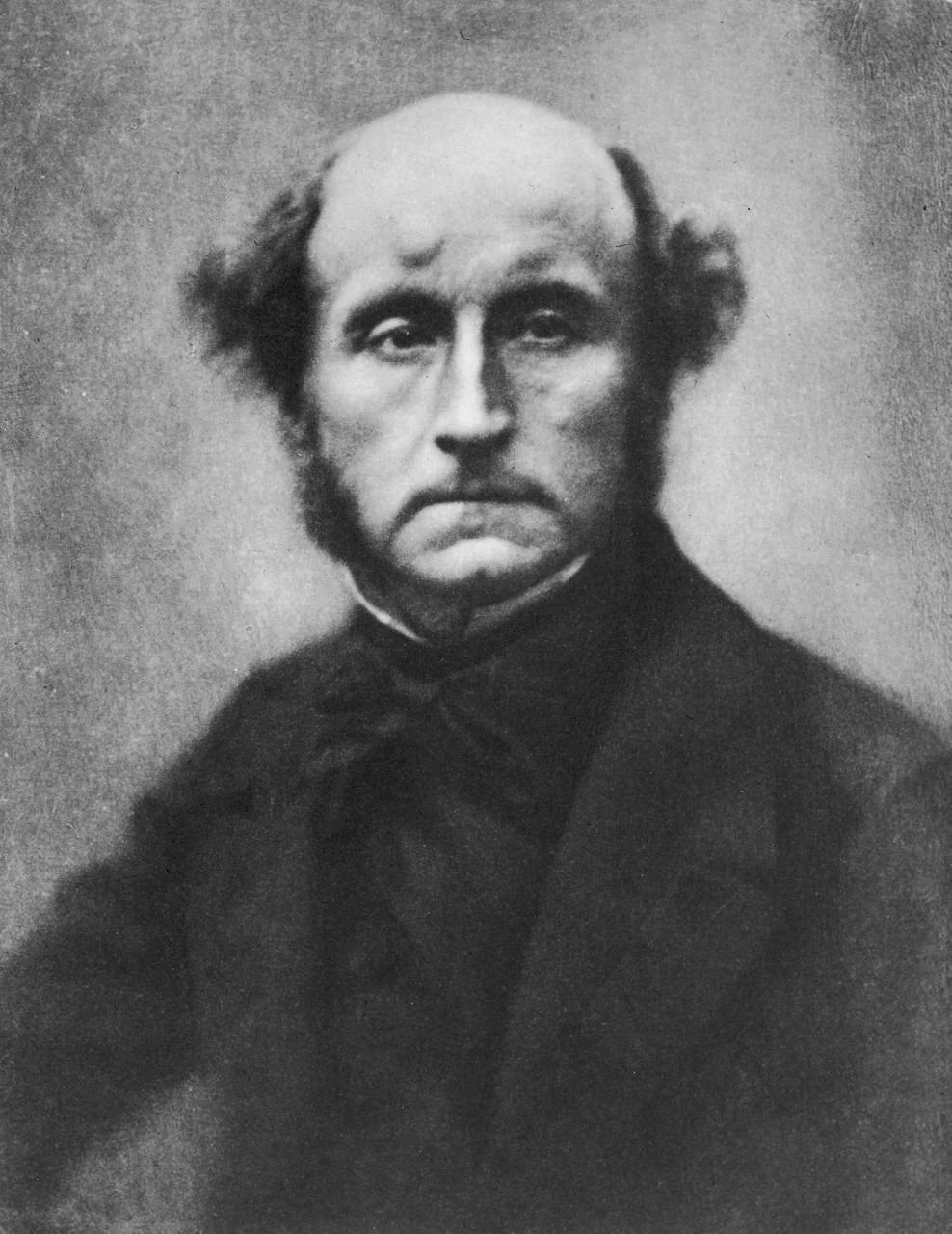
| 45 Quotes | |
| Occup. | Philosopher |
| From | England |
| Born | May 20, 1806 |
| Died | May 8, 1873 |
| Aged | 66 years |
| Cite | |
Citation Formats
APA Style (7th ed.)
John stuart mill biography, facts and quotes. (2026, February 2). FixQuotes. https://fixquotes.com/authors/john-stuart-mill/
Chicago Style
"John Stuart Mill biography, facts and quotes." FixQuotes. February 2, 2026. https://fixquotes.com/authors/john-stuart-mill/.
MLA Style (9th ed.)
"John Stuart Mill biography, facts and quotes." FixQuotes, 2 Feb. 2026, https://fixquotes.com/authors/john-stuart-mill/. Accessed 12 Feb. 2026.
Early Life and Background
John Stuart Mill was born on May 20, 1806, in Pentonville, London, into a household that treated childhood as a political experiment. His father, James Mill, a hard-driving disciple of Jeremy Bentham, set out to manufacture a rational reformer for an age of rotten boroughs, censorship, and inherited privilege. The result was a boy whose earliest memories were of lessons, not play: Greek before adolescence, logic before leisure, and the constant pressure to become useful to the utilitarian cause.That pressure produced brilliance and a private cost. Mill grew up amid the crosscurrents of post-Napoleonic Britain - industrialization, widening literacy, and fierce arguments over liberty and parliamentary reform - yet his emotional life remained constricted by design. He later described himself as trained to be a "reasoning machine", an identity that sharpened his analytical powers while leaving him vulnerable to inner emptiness once the youthful certainty of his mission cracked.
Education and Formative Influences
Mill's education was largely home-built and relentless: Greek and Latin authors, mathematics, Aristotle's logic, political economy, and the utilitarian canon, combined with argument drills intended to inoculate him against dogma. In his teens he read Bentham, encountered radical circles in London, and briefly tasted the exhilaration of intellectual comradeship. A decisive rupture came in 1826, when he suffered a mental crisis - not merely exhaustion but the collapse of meaning when he asked whether his reformist goals, if achieved, would make him happy. Recovery came through new sources his father had distrusted: Wordsworth's poetry, Coleridgean criticism, and a widening engagement with French thought, all of which taught him that a humane politics needed feelings, imagination, and individuality, not only calculation.Career, Major Works, and Turning Points
Mill spent most of his working life at the East India Company (1823-1858), rising to a senior role drafting policy, while writing essays that made him the era's most influential liberal mind. His landmark works arrived as Victorian Britain debated democracy, empire, and moral authority: A System of Logic (1843) argued for empirical methods and the social sciences; Principles of Political Economy (1848) married classical economics to reformist aims; On Liberty (1859) defended individuality against social tyranny; Utilitarianism (1861) refined the doctrine by distinguishing higher and lower pleasures; and Considerations on Representative Government (1861) explored institutions that could educate citizens while checking power. The turning point of his inner and public life was his partnership with Harriet Taylor, later his wife (1851), whose intellectual companionship deepened his sensitivity to domestic power and female subordination; after her death (1858) he channeled grief into work, including The Subjection of Women (1869). As a Liberal MP for Westminster (1865-1868), he supported electoral reform, Irish land justice, and - most memorably - an amendment to replace "man" with "person" in the Reform Act, an early parliamentary push for women's suffrage.Philosophy, Style, and Themes
Mill's philosophy is a portrait of a mind trying to reconcile two imperatives: the utilitarian demand for measurable human betterment and the romantic demand that persons be more than instruments of aggregate happiness. His prose is plain, patient, and judicial, built to persuade readers who disagree; he stages objections, concedes what is fair, and then turns the argument with carefully weighted distinctions. That method was not only intellectual etiquette but self-therapy - a way of ensuring that inherited certainties would never again rule him unexamined.The core of his mature liberalism is the harm principle and an almost visceral suspicion of social conformity. "The only purpose for which power can be rightfully exercised over any member of a civilized community, against his will, is to prevent harm to others. His own good, either physical or moral, is not sufficient warrant". He aimed this as much at majority opinion and moral busybodies as at the state, diagnosing "The despotism of custom" as a force that can feel benevolent while quietly crushing growth . Yet Mill was not a libertine celebrant of impulse; his freedom is disciplined, because character is formed by choosing and bearing consequences. That is why he insisted that genuine understanding ripens through lived ordeal: "There are many truths of which the full meaning cannot be realized until personal experience has brought it home". The psychological signature across his work is a man who learned, painfully, that progress needs both argument and the inner enlargement that only experience and independent living can supply.
Legacy and Influence
Mill died on May 8, 1873, in Avignon, France, and was buried beside Harriet, the relationship that most shaped his later conscience. His afterlife has been unusually durable because his questions remain civic rather than merely academic: how to protect dissent, how to justify coercion, how to dignify individuality without eroding solidarity, and how to extend equal standing across gender and class. He became a cornerstone for modern liberal theory, an ancestor of free speech jurisprudence, and a continuing reference point in debates over paternalism, privacy, education, and "harm". Even his tensions - between utility and rights, empire and reform, elitism and democracy - have kept him relevant, because they mirror the contradictions of modernity itself.Our collection contains 45 quotes written by John, under the main topics: Witty One-Liners - Ethics & Morality - Wisdom - Truth - Justice.
Other people related to John: Thomas Love Peacock (Author), Walter Bagehot (Author), Nassau William Senior (Economist), Millicent Fawcett (Activist), James Martineau (Philosopher), Hippolyte Taine (Critic), John Sterling (Author), Wilhelm von Humboldt (Educator), Robert Heilbroner (Economist), Henry Charles Carey (Economist)
John Stuart Mill Famous Works
- 1873 Autobiography (Book)
- 1869 The Subjection of Women (Book)
- 1861 Utilitarianism (Book)
- 1859 On Liberty (Book)
- 1848 Principles of Political Economy (Book)
- 1843 A System of Logic, Ratiocinative and Inductive (Book)