
Joseph Haydn Biography Quotes 4 Report mistakes
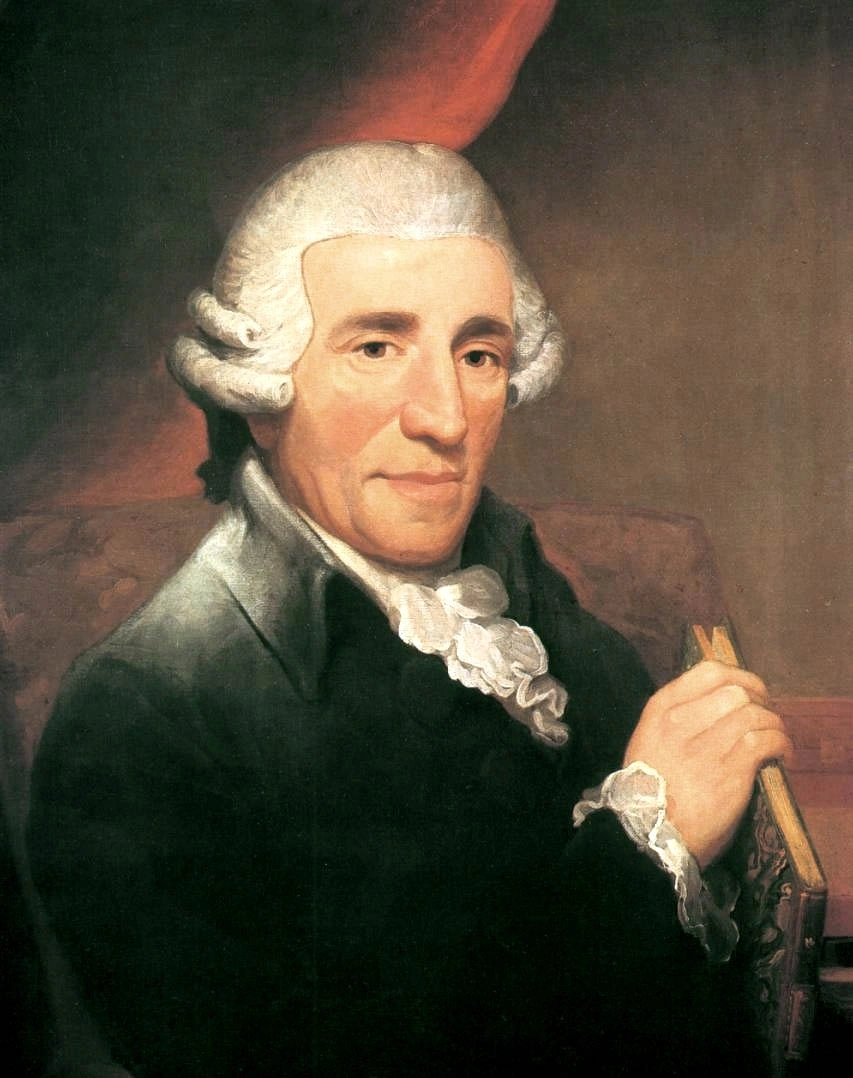
| 4 Quotes | |
| Born as | Franz Joseph Haydn |
| Occup. | Composer |
| From | Austria |
| Born | March 31, 1732 Rohrau, Lower Austria |
| Died | May 31, 1809 Wien, Austria |
| Aged | 77 years |
| Cite | |
Citation Formats
APA Style (7th ed.)
Joseph haydn biography, facts and quotes. (2026, February 11). FixQuotes. https://fixquotes.com/authors/joseph-haydn/
Chicago Style
"Joseph Haydn biography, facts and quotes." FixQuotes. February 11, 2026. https://fixquotes.com/authors/joseph-haydn/.
MLA Style (9th ed.)
"Joseph Haydn biography, facts and quotes." FixQuotes, 11 Feb. 2026, https://fixquotes.com/authors/joseph-haydn/. Accessed 12 Feb. 2026.
Early Life and Education
Franz Joseph Haydn was born in 1732 in Rohrau, a small village on the border of Austria and Hungary, to Mathias Haydn, a wheelwright, and Maria Koller, a cook. Music was part of the household, and his talent emerged early. Around the age of six he was sent to the nearby town of Hainburg to live with Johann Matthias Frankh, a schoolmaster and choirmaster who gave him his first structured training. His clear treble voice led to a place in the choir at St. Stephen's Cathedral in Vienna under Georg Reutter. There he learned practical musicianship, but as his voice broke he could no longer remain, and he had to make his way in Vienna by teaching, accompanying, and studying on his own. He deepened his craft by studying theoretical works such as Johann Joseph Fux's Gradus ad Parnassum and by seeking guidance from the renowned composer and singing teacher Nicola Porpora, for whom he worked as an accompanist.First Appointments and Marriage
Haydn's first steady patron was Count Karl Joseph Franz Morzin, who employed him as Kapellmeister in the late 1750s. This position gave him responsibility for instrumental music and an opportunity to develop the genres that would define his legacy, including symphonies and string quartets. In 1760 he married Maria Anna (Anna) Keller of Vienna. The marriage, though lasting, produced no children and was not particularly harmonious; Haydn's professional commitments kept him away from home for long stretches. During these years his younger brother Michael Haydn emerged as a gifted composer in his own right, and the brothers remained in respectful contact throughout their careers.Service to the Esterhazy Family
In 1761 Haydn entered the service of the Esterhazy princes, first under Paul Anton and, after 1762, under Nikolaus I, whose passion for music and the baryton instrument shaped Haydn's work for decades. Promoted to full Kapellmeister, he oversaw a resident ensemble at the Esterhaza palaces and wrote an extraordinary stream of music: symphonies, operas for the court theater, chamber works, sacred pieces, and the large corpus of baryton trios for Nikolaus. The court's concertmaster Luigi Tomasini and the virtuoso cellist Anton Kraft were important collaborators who inspired solo parts of uncommon character and difficulty. In this semi-isolated environment Haydn honed a distinctive voice, later remarking that, cut off from outside influence, he was forced to become original.Friendship with Mozart and Circle in Vienna
Regular visits to Vienna brought Haydn into contact with leading figures. His friendship with Wolfgang Amadeus Mozart in the 1780s was particularly meaningful. Mozart dedicated a set of six string quartets to Haydn, acknowledging him as a master of the genre, and Haydn publicly praised Mozart's rare talent, words recorded in a letter to Leopold Mozart. The exchange of ideas between the two deepened Haydn's exploration of quartet writing. Another central figure was Baron Gottfried van Swieten, a patron who promoted the music of Handel and encouraged large-scale choral works; his influence would later be decisive for Haydn's oratorios. Haydn also mentored younger composers such as Ignaz Pleyel, whose career and publications disseminated Haydn's style across Europe.London Journeys and International Fame
The death of Nikolaus I in 1790 led his successor to reduce the court's musical establishment. Freed from daily duties, Haydn accepted invitations from the violinist and impresario Johann Peter Salomon to visit London. Two extended stays (1791, 1792 and 1794, 1795) brought Haydn immense public acclaim. He led performances of new symphonies written for large concert halls, works now known as the London symphonies, including pieces later nicknamed Surprise, Military, and The Clock. In England he also received an honorary doctorate from the University of Oxford, leading to the association of his Symphony No. 92 with the title Oxford. London society embraced him; among his acquaintances was Rebecca Schroeter, who encouraged and supported him during his time there. The experience of hearing Handel's oratorios performed with massive forces widened his conception of choral writing and planted seeds for his late masterpieces.Teacher of Beethoven and Later Works
Back in Vienna, Haydn accepted Ludwig van Beethoven as a pupil after the younger composer returned from Bonn in the early 1790s. Though their relationship had complexities, Haydn's guidance in counterpoint and form left a mark, and Beethoven dedicated his Op. 2 piano sonatas to his elder colleague. At the same time, Haydn, encouraged by van Swieten and drawing on his London impressions, composed The Creation and The Seasons, grand oratorios that combine vivid pictorial writing with learned counterpoint. He also wrote late quartets, notably the Op. 76 set, which display daring harmonic turns, thematic economy, and a command of instrumental dialogue that inspired generations. For the Esterhazy family, now under Nikolaus II, he provided annual Mass settings for Princess Maria Hermenegild, including the Heiligmesse, Paukenmesse, and the work later known as the Nelson Mass.Style, Innovations, and Legacy
Haydn's contribution to musical form and ensemble writing is foundational. In symphonies and quartets he refined sonata procedures, developed motivic unity across movements, and exploited contrast, wit, and surprise as structural devices. His slow introductions, monothematic expositions, and finales that balance learned counterpoint with popular style became models. He treated the string quartet as a conversation among equals, an approach shaped in part by close work with players such as Luigi Tomasini and Anton Kraft. His humor, from the theatrical device of the Farewell Symphony to rhythmic play in chamber music, served expressive ends rather than mere novelty. As a choral composer he fused contrapuntal craft, learned from Fux and sharpened through Handel's example, with a richly colored orchestral palette. The immediate circle around him, Mozart, Beethoven, Pleyel, van Swieten, Salomon, and the Esterhazy princes, both drew from and amplified his achievements, ensuring a wide and lasting impact.Final Years
Haydn's final decade brought public honors and declining health. He continued to appear at performances of his oratorios and to receive visitors who regarded him as the patriarch of the new instrumental age. Though large projects became difficult, he maintained his interest in sacred music and revisited earlier works. Vienna, where he spent his last years, recognized him as a cultural figurehead. He died there in 1809, closing a life that had begun in rural Rohrau and had unfolded across courts and concert halls from Eisenstadt and Esterhaza to London. Through the devotion of patrons like Nikolaus I and Nikolaus II Esterhazy, the collegial exchange with Mozart, the mentorship of Beethoven, and the enterprise of Salomon and van Swieten, Haydn's career mapped the rise of public concert life and the maturation of the classical style. His music, shaped by collaboration with family, patrons, teachers, and players, became a cornerstone of the symphony, the string quartet, and the oratorio.Our collection contains 4 quotes written by Joseph, under the main topics: Witty One-Liners - Music - Learning - Self-Improvement.
Other people related to Joseph: Ludwig van Beethoven (Composer), Carl Philipp Emanuel Bach (Musician)
Source / external links