
Linda Tripp Biography Quotes 11 Report mistakes
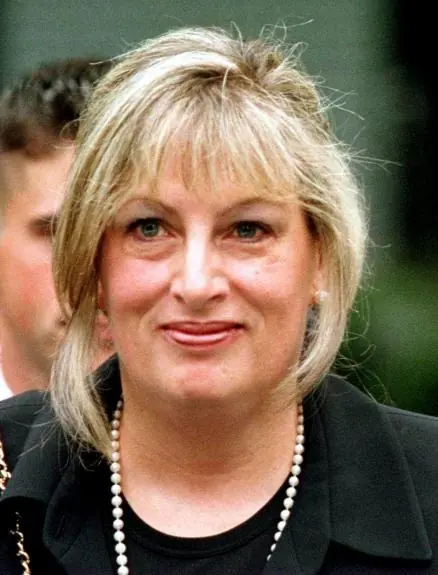
| 11 Quotes | |
| Born as | Linda Rose Carotenuto |
| Known as | Linda Rose Tripp |
| Occup. | Celebrity |
| From | USA |
| Born | November 24, 1949 Jersey City, New Jersey |
| Age | 76 years |
Linda Tripp was born Linda Rose Carotenuto on November 24, 1949, in Jersey City, New Jersey. Raised in the United States, she came of age during the tumult of the 1960s and moved into adulthood with a strong interest in government service. Her early years provided a conventional American backdrop for what would later become an extraordinarily public life, marked by her proximity to power and by choices that would reverberate through American politics.
Entry into Public Service
Tripp entered government work as a civilian employee, beginning a long tenure that would place her at various corners of the federal bureaucracy. By the late 1980s and early 1990s, she was working in Washington, D.C., and eventually found herself in the White House during the administration of President George H. W. Bush. She remained when President Bill Clinton took office in 1993, an unusual continuity that reflected both her experience and the institutional need for nonpartisan civil servants. Her assignments were administrative and clerical in nature, but they were embedded close to the nerve center of executive decision-making, giving her a front-row seat to the rhythms, stresses, and personalities of the modern presidency.
White House and Pentagon Years
During the early Clinton years, Tripp worked in the White House before being transferred in 1994 to the Department of Defense, where she took a position in public affairs at the Pentagon. The move placed her in a sprawling, high-profile organization and broadened her network of colleagues. It was at the Pentagon, in 1996, that she met Monica Lewinsky, a former White House intern who had been reassigned to the Department of Defense. The two women, separated by a generation but bound by workplace camaraderie, developed a friendship that became central to both of their lives and, ultimately, to the course of national politics.
Relationship with Monica Lewinsky
Tripp's friendship with Lewinsky grew over lunches and long conversations. As trust deepened, Lewinsky confided that she had been involved in an intimate relationship with President Bill Clinton while she was an intern at the White House. Tripp, older and steeped in years of government service, reacted in a way that would define her public identity. Believing the information had legal and historical importance, and encouraged by the literary agent Lucianne Goldberg, she began secretly recording telephone conversations with Lewinsky in 1997. The recordings captured Lewinsky discussing her relationship with the president, including details that became crucial to investigators and the press. Tripp also encouraged Lewinsky to preserve a dress that would later become physical evidence.
Cooperation with Investigators
In January 1998, with the Paula Jones civil suit against President Clinton underway and the Office of Independent Counsel led by Kenneth Starr scrutinizing possible wrongdoing, Tripp provided the recordings to federal investigators and agreed to cooperate. She obtained immunity from the Office of Independent Counsel in exchange for her testimony and evidence. On January 16, 1998, the FBI and prosecutors confronted Lewinsky at a mall and nearby hotel in the Pentagon City area; Tripp's cooperation was key to that operation. The scandal swiftly engulfed the Clinton White House and the country, implicating not only President Clinton and Monica Lewinsky but also senior figures such as Hillary Rodham Clinton and presidential confidants like Vernon Jordan, who had been assisting Lewinsky with job prospects during the unfolding investigation.
The recorded conversations and corroborating evidence upended the president's public denials, contributed to a crisis of trust, and intensified the legal and political stakes. Tripp testified before a grand jury, and the material she provided featured prominently in the Starr investigation and in subsequent congressional proceedings that led to the impeachment of President Clinton by the House of Representatives in December 1998. He was later acquitted by the Senate.
Public Fallout and Legal Actions
Tripp's actions were polarizing. To some, she was a whistleblower who exposed dishonesty at the highest level of government; to others, she was a betrayer of a younger friend's confidences. The recordings themselves raised complicated questions because Maryland, where some calls were made or recorded, requires the consent of all parties for lawful taping. Tripp's immunity shielded her from prosecution in connection with the federal investigation, and authorities in Maryland ultimately declined to pursue charges. The public debate about ethics, privacy, and loyalty raged, and the deeply personal nature of the revelations made Tripp a lightning rod in the media.
Her government career ended during the transition out of the Clinton administration. In a separate matter, she sued the U.S. government under the Privacy Act after information from her personnel file was improperly released to a reporter. In 2003, she settled the case, receiving an apology, back pay, and a retroactive promotion, as well as coverage of legal fees. The settlement capped a fraught period in which she faced intense scrutiny, security concerns, and the loss of professional standing.
Later Years
After leaving government, Tripp sought a quieter life outside Washington's political arena. She relocated to Virginia and, with her future husband, the German-born businessman Dieter Rausch, became a small-business owner. Together they operated The Christmas Sleigh, a specialty shop in Middleburg, Virginia, known for European holiday ornaments and decor. The work represented a dramatic shift from the pace and turbulence of federal service, and it allowed Tripp to cultivate a more private existence.
In the years that followed the scandal, Tripp granted occasional interviews reflecting on the events of the 1990s. She remained unapologetic about her decision to cooperate with investigators, framing it as an act of civic responsibility rather than personal betrayal. The broader culture periodically revisited her story through books, documentaries, and dramatizations, prompting fresh waves of commentary about the power dynamics of the Clinton era and about the treatment of Monica Lewinsky in the press. Tripp's own reputation was buffeted by these reassessments, which tended to complicate the once-binary public narrative of hero and villain.
Personal Life
Family life was a stabilizing force for Tripp. In her earlier years she married Bruce Tripp, with whom she had two children, Allison and Ryan. Though the marriage ended in divorce, she remained closely involved in her children's lives. Her later marriage to Dieter Rausch coincided with her move into entrepreneurship and a comparatively lower-profile routine. Friends and family described her as meticulous, organized, and fiercely protective of those within her circle, even as her public image remained entangled in the most dramatic chapter of her career.
Legacy
Linda Tripp's place in American history is inseparable from the Clinton-Lewinsky scandal, an episode that redefined political scandal for a generation. By choosing to document and then disclose the confidences of a friend, she became a catalyst for a constitutional confrontation that tested the boundaries between private misconduct and public responsibility. The key figures around her, Monica Lewinsky, President Bill Clinton, First Lady Hillary Rodham Clinton, Independent Counsel Kenneth Starr, Paula Jones, and Vernon Jordan, were drawn into a vortex that reshaped careers and public perceptions. Lucianne Goldberg's role in urging the recordings added another layer to the ethical debate about ends and means.
Over time, the scandal has been reevaluated in light of changing attitudes about workplace power, consent, and the burdens placed on young women in political environments. Those shifts affected how people viewed Tripp as well. For some, she remained the person who violated a friend's trust; for others, she was the civil servant who believed the truth should be documented and told, no matter the personal cost. What is clear is that her actions altered the trajectory of a presidency, influenced the impeachment process, and left an enduring mark on American political culture.
Linda Tripp died on April 8, 2020, at the age of 70. Her life, moving from an unassuming start in New Jersey to the center of a national crisis and finally to a quiet storefront in Virginia, reflected the unpredictable intersections of private choices and public consequences. She occupies a singular role in the history of the late 20th century, a reminder of how individuals on the periphery of power can, through circumstance and decision, shape the course of national events.
Our collection contains 11 quotes who is written by Linda, under the main topics: Justice - Freedom - Book - Honesty & Integrity - Privacy & Cybersecurity.
Other people realated to Linda: Ken Starr (Lawyer), Michael Isikoff (Journalist)
Source / external links