
Lord Acton Biography Quotes 27 Report mistakes
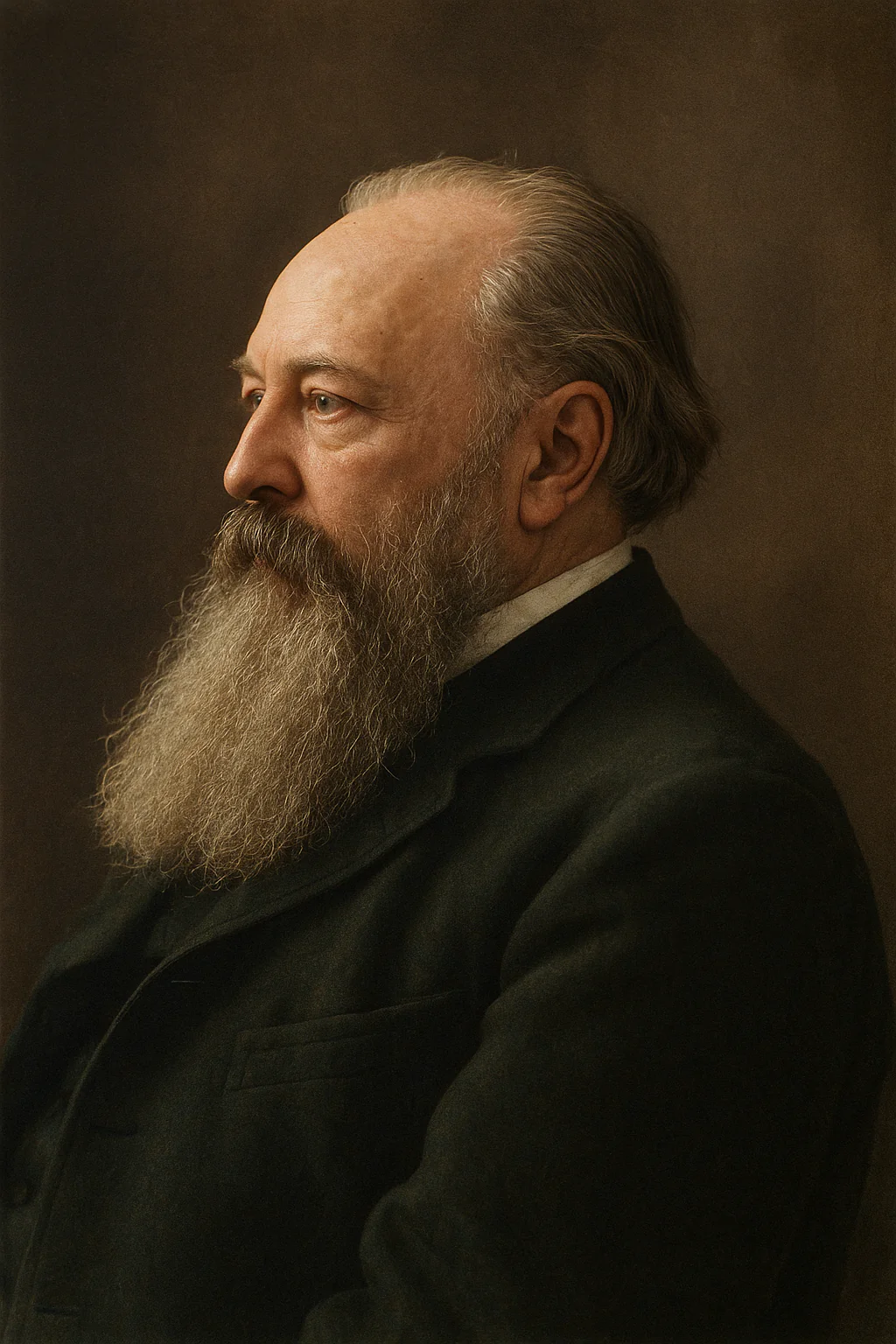
| 27 Quotes | |
| Born as | John Emerich Edward Dalberg-Acton |
| Occup. | Historian |
| From | United Kingdom |
| Born | January 10, 1834 Naples, Kingdom of the Two Sicilies |
| Died | June 19, 1902 Tegernsee, Kingdom of Bavaria, German Empire |
| Aged | 68 years |
| Cite | |
Citation Formats
APA Style (7th ed.)
Lord acton biography, facts and quotes. (2026, February 2). FixQuotes. https://fixquotes.com/authors/lord-acton/
Chicago Style
"Lord Acton biography, facts and quotes." FixQuotes. February 2, 2026. https://fixquotes.com/authors/lord-acton/.
MLA Style (9th ed.)
"Lord Acton biography, facts and quotes." FixQuotes, 2 Feb. 2026, https://fixquotes.com/authors/lord-acton/. Accessed 1 Apr. 2026.
Early Life and Background
John Emerich Edward Dalberg-Acton was born on 10 January 1834 into a transnational Catholic aristocracy whose loyalties crossed borders more easily than confessional suspicions. His father, Sir Ferdinand Dalberg-Acton, had roots in the Holy Roman Empire and served in European diplomacy; his mother, Marie Louise de Dalberg, descended from the Brignole family of Genoa. Acton inherited not only property and title but an instinct for Europe as a single historical theater - and for England as a nation still uneasy about Catholics in public life.His childhood was shaped by displacement and early loss. Ferdinand died in 1837, and in 1840 his mother married Granville Leveson-Gower, later 2nd Earl Granville, a leading Whig statesman. The boy moved in and out of elite English political circles while remaining, by religion and temperament, slightly apart. That double position - intimate with power yet skeptical of it - became an emotional engine of his later historical imagination.
Education and Formative Influences
Acton was educated privately and then on the Continent after Cambridge would not admit Catholics to a degree on equal terms. The decisive influence was the German Catholic historian Ignaz von Dollinger at Munich, whose seminar discipline, archival rigor, and broad European canvas taught Acton to treat history as moral inquiry grounded in evidence. He absorbed the German tradition of source criticism while retaining an English concern for constitutional liberty, and he began building the vast multilingual library that would later make his home at Aldenham and then Cambridge a working instrument of scholarship.Career, Major Works, and Turning Points
Returning to Britain, Acton entered public life as an intellectual Catholic liberal: he edited the Rambler and later the Home and Foreign Review, helped shape debates on religious freedom, and sat as Liberal MP for Carlow Borough (1859-1865). The great turning point was Vatican I (1869-1870) and the declaration of papal infallibility, which he opposed as historically indefensible and politically dangerous; his anguished break with ultramontanism left him a loyal Catholic with a lifelong suspicion of sacralized authority. Though he wrote more essays, reviews, and letters than finished books, his influence traveled through set-piece texts: the celebrated letter to Bishop Mandell Creighton (1887) on judging rulers morally, his lectures and essays on the history of liberty, and his later institutional role as Regius Professor of Modern History at Cambridge (1895). There he planned the Cambridge Modern History, insisting on a cosmopolitan, document-based narrative; he died on 19 June 1902 before completing much of his own synthesis, leaving behind an immense paper trail of reading notes, marginalia, and correspondence.Philosophy, Style, and Themes
Acton practiced a paradoxical form of moral history: he distrusted simple moralizing, yet he believed the historian must not suspend judgment on crimes committed by the powerful. His famous warning, “Power tends to corrupt and absolute power corrupts absolutely”. , was not a slogan but a method - a demand that historians trace how institutions tempt otherwise ordinary people into rationalized cruelty. This conviction grew out of his Catholic experience of centralized authority and his intimate view of British politics through the Granville connection; it made him especially attentive to the ways empires, parties, and churches convert lofty ends into coercive means.His writing style, often aphoristic and densely allusive, reflects an inner life trained by relentless reading and a fear of premature closure. He preferred fragments, lectures, and critical essays because he treated knowledge as a conscience exercise rather than a performance of certainty. “Liberty is not the power of doing what we like, but the right to do what we ought”. captures his austere, duty-centered liberalism: freedom mattered because it enabled moral responsibility, not self-indulgence. Likewise, “Every thing secret degenerates, even the administration of justice; nothing is safe that does not show how it can bear discussion and publicity”. reveals his psychological core - a belief that hidden power deforms both ruler and subject, and that open argument is a form of ethical hygiene.
Legacy and Influence
Acton left no single masterpiece equal to his reputation, but he shaped modern historical conscience: the insistence that archives and moral standards belong together, that liberty is a cumulative European achievement, and that no confession or party can claim immunity from critique. His letter to Creighton became a touchstone in debates about judging past leaders; his Cambridge project helped professionalize collaborative, source-driven history; and his aphorisms entered political vocabulary as warnings against unaccountable authority. In an era of mass politics, empire, and church centralization, Acton modeled the historian as a guardian of liberty - not by shouting, but by reading widely, judging carefully, and refusing to let power write its own absolution.Our collection contains 27 quotes written by Lord, under the main topics: Witty One-Liners - Ethics & Morality - Wisdom - Art - Justice.
Other people related to Lord: Gertrude Himmelfarb (Historian)
Frequently Asked Questions
- Lord Acton freedom quote: One of Acton's notable quotes is 'Liberty is not the power of doing what we like, but the right of being able to do what we ought.'
- Lord Acton Catholic: Lord Acton was a devout Catholic and often wrote on the relationship between religion and politics.
- When did Lord Acton say power corrupts: Lord Acton expressed this idea in a letter to Bishop Mandell Creighton in 1887.
- Lord Acton power corrupts: He coined the phrase 'Power tends to corrupt, and absolute power corrupts absolutely' to suggest that as one's power increases, their moral compass may decline.
- Lord Acton definition of history: Lord Acton viewed history as a means to inform moral judgment, and believed it should be studied to understand the truth about humanity.
- Absolute power corrupts absolutely Lord Acton: Lord Acton famously stated that 'Power tends to corrupt, and absolute power corrupts absolutely.'
- How old was Lord Acton? He became 68 years old
Source / external links