
Marcus Garvey Biography Quotes 24 Report mistakes
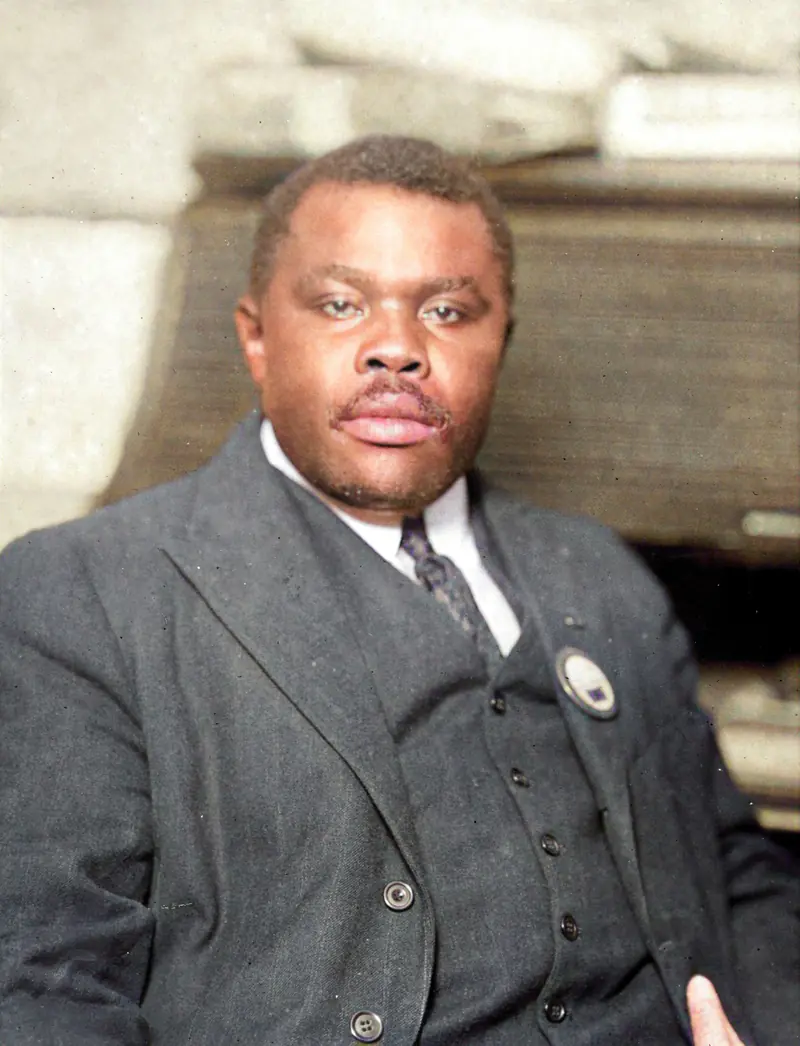
Attr: By Keystone View Company
| 24 Quotes | |
| Born as | Marcus Mosiah Garvey Jr. |
| Occup. | Publisher |
| From | Jamaica |
| Spouses | Amy Ashwood (1919-1922) Amy Jacques (1922) |
| Born | August 17, 1887 St. Ann's Bay, Saint Ann, Jamaica |
| Died | June 10, 1940 London, England, United Kingdom |
| Cause | Stroke |
| Aged | 52 years |
Marcus Mosiah Garvey Jr. was born on August 17, 1887, in St. Ann’s Bay, Jamaica, then part of the British colonial Caribbean. He was the youngest of eleven children born to Marcus Mosiah Garvey Sr., a mason and bookkeeper, and Sarah Jane Richards, a domestic worker. Garvey’s parents instilled in him a love for learning; his father maintained a substantial library that Marcus eagerly explored. Economic hardship and racial discrimination marked Garvey’s early life, shaping his later dedication to uplifting people of African descent worldwide.
Education and Early Influences
Garvey attended elementary school in St. Ann’s Bay but left for Kingston as a teenager to work and further his education. In Kingston, he took up work as a printer’s apprentice and became involved with labor unions and journalism. His first-hand experiences of poverty, exclusion, and the struggles of black workers deeply influenced his worldview and political ambitions.
Garvey’s Travels and Awakening
In 1910, Garvey set out to explore a broader world, traveling to Central America, London, and other parts of Europe. While in London, he worked for the African Times and Orient Review, where he encountered Pan-Africanist thinkers who dreamed of unity and self-determination for African peoples. These experiences intensified his belief in black pride and the need for social and economic advancement for people of African descent.
The Founding of the UNIA
Upon returning to Jamaica in 1914, Garvey launched the Universal Negro Improvement Association (UNIA), aiming to uplift and unite people of African descent everywhere. The UNIA’s motto was “One God! One Aim! One Destiny!” It began as a small discussion group but soon blossomed into a mass movement.
Expansion in the United States
In 1916, Garvey immigrated to the United States, settling in Harlem, New York, then a thriving center of black culture and politics. He quickly recognized the potential for his movement to flourish among African Americans. With charismatic oratory and grand vision, Garvey mobilized thousands. The UNIA held large conventions, organized parades, and adopted a “Back to Africa” program, a plan to establish an independent black nation in Africa. He also founded the Black Star Line, a shipping company intended to aid commerce between Africa and its diaspora.
Publishing and Media Endeavors
Publishing was central to Garvey’s activism. He established and edited the influential newspaper, The Negro World, which reached audiences throughout the Americas, Africa, and Europe. The paper became a key tool in spreading his ideas of black pride, self-reliance, and unity.
Supporters, Allies, and Adversaries
Garvey worked alongside and was supported by figures such as Amy Ashwood Garvey (his first wife and early UNIA co-founder) and Amy Jacques Garvey (his second wife and chief aide, who later became an important chronicler of his life and movement). The UNIA drew support from millions but also faced criticism from some black intellectuals and leaders such as W.E.B. Du Bois, who disagreed with Garvey’s separatist philosophy and methods.
Downfall and Later Years
The ambitious business ventures of the UNIA, especially the Black Star Line, were plagued by mismanagement and financial troubles. In 1922, Garvey was indicted by the U.S. government on charges of mail fraud connected to fundraising for the Black Star Line. He was convicted in 1923 and sentenced to prison. After serving two years, Garvey was released and deported to Jamaica in 1927.
Garvey continued to promote his causes in Jamaica and later in London but never regained the same influence. Despite personal and organizational setbacks, he persisted in advocating for black rights and Pan-Africanism until his health deteriorated.
Death and Legacy
Marcus Garvey died in London on June 10, 1940, following a series of strokes. Though marginalized at the time of his death, his vision inspired future generations. Garvey is regarded as a national hero in Jamaica and a founding figure in Pan-Africanism. His philosophy influenced civil rights movements worldwide, prophetic leaders like Malcolm X and Martin Luther King Jr., the Rastafarian religion, and broader ideas of black pride and empowerment.
Conclusion
Marcus Garvey’s life was a testament to the power of vision, resilience, and community organizing. As a publisher, journalist, orator, and leader, he gave millions hope and pride in their heritage, leaving a legacy that continues to inspire struggles for justice and equality.
Our collection contains 24 quotes who is written by Marcus, under the main topics: Motivational - Truth - Justice - Leadership - Learning.
Other people realated to Marcus: Malcolm X (Activist), W. E. B. Du Bois (Writer), John Henrik Clarke (Author), Claude McKay (Writer)
Frequently Asked Questions
- What are Marcus Garvey's famous words? One of Marcus Garvey's most famous quotes is, 'Up, you mighty race, accomplish what you will.'
- Why was Marcus Garvey jailed? Marcus Garvey was jailed in the United States in 1925 for mail fraud related to the Black Star Line shipping company.
- What did Marcus Garvey say about mixed race people? Marcus Garvey advocated for unity among all people of African descent, but some of his views on mixed race individuals were controversial and reflected the racial attitudes and divisions of his time.
- What is Marcus Garvey best known for? Marcus Garvey is best known for founding the Universal Negro Improvement Association (UNIA) and promoting Black pride, economic self-sufficiency, and pan-Africanism.
- How old was Marcus Garvey? He became 52 years old
Source / external links