
Miriam Beard Biography Quotes 5 Report mistakes
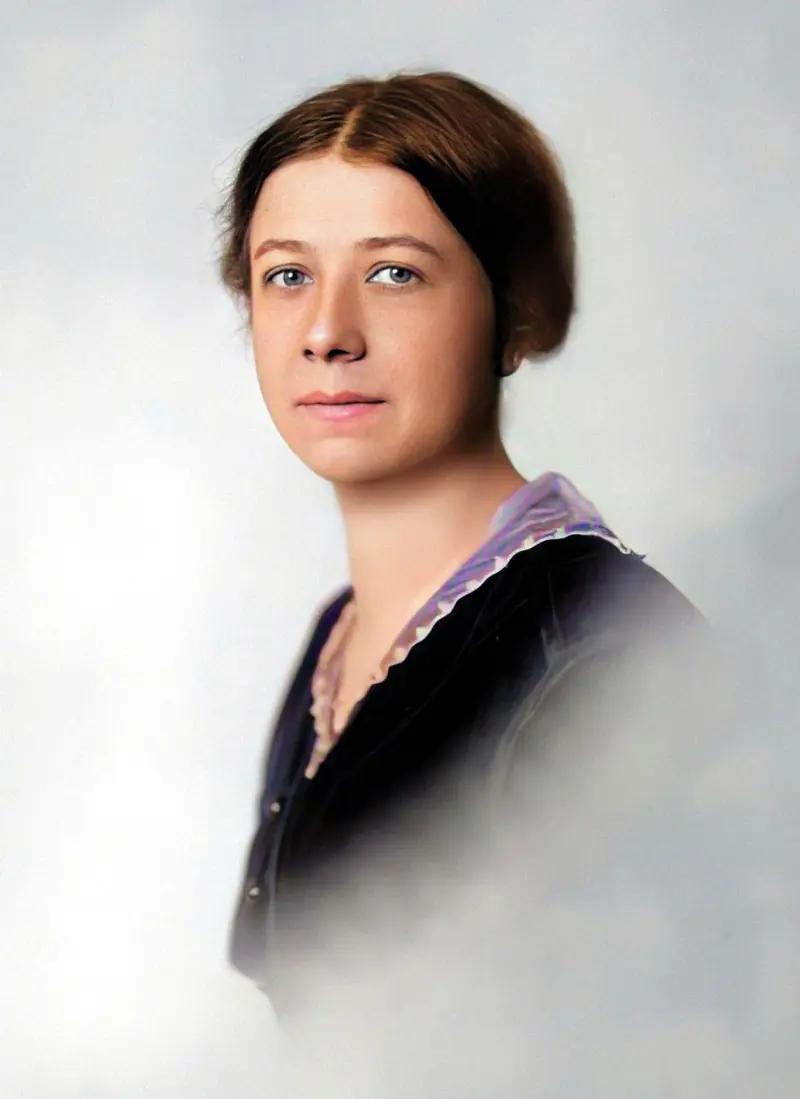
Attr: Library of Congress
| 5 Quotes | |
| Born as | Mary Ritter Beard |
| Occup. | Historian |
| From | USA |
| Born | August 5, 1876 Indianapolis, Marion County, Indiana |
| Died | August 14, 1958 Hartsdale, Westchester County, New York |
| Aged | 82 years |
Mary Ritter Beard was born on August 5, 1876, in Indianapolis, Indiana, into a Midwestern Protestant world that prized self-help, civic improvement, and moral earnestness. The city was a junction of commerce and reform talk, and Beard grew up in a culture where lectures, clubs, and newspapers framed public life as something citizens could - and should - shape. That early exposure to organized voluntary activity mattered: she would later treat institutions and everyday collective work as engines of history, not mere background scenery.
She came of age as the United States moved from Reconstruction memory into the Progressive Era, when settlement houses, labor agitation, municipal reform, and the drive for woman suffrage were reordering assumptions about who counted in public decision-making. Beard was temperamentally drawn to the practical side of ideas. She was neither a romantic antiquarian nor a narrow archivist; she was an organizer of knowledge and of people, convinced that historical understanding was inseparable from civic consequences.
Education and Formative Influences
Beard studied at DePauw University (then Indiana Asbury University), an institution that trained ambitious Midwesterners for teaching, ministry, law, and reform, and she graduated in 1898. In campus debate and the era's ferment over democracy, empire, and labor, she absorbed the Progressive belief that scholarship should be usable. Her earliest intellectual formation blended moral seriousness with a modernizing faith in social science and documentation, but she never fully surrendered to academic detachment; she learned to write history as an intervention in public argument.
Career, Major Works, and Turning Points
After moving in reform and suffrage circles, she married historian Charles A. Beard in 1900 and, in New York City, entered the dense ecosystem of settlement work, adult education, and political clubs that fed Progressive scholarship. She helped build the intellectual infrastructure of women's history while also coauthoring broad syntheses that reached mass audiences, including with Charles Beard on The Rise of American Civilization (1927) and later America in Midpassage (1939). Her own landmark interventions were Woman's Work in Municipalities (1915), which documented the concrete civic labor women already performed, and the two-volume Woman as Force in History (1946), which argued that women were not a footnote to men's deeds but a continuous, organizing power in economies, families, institutions, and ideas. A major turning point came as she increasingly challenged both celebratory suffrage narratives and male-centered professional history, pushing instead for a long view of women's agency that did not depend solely on formal political rights.
Philosophy, Style, and Themes
Beard's historical psychology was shaped by movement politics: she wanted history to expand the reader's sense of human capacity, especially women's. She insisted that societies are made not just by officeholders and generals but by builders of schools, households, charities, workplaces, and voluntary associations. That conviction often put her at odds with academic specialization and with approaches that treated women's past primarily as a record of oppression. Beard did not deny constraint; she feared that a one-dimensional story of victimhood would narrow women's claims on the future. Her prose, brisk and didactic, favored enumeration of institutions, examples of collective labor, and an argument-by-accumulation that mirrored her belief that power is frequently indirect and distributed.
Travel and comparative observation sharpened her sense that history is an education in perception, not merely a sequence of events. "Certainly, travel is more than the seeing of sights; it is a change that goes on, deep and permanent, in the ideas of living". That line captures her method: encounter alters the mind, and altered minds remake societies. She also used "the bizarre" as a reminder that what feels natural at home is often just habit wearing the mask of necessity: "Wherever we go, across the Pacific or Atlantic, we meet, not similarity so much as 'the bizarre'. Things astonish us, when we travel, that surprise nobody else". This sensibility underwrote her critique of inherited historical canons. When she wrote, "It's only very recently that women have succeeded in entering those professions which, as Muses, they typified for the Greeks". , she was not offering a salon epigram; she was diagnosing a civilizational contradiction - women imagined as symbols of inspiration while excluded from the institutional authority to produce art, knowledge, and policy.
Legacy and Influence
Beard died on August 14, 1958, but her influence persists as both model and provocation. She helped legitimize women's history as a serious field while insisting it should reshape general history rather than become a separate annex, and her emphasis on institutions, labor, and civic work anticipated later scholarship on social reproduction, voluntary associations, and the politics of expertise. Even when later feminist historians disputed her reluctance to center oppression, they inherited her core demand: that historical narrative must account for women's agency as a continuous force in the making of the United States, not as an intermittent exception.
Our collection contains 5 quotes who is written by Miriam, under the main topics: Equality - Travel - Kindness.
Source / external links