
Nat Turner Biography Quotes 1 Report mistakes
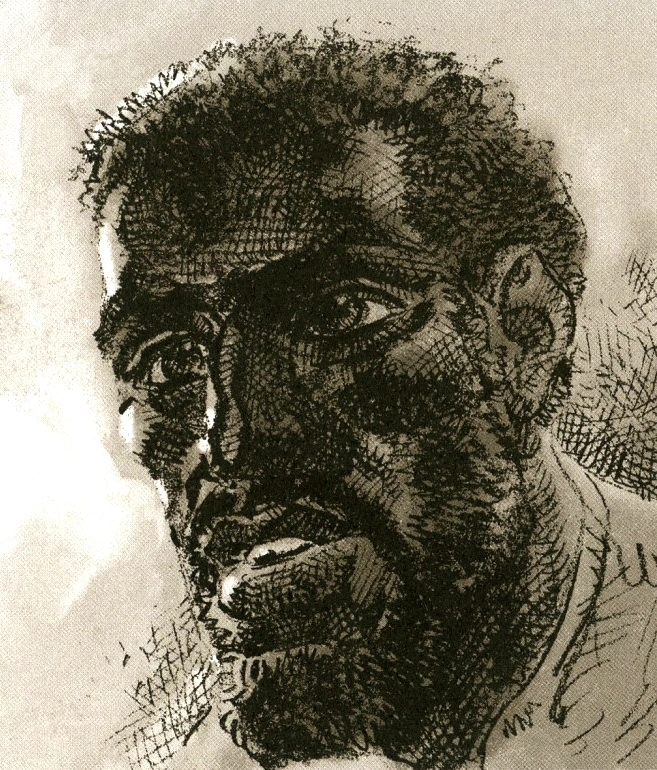
| 1 Quotes | |
| Native name | Nathaniel Turner |
| Occup. | Activist |
| From | USA |
| Born | October 2, 1800 Southampton County, Virginia |
| Died | November 11, 1831 Jerusalem, Virginia |
| Cause | Execution - Hanging |
| Aged | 31 years |
| Cite | |
Citation Formats
APA Style (7th ed.)
Nat turner biography, facts and quotes. (2026, February 11). FixQuotes. https://fixquotes.com/authors/nat-turner/
Chicago Style
"Nat Turner biography, facts and quotes." FixQuotes. February 11, 2026. https://fixquotes.com/authors/nat-turner/.
MLA Style (9th ed.)
"Nat Turner biography, facts and quotes." FixQuotes, 11 Feb. 2026, https://fixquotes.com/authors/nat-turner/. Accessed 8 Mar. 2026.
Early Life and Background
Nat Turner was born enslaved on October 2, 1800, in Southampton County, Virginia, a Tidewater world of tobacco, small farms, and a tightening regime of slave patrols and property law. He belonged first to Benjamin Turner, from whom he took his surname, and grew up amid the brutal intimacy of plantation life - labor, punishment, kinship made precarious by sale, and the constant calculation of white authority. Even in childhood he was noticed for unusual gravity and memory; white neighbors later claimed he spoke as if marked for something beyond fieldwork, a projection that reveals as much about enslavers need to domesticate Black intelligence as it does about Turners early self-possession.
Turners inner life formed under conditions designed to crush interiority. Yet religion and story moved through enslaved quarters as a language of survival and a coded archive of hope. He learned scripture early and became known among enslaved people for interpreting biblical passages and for a composure that looked like destiny. The same county that produced prosperous planters also produced an enslaved community seasoned in clandestine gathering, kin networks, and spiritual practice - the infrastructure from which resistance could later draw strength.
Education and Formative Influences
Turner was taught to read, an illicit skill in much of the South and increasingly policed after 1831, and he used literacy as a private armory: the Bible, hymns, and the prophetic rhetoric of the Old Testament became his primary texts. In an era of the Second Great Awakening, when evangelical fervor crossed racial lines but reinforced slavery through paternalist theology, Turner absorbed a different lesson - that revelation could indict Pharaohs as well as comfort captives. His formation was also shaped by local talk of omens, visions, and signs in the sky, the folk cosmology of both Black and white Virginians, and by the daily evidence that law and church often collaborated to sanctify domination.
Career, Major Works, and Turning Points
Turner was not an activist in the modern organizational sense; his activism took the form of insurgent leadership, culminating in the Southampton slave rebellion of August 1831. After years in which he reported visions and interpreted natural phenomena as divine messages, he gathered a small band of enslaved men and began a coordinated attack that killed approximately 55 white people over two days as the group moved from plantation to plantation seeking arms and recruits. Militia and federal forces crushed the revolt, and white reprisals killed many Black people, including those uninvolved. Turner evaded capture for weeks before being seized, tried, convicted, and hanged on November 11, 1831. His only sustained "text" is indirect - his jailhouse narrative as recorded by Thomas R. Gray as The Confessions of Nat Turner, a mediated document that nevertheless preserves Turners apocalyptic logic and political intent.
Philosophy, Style, and Themes
Turners psychology is best approached through the disciplined solitude he cultivated and the sacred framework he used to metabolize terror into purpose. “Having soon discovered to be great, I must appear so, and therefore studiously avoided mixing in society, and wrapped myself in mystery, devoting my time to fasting and prayer”. The sentence is less brag than strategy: greatness here means the burden of an assigned role, maintained through distance, ritual, and control of how others could read him. In a system that treated enslaved people as transparent property, mystery became a kind of autonomy, fasting a training in endurance, and prayer a technology for concentrating will.
His style of action followed from a theology that fused providence with judgment. Turner did not argue for rights in the language of petitions; he acted as if history were a courtroom and he had been appointed its instrument. That conviction offered psychic coherence where ordinary life offered only contingency - sale, violence, family separation, arbitrary punishment. It also shaped the rebellions uncompromising force: to strike at slavery as a divinely condemned order was to refuse gradualism and refuse the enslavers demand for gratitude. The tragedy is that Turners certainty, while empowering, narrowed the space for mercy and amplified the collisions that followed; yet it also exposed the foundational violence of the regime that called itself civilized.
Legacy and Influence
Turners revolt reshaped the American debate over slavery. Virginia and other states tightened slave codes, expanded patrols, and accelerated prohibitions on Black literacy and assembly, while northern abolitionists seized on the uprising as evidence that slavery was war by other means. For Black communities, Turner became a terrifying symbol of what captivity could produce when faith and rage converged - feared by enslavers, guardedly admired by some, and endlessly contested in memory. Writers and historians have returned to him to ask how an enslaved man fashioned an inner sovereignty strong enough to risk everything; his life endures as a stark reminder that American freedom was built alongside - and often against - people who refused to consent to their own bondage.
Our collection contains 1 quotes written by Nat, under the main topics: Prayer.
Other people related to Nat: William Styron (Novelist)
Source / external links