
Oliver Herford Biography Quotes 16 Report mistakes
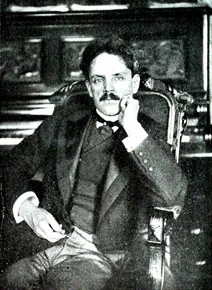
| 16 Quotes | |
| Occup. | Author |
| From | USA |
| Born | January 1, 1863 Sheffield, England |
| Died | January 1, 1935 New York City, New York, USA |
| Aged | 72 years |
| Cite | |
Citation Formats
APA Style (7th ed.)
Oliver herford biography, facts and quotes. (2026, February 11). FixQuotes. https://fixquotes.com/authors/oliver-herford/
Chicago Style
"Oliver Herford biography, facts and quotes." FixQuotes. February 11, 2026. https://fixquotes.com/authors/oliver-herford/.
MLA Style (9th ed.)
"Oliver Herford biography, facts and quotes." FixQuotes, 11 Feb. 2026, https://fixquotes.com/authors/oliver-herford/. Accessed 1 Apr. 2026.
Early Life and Background
Oliver Herford was born January 1, 1863, in Sheffield, England, into a household where Nonconformist religion and the habits of print culture coexisted with the small improvisations of daily life. The Victorian city around him was a crucible of industry and class friction, and Herford grew up alert to how solemn public language could conceal private absurdity - a perception that later became the engine of his verse, cartoons, and parodies.As a young man he moved with his family to the United States, a shift that mattered less as a change of passport than as a widening of stage. In the bustling American magazine world of the Gilded Age and Progressive Era, humor was not just entertainment but a portable form of criticism - a way to puncture cant, advertise taste, and survive modern speed. Herford would become one of the era's most recognizably light-handed satirists, while keeping an undertone of melancholy about human self-importance and human self-deception.
Education and Formative Influences
Herford studied art in the United States, including training in Chicago, where commercial illustration and fine-art aspiration collided in the same studios and print shops. He absorbed the line economy of poster design, the legibility demands of periodical art, and the British tradition of nonsense verse and social parody, then translated those influences into an American idiom suited to illustrated magazines, gift books, and the drawing-room performance of wit.Career, Major Works, and Turning Points
From the 1890s into the interwar years, Herford built a career as a writer-artist whose poems and drawings often arrived as inseparable twins. He became closely associated with The Century Magazine and, most notably, Life magazine in its original incarnation as a leading illustrated humor weekly, contributing verse, cartoons, and brief satirical pieces that circulated widely in middle-class America. Alongside magazine work he published popular books that blended illustration with deft, epigrammatic verse, including The Rubaiyat of a Persian Kitten (a playful recasting of Fitzgerald), The Bashful Earthquake and Other Fables and Verses, and The Fairy Godmother-in-Law, works that made nonsense feel like social observation in costume. His turning point was not a single publication but a sustained recognition that his best vehicle was the hybrid form - part poem, part picture, part performance - which let him be tender and cutting in the same breath.Philosophy, Style, and Themes
Herford's style is deceptively airy: quick rhyme, clean contour, and a preference for the small stage of manners over the big stage of politics. Yet the apparent lightness is strategic. He understood that the modern reader, flooded by noise, receives truth more readily when it arrives smiling - and that the smile can be a mask for loneliness. His animals, children, and fable-like speakers behave as proxies for adult vanity, while his parodies of grand forms (the quatrain, the moral tale, the aphorism) expose how easily culture turns feeling into formula.Psychologically, Herford returns to the idea that character is revealed in what is withheld, not what is declared. “A man is known by the silence he keeps”. That line is not merely a quip; it is a working method. He favors implication over proclamation, letting a pause, a blank space beneath a drawing, or an apparently innocent rhyme do the work of judgment. His humor also carries a migrant's double vision, attentive to how identities harden into stereotypes and how jokes can both bind and wound. “The Irish gave the bagpipes to the Scotts as a joke, but the Scotts haven't seen the joke yet”. In Herford's hands, the barb is less about any one people than about the human habit of clinging to burdens as if they were inheritances of pride. And beneath the satire lies a craftsman's ethic - the suspicion that devotion matters even without reward: “A man must love a thing very much if he not only practices it without any hope of fame and money, but even... without any hope of doing it well”. The ellipsis feels earned; he knows the artist's private embarrassment, and he dignifies it without sentimentality.
Legacy and Influence
Herford died January 1, 1935, after outliving the magazine ecosystem that had helped define him, but his influence persists in the lineage of American light verse, captioned cartooning, and illustrated nonsense that runs through early New Yorker sensibilities and beyond. He helped codify a voice that could be whimsical without being empty, skeptical without being cruel, and literary without being pompous - a voice that made room for the inner life by refusing to overstate it. In an age that often equated seriousness with volume, Herford proved that delicacy can carry judgment, and that a small drawing paired with a small poem can illuminate a large portion of human behavior.Our collection contains 16 quotes written by Oliver, under the main topics: Witty One-Liners - Motivational - Wisdom - Mortality - Change.
Oliver Herford Famous Works
- 1930 Excuse It, Please (Book)
- 1920 More Animals (Book)
- 1913 The Deb's Dictionary (Book)
- 1908 Cupid's Cyclopedia (Book)
- 1904 The Rubaiyat of a Persian Kitten (Book)
- 1899 A Child's Primer of Natural History (Book)
- 1899 The Bashful Earthquake (Book)
- 1899 An Alphabet of Celebrities (Book)
Source / external links