
Paul Bailey Biography Quotes 1 Report mistakes
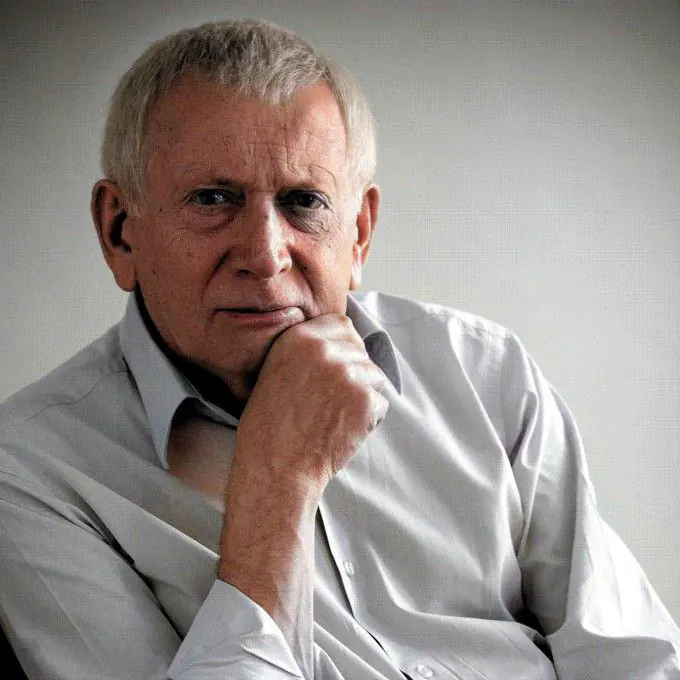
| 1 Quotes | |
| Occup. | Novelist |
| From | USA |
| Born | February 16, 1937 |
| Age | 88 years |
Paul Bailey, born in 1937 in London, is an English novelist, biographer, and critic. Although sometimes mistakenly described as American, his career and reputation were forged within British letters. He emerged from the postwar generation of writers who combined technical finesse with a humane, ironical eye, and he became known for placing memory, performance, and the quiet heroism of everyday lives at the center of his fiction. Details of his private life have seldom been disclosed at length by Bailey himself, a reserve that helped keep the focus on the work rather than the maker.
First Books and Breakthrough
Bailey's debut, At The Jerusalem (1967), announced a distinctive voice: spare, compassionate, and unsentimental. Set among older people in a home, it refused both condescension and easy consolation, and its alertness to the cadences of conversation became a hallmark. He followed it with Trespasses (1970), consolidating his position as a novelist attentive to the moral weight of small decisions and the ripple effects of memory. By the later 1970s he had earned wider notice with Peter Smart's Confessions (1977), a critical success that confirmed his ability to blend comedy with a measured melancholy.
Novels of Memory, Exile, and Voice
Through the 1980s and beyond, Bailey wrote novels that explored the claims of the past on the present, often through narrators whose voices are at once wounded and witty. Gabriel's Lament (1986) brought him to a large readership and deepened his reputation for psychological acuity. Later works broadened his geographical and historical range. Kitty and Virgil (1998) introduced many readers to the textures of Central and Eastern European memory through a tender portrait of a Romanian exile, while Uncle Rudolf (2002) traced the imprint of music, performance, and political disruption on private lives. The Prince's Boy (2010) ranged back to interwar Bucharest and the costs of secrecy and survival. In Chapman's Odyssey (2011), a hospitalized narrator drifts through a collage of recollection and literary ghosts, a formal summation of Bailey's long-standing fascination with how stories themselves become companions in adversity.
Nonfiction, Criticism, and Advocacy
Bailey has also been a biographer and memoirist. An Immaculate Mistake: Scenes from Childhood and Beyond (1990) is a quietly dazzling account of formative experiences and the wayward paths by which a sensibility is formed. His group portrait Three Queer Lives (2001) offered an alternative cultural history through three figures he felt deserved renewed attention: the novelist and actress Naomi Jacob, the music-hall star Fred Barnes, and the broadcaster and wit Arthur Marshall. By placing Jacob, Barnes, and Marshall at the foreground, Bailey made an argument for who gets remembered and why, aligning his nonfiction with the wider ethical commitments of his fiction: to listen for voices at risk of being muffled by official narratives.
As a critic, he contributed reviews and essays to major British newspapers and journals, sustaining a parallel career as a reader and advocate for others. His criticism consistently championed neglected authors, and his introductions and essays helped new generations find their way to overlooked books and to literature from beyond Britain's borders, especially from Central and Eastern Europe. The constellation of people around him, then, has often been the people he chose to bring into the light: Jacob, Barnes, and Marshall in biography, and the displaced artists and émigrés who populate his novels.
Recognition
Bailey's achievements have been marked by significant honors. He was twice shortlisted for the Booker Prize, a recognition that placed him among the most accomplished English-language novelists of his time. He received the E. M. Forster Award from the American Academy of Arts and Letters, underscoring an international esteem for his work. He has been elected a Fellow of the Royal Society of Literature, a testament to the long, steady respect he commands among peers. These distinctions map onto the durability of his books, which have remained in circulation and conversation for decades.
Themes, Style, and Working Method
Bailey's prose is notable for clarity, musicality, and restraint. He favors narrators whose humor is a survival strategy, and he writes with a dramatist's ear for dialogue. Performance figures strongly: singers, actors, raconteurs, and readers themselves, all negotiating the roles assigned by family, society, or history. Exile, whether geographical or emotional, recurs: characters leaving homes, countries, or selves behind, and then working to assemble a livable future from damaged recollections. Without polemic, his fiction treats sexuality, aging, and class with the same steady curiosity, refusing to sentimentalize or to simplify.
Legacy and Influence
Across more than half a century in print, Bailey has shown how the intimate scale of a life can bear the weight of large histories. He helped enlarge the imaginative territory of the postwar English novel, not by spectacle but by attention: to tone, to memory's odd edits, and to the dignity of overlooked people. The individuals who matter most around him in the public record are the ones his books and essays place before us again and again: Naomi Jacob, Fred Barnes, and Arthur Marshall as subjects of loving critical rescue; the exiles and artists whose stories he set at the center; the readers he trusted to follow a supple voice rather than a schematic plot. In that trust lies his particular bequest: a belief that literature's deepest work is to listen, to remember, and to keep faith with lives that might otherwise pass unheard.
Our collection contains 1 quotes who is written by Paul, under the main topics: Writing.
Paul Bailey Famous Works
- 1986 Gabriel's Lament (Novel)
- 1980 Old Soldiers (Novel)
- 1977 Peter Smart's Confessions (Novel)
- 1973 A Distant Likeness (Novel)
- 1970 Trespasses (Novel)
- 1967 At the Jerusalem (Novel)
Source / external links