
Robert Rodriguez Biography Quotes 5 Report mistakes
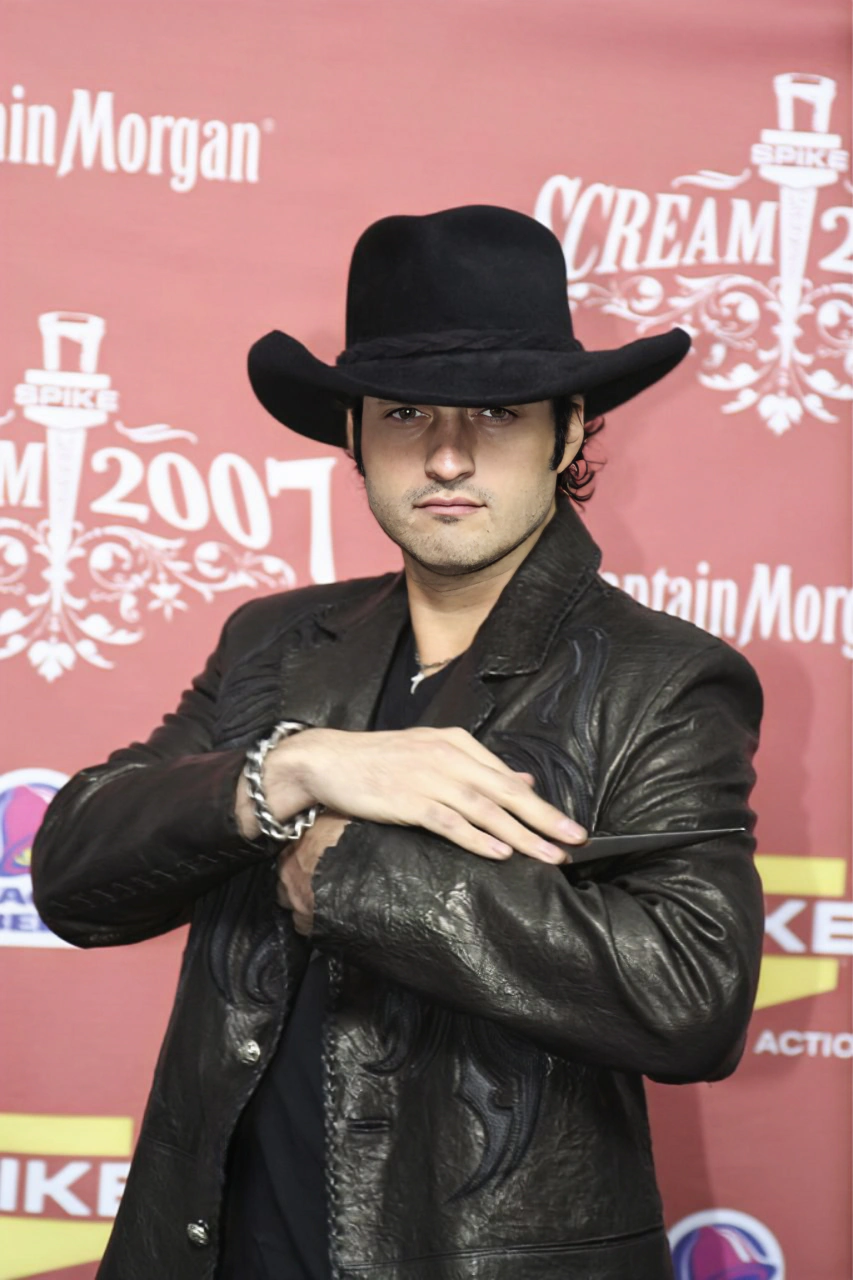
Attr: By pinguino k from North Hollywood
| 5 Quotes | |
| Born as | Robert Anthony Rodriguez |
| Occup. | Director |
| From | USA |
| Born | June 20, 1968 San Antonio, Texas, USA |
| Age | 57 years |
| Cite | |
Citation Formats
APA Style (7th ed.)
Robert rodriguez biography, facts and quotes. (2026, February 11). FixQuotes. https://fixquotes.com/authors/robert-rodriguez/
Chicago Style
"Robert Rodriguez biography, facts and quotes." FixQuotes. February 11, 2026. https://fixquotes.com/authors/robert-rodriguez/.
MLA Style (9th ed.)
"Robert Rodriguez biography, facts and quotes." FixQuotes, 11 Feb. 2026, https://fixquotes.com/authors/robert-rodriguez/. Accessed 12 Feb. 2026.
Early Life and Background
Robert Anthony Rodriguez was born on June 20, 1968, in San Antonio, Texas, the third of ten children in a Mexican-American family shaped by Catholic routines, Southwest working-class pragmatism, and the noisy intimacy of a big household. That scale mattered: siblings became his first cast and crew, his parents home base and production office, and his neighborhood the earliest backlot. Long before he had access to film schools or studio gates, he learned the essential independent lesson - make something where you are, with whoever is around, and make it move.San Antonio in the 1970s and 1980s offered a hybrid cultural palette - Tejano music and American television, border-city bilingual life and Hollywood myth. Rodriguez absorbed pop icons and genre grammar the way other kids absorbed sports statistics, then immediately tried to recreate it, not as imitation but as problem-solving. The early psychological pattern that persisted through his career was visible even then: a bias for action over permission, and an almost competitive joy in constraints, as if limitations were a dare rather than a barrier.
Education and Formative Influences
He attended St. Anthony Catholic High School and later enrolled at the University of Texas at Austin, drawn to its film environment and the possibility of turning youthful experiments into a vocation. In Austin - a city with a rising do-it-yourself arts economy and a growing independent film reputation - Rodriguez refined his instincts by making shorts, learning editing and sound through repetition, and studying how audiences respond to rhythm and payoff. He looked as closely at comic books, music videos, and grindhouse pacing as he did at canonical cinema, building a toolbox that treated storytelling as engineering: define the effect, then build the simplest machine that produces it.Career, Major Works, and Turning Points
Rodriguez broke through with El Mariachi (shot in 1992 and released in 1993), famously produced on a microbudget and propelled by ingenuity, speed, and a shrewd understanding of genre pleasure; the film became a landmark of 1990s American independents and led to his studio debut Desperado (1995), where he expanded the same mythic Mexico-Texas corridor into operatic action. He diversified quickly - From Dusk Till Dawn (1996) fused crime and horror with cheeky tonal pivots; The Faculty (1998) proved his command of mainstream thrills; the Spy Kids franchise (2001 onward) showed his ability to translate kinetic craft into family fantasy while building a homegrown production ecosystem at Troublemaker Studios in Austin. Later peaks included Sin City (2005), co-directed with Frank Miller, which merged digital technique with graphic composition; Planet Terror (2007) and Machete (2010) revived exploitation aesthetics; and Alita: Battle Angel (2019), where he inherited James Cameron's long-gestating project and delivered a performance-capture spectacle with a handmade filmmaker's sense of pacing. Across decades, his turning point was less a single award than a method: keep control by owning process - writing, shooting, editing, composing - and keep momentum by treating each film as both story and laboratory.Philosophy, Style, and Themes
Rodriguez's inner life as an artist is anchored in a stubborn optimism about agency. "Don't be told something is impossible. There's always a way". That sentence is not motivational wallpaper in his case; it describes a temperament trained by low resources and big ambition, the kind that converts anxiety into logistics. He often frames filmmaking as a series of solvable puzzles, and that mind-set explains why his sets are engineered for speed and why he gravitates toward tools that reduce dependency. "Don't give me any money, don't give me any people, but give freedom, and I'll give you a movie that looks gigantic". Freedom, for him, is not abstract independence but the practical ability to iterate - to rewrite, reblock, reshoot, and edit with the same hands until the movie matches the imagined sensation.His style is a hybrid of comic-book clarity, musical timing, and regional texture: clean silhouettes, bold color, velocity, and an ear for how a scene lands like a punchline or a guitar riff. Digital production is not a mere cost saver in his work; it is a thematic extension of his self-reliance. "What I love about new technology is that it really pushes the art. It really pushes it in a way that you can't imagine until you come up with the idea. It's idea-based. You can do anything". The recurring themes follow naturally - outsiders improvising against systems, families forged under pressure (from mariachis to child spies), and heightened worlds where moral lines are drawn in graphic strokes. Even when the tone turns playful or absurd, the underlying psychology is consistent: mastery is earned through doing, and the joy is in the build.
Legacy and Influence
Rodriguez endures as a defining figure of post-1990 independent cinema who proved that a filmmaker could start with almost nothing, keep authorship through technical fluency, and still operate inside mass entertainment. He helped normalize Austin as a serious production hub, modeled a multi-hyphenate career that inspired a generation of writer-director-editor-composers, and pushed digital workflows into the mainstream without losing the tactile pleasures of genre. His films, studios, and public articulation of process - part craft manual, part defiant ethos - continue to tell aspiring directors that control is not granted by institutions; it is built, shot by shot, by the person willing to solve the next problem.Our collection contains 5 quotes written by Robert, under the main topics: Motivational - Art - Never Give Up - Movie - Technology.
Other people related to Robert: Salma Hayek (Actress), Cheech Marin (Comedian), Eva Mendes (Actress), Famke Janssen (Actress), Don Johnson (Actor), Michelle Rodriguez (Actress), Elijah Wood (Actor), Michael Madsen (Actor), Josh Hartnett (Actor), Jordana Brewster (Actress)
Frequently Asked Questions
- Robert Rodriguez book: He wrote 'Rebel Without a Crew,' a memoir about making El Mariachi.
- Robert Rodriguez Quentin Tarantino: Robert Rodriguez and Quentin Tarantino are longtime collaborators and friends; they have co-directed and produced films like From Dusk Till Dawn, Grindhouse, and Sin City.
- Robert Rodriguez siblings: He has nine siblings.
- Robert Rodriguez movies in order: His films in order include El Mariachi (1992), Desperado (1995), From Dusk Till Dawn (1996), The Faculty (1998), Spy Kids (2001), Spy Kids 2 (2002), Spy Kids 3-D (2003), Sin City (2005), Planet Terror (2007), Machete (2010), Spy Kids: All the Time in the World (2011), Machete Kills (2013), Sin City: A Dame to Kill For (2014), Alita: Battle Angel (2019), We Can Be Heroes (2020).
- Robert Rodriguez wife: He was married to Elizabeth Avellán from 1990 to 2007.
- What is Robert Rodriguez net worth? His estimated net worth is around $50 million.
- Robert Rodriguez children: He has five children.
- Robert Rodriguez movies: Some of his notable movies include El Mariachi, Desperado, From Dusk Till Dawn, Spy Kids series, Sin City, Machete, and Alita: Battle Angel.
- How old was Robert Rodriguez when he made El Mariachi? He was 23 years old when he made 'El Mariachi.'
- Did Robert Rodriguez date Rose McGowan? Yes, Robert Rodriguez and Rose McGowan dated for several years.
- What is Robert Rodriguez best known for? He is best known for directing 'El Mariachi,' 'Desperado,' 'Spy Kids,' and 'Sin City.'
- Are Quentin Tarantino and Robert Rodriguez still friends? Yes, Robert Rodriguez and Quentin Tarantino remain friends and collaborators.
- How old is Robert Rodriguez? He is 57 years old
Source / external links