
Toni Morrison Biography Quotes 43 Report mistakes
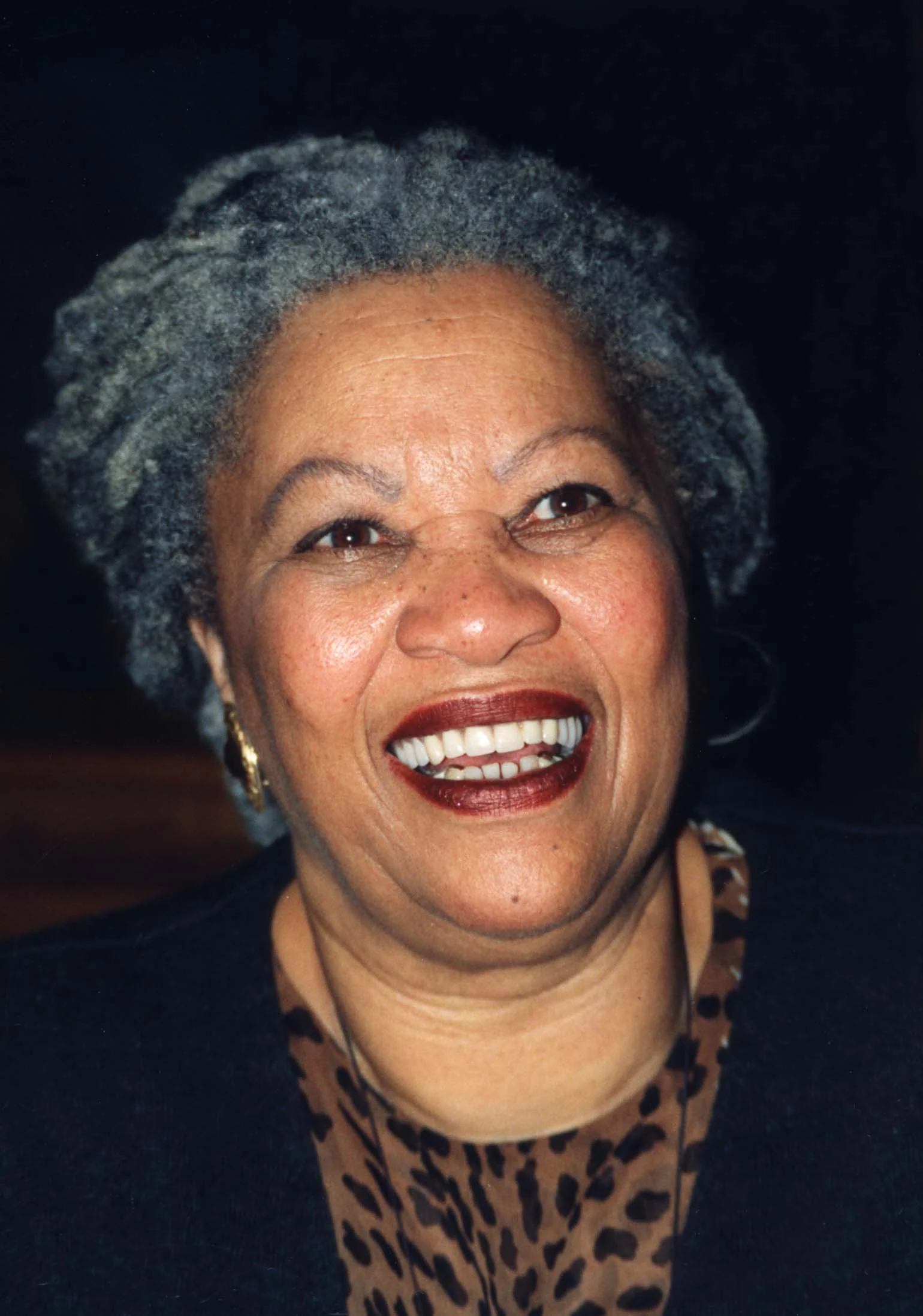
Attr: John Mathew Smith
| 43 Quotes | |
| Born as | Chloe Ardelia Wofford |
| Occup. | Novelist |
| From | USA |
| Born | February 18, 1931 Lorain, Ohio, USA |
| Died | August 5, 2019 New York City, New York, USA |
| Cause | Pneumonia |
| Aged | 88 years |
| Cite | |
Citation Formats
APA Style (7th ed.)
Toni morrison biography, facts and quotes. (2026, February 11). FixQuotes. https://fixquotes.com/authors/toni-morrison/
Chicago Style
"Toni Morrison biography, facts and quotes." FixQuotes. February 11, 2026. https://fixquotes.com/authors/toni-morrison/.
MLA Style (9th ed.)
"Toni Morrison biography, facts and quotes." FixQuotes, 11 Feb. 2026, https://fixquotes.com/authors/toni-morrison/. Accessed 31 Mar. 2026.
Early Life and Background
Chloe Ardelia Wofford was born on February 18, 1931, in Lorain, Ohio, an industrial Lake Erie town shaped by Black migration, steel work, and the everyday negotiations of segregation without the formal codes of the Deep South. She grew up in a working-class family whose household life carried the pressure and beauty of oral tradition - songs, ghost stories, biblical cadence, and the blunt realism of parents who had known Southern racial terror and brought its lessons north.That inner archive mattered. Morrison later treated Black community not as backdrop but as an engine of memory - a place where love and cruelty coexist, where survival skills become a kind of art. The Great Depression and World War II framed her childhood, but so did the smaller violences of disdain and exclusion. Lorain's relative diversity did not cancel racism; it sharpened her attention to how people are trained to see, and to whom sympathy is granted.
Education and Formative Influences
She studied at Howard University in Washington, DC (BA, 1953), taking the name Toni from her baptismal middle name Anthony, then earned an MA at Cornell University in 1955 with a thesis on William Faulkner and Virginia Woolf - a pairing that hints at her lifelong interest in time, consciousness, and the moral weather of a place. Teaching at Howard, she watched colorism, class aspiration, and gender roles play out within Black life itself, while the rising civil rights movement expanded the stakes of representation: who gets to be complex on the page, and who is flattened into symbol.Career, Major Works, and Turning Points
After teaching and editing, Morrison became a senior editor at Random House in New York, championing Black writers and shaping a broader literary public while raising two sons after her divorce. She published her first novel, The Bluest Eye (1970), followed by Sula (1973) and Song of Solomon (1977), the latter bringing major acclaim for its mythic reach and comic severity. Her most disruptive turn came with Beloved (1987), a novel of slavery's afterlife that fused horror, lyric tenderness, and historical rigor; it won the Pulitzer Prize and became a moral reference point in American letters. Later works - including Jazz (1992), Paradise (1997), Love (2003), A Mercy (2008), and Home (2012) - widened her map of Black experience across centuries. In 1993 she became the first Black woman to win the Nobel Prize in Literature.Philosophy, Style, and Themes
Morrison wrote as if history were not past but inhabited - pressing against the present through bodies, houses, and language. She distrusted explanations that tidy suffering into lessons and instead built novels that force readers to feel how trauma reorganizes time. “When there is pain, there are no words. All pain is the same”. That severity did not flatten difference; it clarified her method: the unsayable is approached through rhythm, repetition, image, and communal speech, until silence itself becomes evidence.Her style braided sermon and gossip, folktale and interior monologue, with a musician's control of tempo. Children appear not as sentimental emblems but as the most exposed witnesses of adult harm and adult need. “Everywhere, everywhere, children are the scorned people of the earth”. In Morrison, the scorn is structural - race, patriarchy, poverty - and the response is not merely endurance but moral imagination. She also turned discipline into a form of freedom: anger, for her, was fuel rather than a destination. “I get angry about things, then go on and work”. The work meant reclaiming Black interior life from the gaze that commodifies it, and staging love as both sanctuary and danger.
Legacy and Influence
Morrison died on August 5, 2019, in the United States, leaving a body of work that changed what the American novel could carry: the psychic costs of slavery, the politics of beauty, the erotics of community, and the sacredness of Black language. As an editor, teacher (including at Princeton University), and public intellectual, she helped build institutions of attention for writers long denied them. Her influence runs through contemporary fiction, criticism, and cultural debate, not as a set of techniques to imitate but as a challenge - to write with ethical precision, to treat marginalized lives as central, and to let history speak in its true, unsettling tense.Our collection contains 43 quotes written by Toni, under the main topics: Wisdom - Justice - Leadership - Writing - Freedom.
Other people related to Toni: William Faulkner (Novelist), Nathaniel Hawthorne (Novelist), Gabriel Garcia Marquez (Novelist), Bell Hooks (Critic), Margaret Walker (Poet), Jonathan Demme (Director), Lucille Clifton (Poet), Edmund White (Novelist)
Frequently Asked Questions
- Toni Morrison education: She earned a B.A. from Howard University and an M.A. from Cornell University.
- Toni Morrison Beloved: Beloved (1987) is her Pulitzer Prize–winning novel about a formerly enslaved woman haunted by her past after the Civil War.
- Toni Morrison cause of death: She died in 2019 from complications of pneumonia.
- Toni Morrison Jazz: Jazz (1992) is a novel set in 1920s Harlem about love, betrayal, and the aftermath of violence.
- Toni Morrison books: Notable novels include The Bluest Eye, Sula, Song of Solomon, Beloved, Jazz, and Paradise.
- How old was Toni Morrison? She became 88 years old
Toni Morrison Famous Works
- 2019 The Source of Self-Regard: Selected Essays, Speeches, and Meditations (Collection)
- 2015 God Help the Child (Novel)
- 2012 Home (Novel)
- 2008 A Mercy (Novel)
- 2008 What Moves at the Margin: Selected Nonfiction (Collection)
- 2003 Love (Novel)
- 1997 Paradise (Novel)
- 1993 Nobel Lecture (Literature) (Essay)
- 1992 Playing in the Dark: Whiteness and the Literary Imagination (Essay)
- 1992 Jazz (Novel)
- 1987 Beloved (Novel)
- 1986 Dreaming Emmett (Play)
- 1983 Recitatif (Short Story)
- 1981 Tar Baby (Novel)
- 1977 Song of Solomon (Novel)
- 1974 The Black Book (Collection)
- 1973 Sula (Novel)
- 1970 The Bluest Eye (Novel)
Source / external links