
William Warburton Biography Quotes 3 Report mistakes
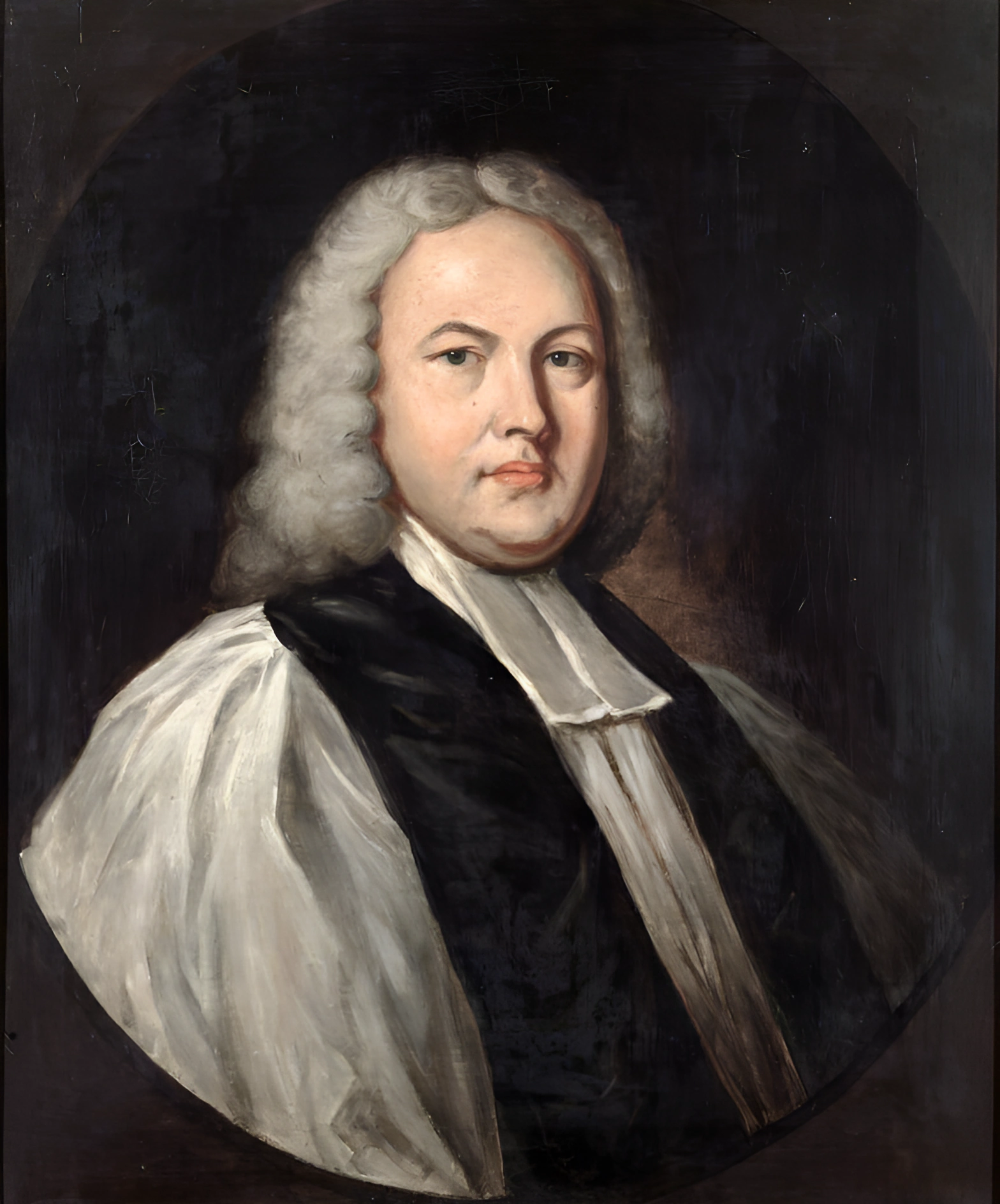
Attr: Edward Kilvert
| 3 Quotes | |
| Occup. | Critic |
| From | England |
| Born | December 24, 1698 |
| Died | June 7, 1779 |
| Aged | 80 years |
| Cite | |
Citation Formats
APA Style (7th ed.)
William warburton biography, facts and quotes. (2026, February 23). FixQuotes. https://fixquotes.com/authors/william-warburton/
Chicago Style
"William Warburton biography, facts and quotes." FixQuotes. February 23, 2026. https://fixquotes.com/authors/william-warburton/.
MLA Style (9th ed.)
"William Warburton biography, facts and quotes." FixQuotes, 23 Feb. 2026, https://fixquotes.com/authors/william-warburton/. Accessed 2 Apr. 2026.
Early Life and Background
William Warburton was born on December 24, 1698, at Newark-on-Trent in Nottinghamshire, into the practical, trading England that had settled after the Glorious Revolution but still lived with its religious aftershocks. His father, George Warburton, worked as a tradesman, and the household sat closer to the rhythms of commerce than to the patronage networks that usually fed clerical preferment. That distance mattered: Warburton grew up with a self-protective sharpness, a sense that advancement would be earned through argumentative force and conspicuous learning rather than inherited ease.The England of his youth was a nation of pamphlets, sermons, and party lines, where Whig and Tory identities often mapped onto rival visions of church authority and national destiny. Warburton absorbed the era's combative print culture early and never outgrew it. Even before he was famous, he cultivated a habit that would define his inner life: turning intellectual disagreement into a test of character, and turning scholarship into a kind of moral theatre in which he could win standing.
Education and Formative Influences
Warburton did not rise by the standard route of an elite grammar school and Oxford fellowship. He was apprenticed to an attorney and trained himself largely through voracious reading, later taking orders in the Church of England and serving as a country parson, first at Greasley in Nottinghamshire and then at Brant Broughton in Lincolnshire. That mixed formation - law's adversarial habits fused with clerical vocation - shaped his mind: he read theology like a brief, history like evidence, and literature like testimony about human motives. The intellectual atmosphere was defined by deism controversies and the prestige of "reason" in religion, and Warburton positioned himself as a learned orthodox champion who nonetheless believed orthodoxy had to be argued, not merely asserted.Career, Major Works, and Turning Points
Warburton's career turned on his ability to make erudition feel like a weapon. He announced himself with The Divine Legation of Moses (1738-1741), a sprawling, paradox-driven defense of biblical revelation that argued the Mosaic law's lack of an explicit doctrine of immortality was proof of divine origin - an argument designed to startle skeptics and embarrass lukewarm defenders. He followed with vigorous participation in the Alexander Pope circle, becoming Pope's literary executor and editor; his edition of Shakespeare (1747) displayed both ingenuity and a pugnacious certainty that provoked rivals. Patronage and controversy fed each other: his alliance with Pope and friendship with Ralph Allen brought him security and status, and his polemics against deists and "freethinkers" helped propel him upward in the church, culminating in his appointment as Bishop of Gloucester in 1760. Across these turning points, Warburton cultivated a public persona of combative guardianship - part critic, part apologist, part prosecutor.Philosophy, Style, and Themes
Warburton's thought cannot be separated from temperament. He believed that public reason must discipline both private impulse and fashionable sneer, and he treated the printed page as a court where arguments were tried. His suspicion of spiritual excess was not merely doctrinal but psychological: “Enthusiasm is that temper of the mind in which the imagination has got the better of the judgment”. The sentence reveals his governing fear - that religious feeling, unmoored from rational control, becomes a kind of self-intoxication - and it explains why he attacked not only deism but also forms of devotion he thought theatrical. His preferred posture was corrective: to expose hidden premises, to show that what looked like liberating doubt could become intellectual laziness.As a critic, Warburton read literature and antiquity as arenas where moral and theological truths were at stake. He distrusted the fashionable weapon of ridicule, insisting that mockery could not replace proof: “Reason is the test of ridicule, not ridicule the test of truth”. That principle explains both his strengths and his antagonisms. He could be bracingly lucid when separating argument from jeer, yet he often wrote as if opponents deserved not just refutation but discipline. His awareness that parties manufacture "truths" also fueled a hard-edged relativism about labels even while he defended orthodoxy: “Orthodoxy is my doxy - heterodoxy is another man's doxy”. In practice, he used that insight less to soften judgment than to justify rigorous argument - if camps are human constructions, then the only stable authority is learned reasoning backed by historical command.
Legacy and Influence
Warburton died on June 7, 1779, having become one of the 18th century's emblematic learned polemicists - a bishop who fought as if ideas were public emergencies. His theological systems did not survive intact, and the Divine Legation is now read more for its audacity than its conclusions; yet his influence persisted through method and tone. He helped set a model for English criticism that treated classical learning, textual emendation, and moral philosophy as mutually reinforcing, and he demonstrated how literary authority could be built through editorial power and strategic alliances. Later generations often judged him severe, even domineering, but they also inherited his insistence that arguments answer to reason rather than fashion, and that scholarship, at its best, is an act of intellectual accountability.Our collection contains 3 quotes written by William, under the main topics: Wisdom - Puns & Wordplay - Reason & Logic.
Other people related to William: Ralph Allen (Politician)
Source / external links