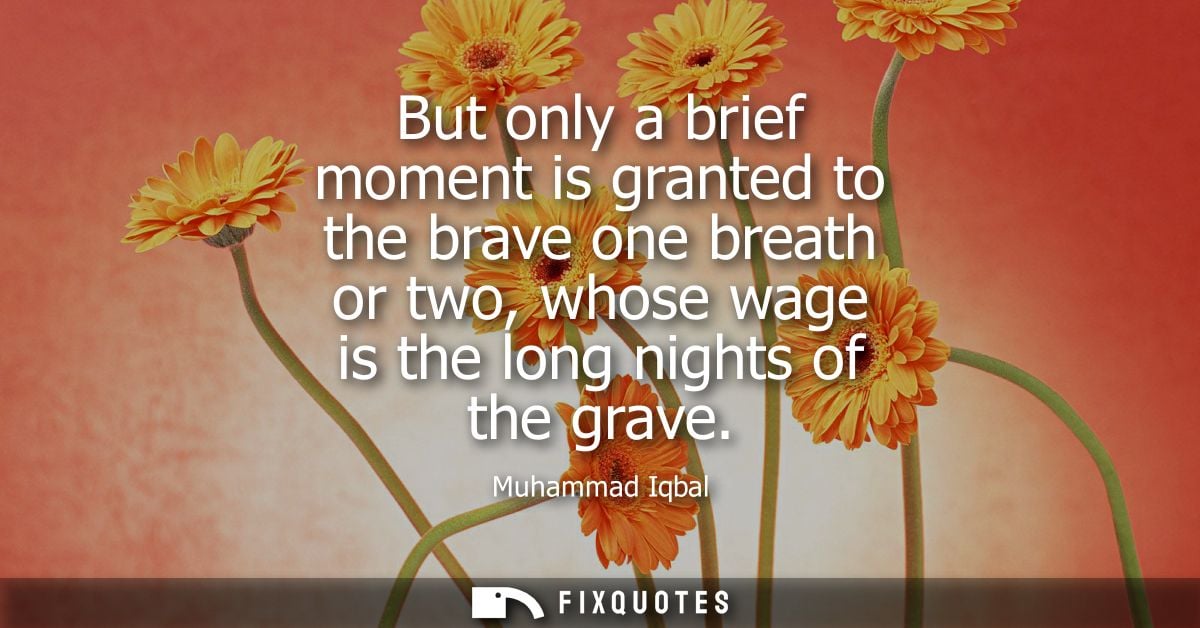
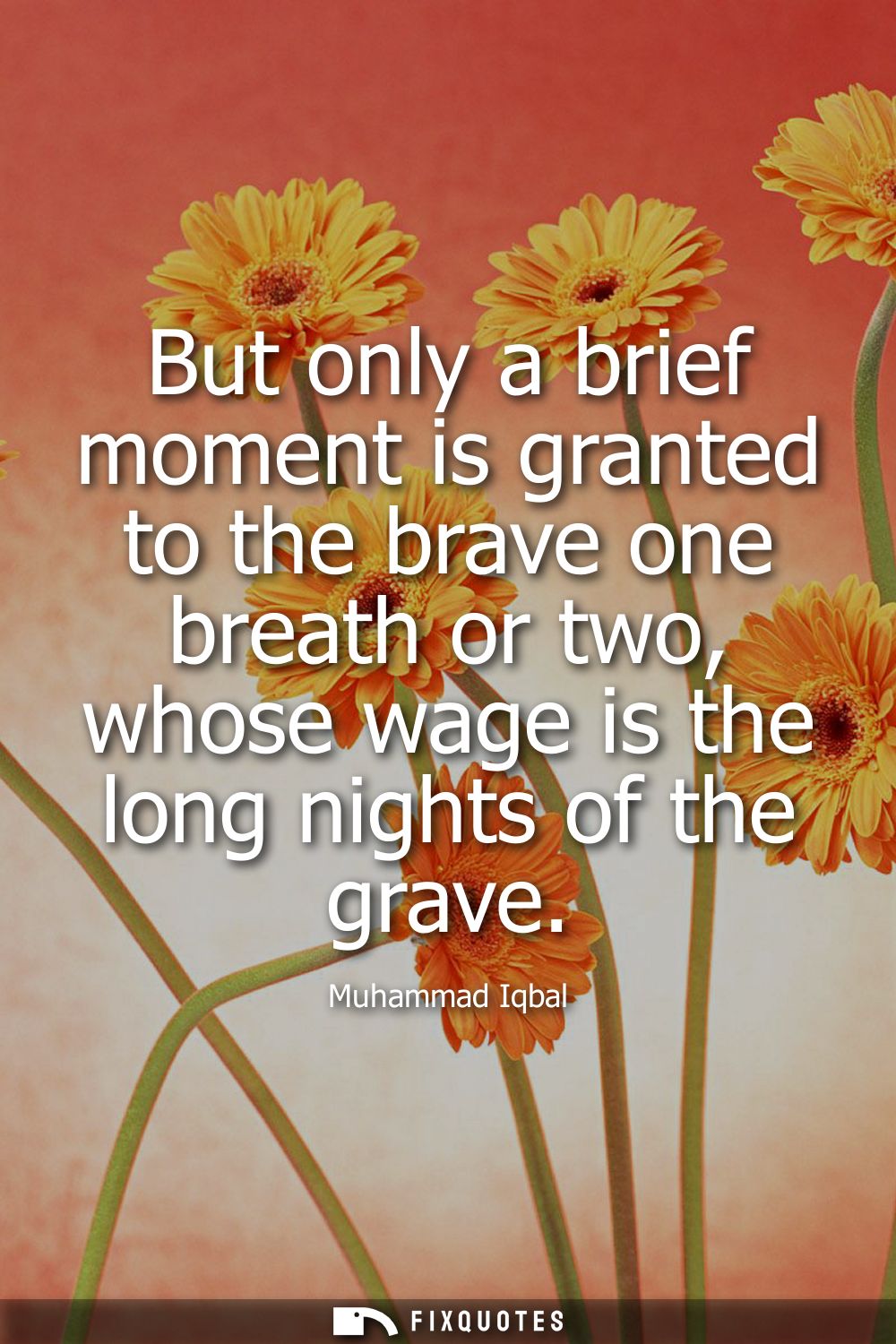
"But only a brief moment is granted to the brave one breath or two, whose wage is the long nights of the grave"
About this Quote
The line compresses the hard arithmetic of existence: courage is allotted only a slender window, one breath or two, while the guaranteed compensation for life’s labor is the long, unbroken night of the grave. Time appears not as an expansive field but as a vanishing aperture through which the brave must pass quickly, decisively, without the luxury of hesitation. The image of a breath brings life to its smallest unit, reminding that the essential currency of action is measured in heartbeats, not years.
Calling the grave’s darkness a wage turns mortality into a contract: no matter what we do, the final payment is the same. Yet the verse refuses despair. By naming the reward so starkly, it strips away illusions that defer action. If the end is assured, the question is not how to avoid it but how to invest the meager breath we are given. The brave are those who spend that breath without miserliness, aware that postponement is a kind of quiet betrayal of the self.
There is a paradox at work. The brave do not receive longer days; their recompense is not safety or longevity. What they claim instead is intensity, an existence that condenses meaning into the present. The risk of loss is transfigured into the dignity of choice. Legacy, transformation, awakening, these are not promised by the world but made possible when a person burns their brief oxygen in the service of something larger than comfort.
The long night does not negate the value of that breath; it frames it, sharpening its edges. Awareness of extinction is what dignifies action, makes truth-telling urgent, turns love into vow, labor into offering. To breathe with courage is to accept the contract and still spend lavishly: to speak when silence is cheaper, to create when apathy is safer, to step forward knowing the night is coming. Mortality becomes not a blockade but the reason to live at full voltage.
About the Author