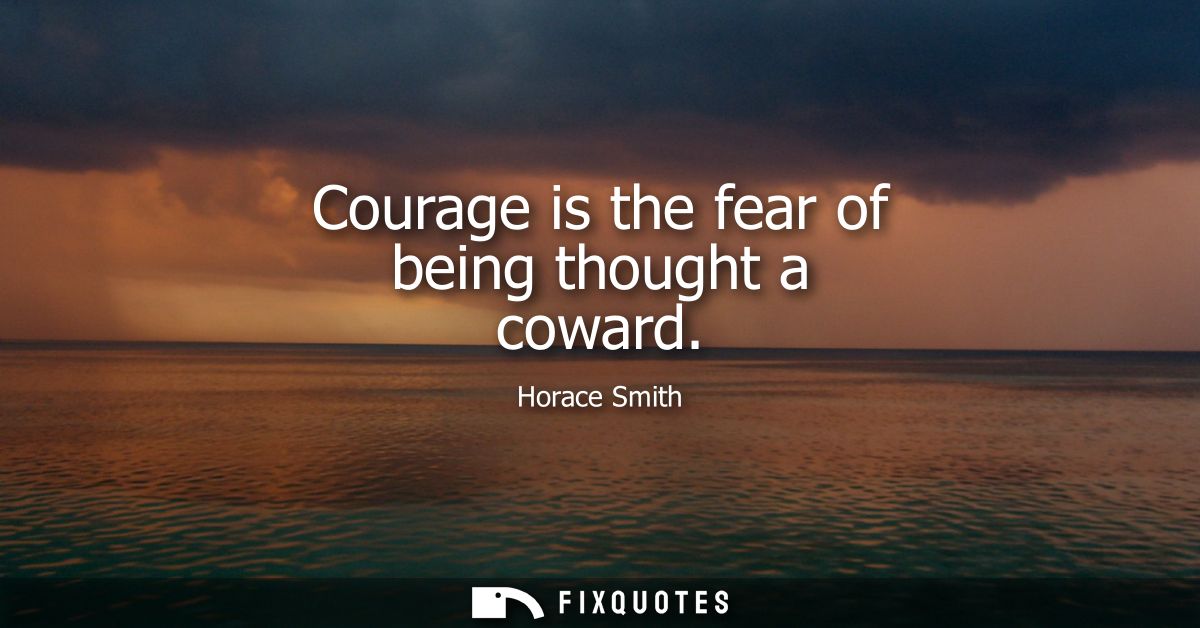
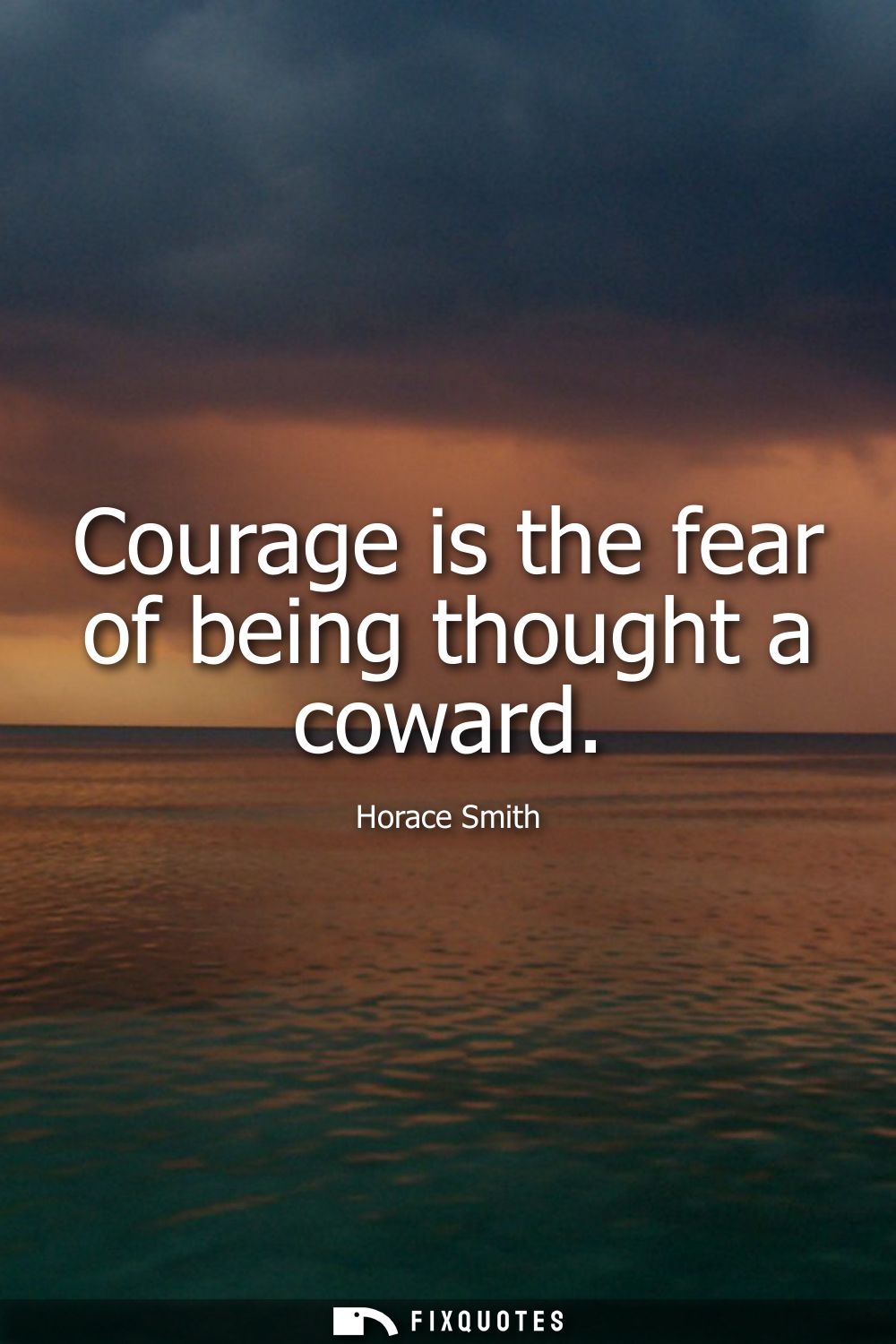
"Courage is the fear of being thought a coward"
About this Quote
Courage, in Horace Smith's telling, isn’t a saintly inner flame; it’s a social reflex. The line cuts against the comfortable story that bravery springs from conviction or nobility. Instead, it suggests a more bruisingly practical engine: reputation. You don’t charge the hill because you’re fearless; you charge because the alternative is a kind of public death, the label that sticks.
That twist is why the quote works. It drags courage out of the realm of private virtue and drops it into the crowd, where status is policed and shame is currency. Smith, a poet writing in an era that prized “manly” honor, understood how quickly a community turns moral judgment into performance pressure. In early 19th-century Britain, courage wasn’t merely admired; it was expected, especially in the shadow of war and an expanding empire that needed bodies willing to be heroic on command. Cowardice was not just weakness but a stain, a narrative you couldn’t easily outrun.
The subtext is darker than it first appears: bravery can be coerced. If courage is fueled by fear of contempt, it becomes indistinguishable from conformity under threat. Smith’s epigram also hints at hypocrisy: the brave may not be above fear at all; they may simply fear different consequences. It’s a neat, cynical compression of how virtue often gets manufactured - not by inner clarity, but by the terror of losing face.
That twist is why the quote works. It drags courage out of the realm of private virtue and drops it into the crowd, where status is policed and shame is currency. Smith, a poet writing in an era that prized “manly” honor, understood how quickly a community turns moral judgment into performance pressure. In early 19th-century Britain, courage wasn’t merely admired; it was expected, especially in the shadow of war and an expanding empire that needed bodies willing to be heroic on command. Cowardice was not just weakness but a stain, a narrative you couldn’t easily outrun.
The subtext is darker than it first appears: bravery can be coerced. If courage is fueled by fear of contempt, it becomes indistinguishable from conformity under threat. Smith’s epigram also hints at hypocrisy: the brave may not be above fear at all; they may simply fear different consequences. It’s a neat, cynical compression of how virtue often gets manufactured - not by inner clarity, but by the terror of losing face.
Quote Details
| Topic | Wisdom |
|---|---|
| Source | Help us find the source |
| Cite | Cite this Quote |
Citation Formats
APA Style (7th ed.)
Smith, Horace. (2026, January 15). Courage is the fear of being thought a coward. FixQuotes. https://fixquotes.com/quotes/courage-is-the-fear-of-being-thought-a-coward-170726/
Chicago Style
Smith, Horace. "Courage is the fear of being thought a coward." FixQuotes. January 15, 2026. https://fixquotes.com/quotes/courage-is-the-fear-of-being-thought-a-coward-170726/.
MLA Style (9th ed.)
"Courage is the fear of being thought a coward." FixQuotes, 15 Jan. 2026, https://fixquotes.com/quotes/courage-is-the-fear-of-being-thought-a-coward-170726/. Accessed 3 Feb. 2026.
More Quotes by Horace
Add to List