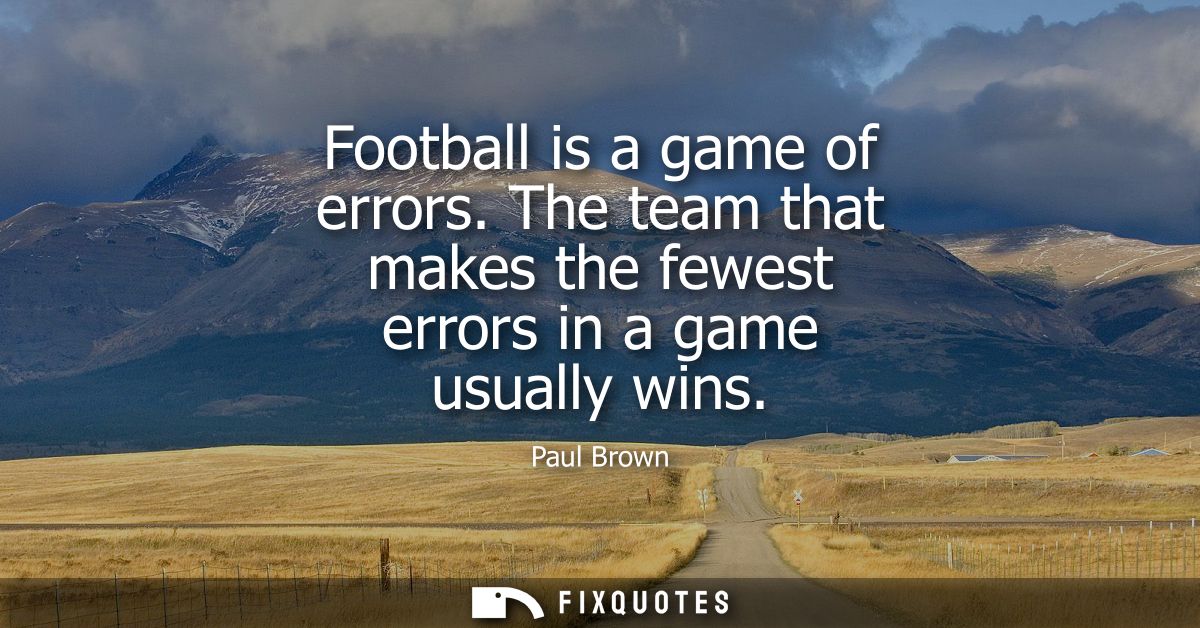
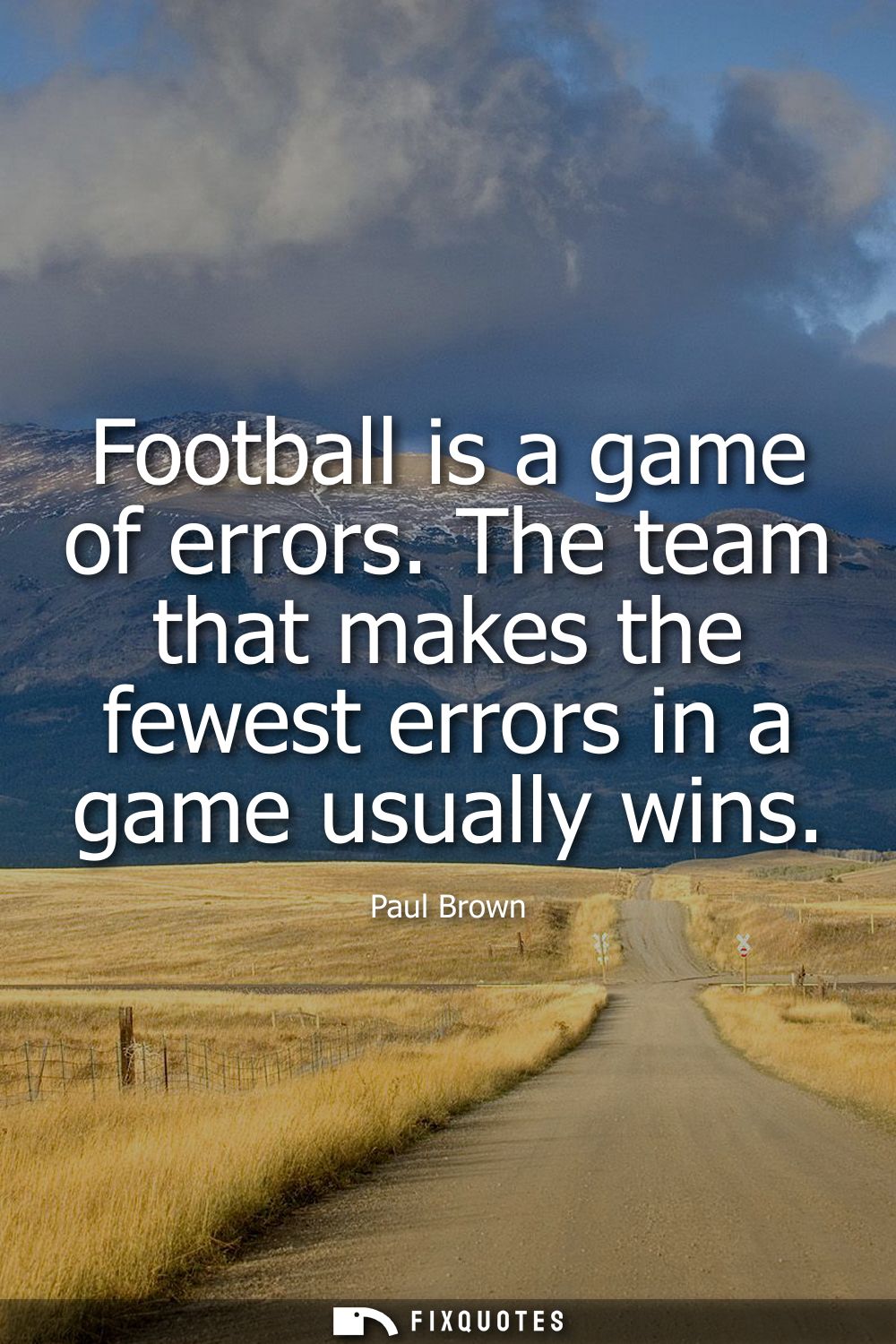
"Football is a game of errors. The team that makes the fewest errors in a game usually wins"
About this Quote
Paul Brown strips football of its romance and frames it as a contest of error control. Games swing less on spectacular plays than on turnovers, penalties, blown assignments, and special teams gaffes. The scoreboard often reflects who protected the ball, aligned correctly, and executed assignments with fewer lapses. At its core, the sport is a sequence of complex, timed tasks performed under stress; the side that limits breakdowns tends to shape the odds.
That perspective matches Brown’s reputation as the architect of modern coaching. He systematized preparation with detailed playbooks, film study, graded practice, and role clarity, building teams that were disciplined and consistent. His Cleveland Browns won relentlessly in the AAFC and NFL not by relying on improvisation, but by making precision routine. Even his innovations like sideline communication and the taxi squad served the same purpose: reduce confusion, sharpen execution, and hedge against inevitable human error.
Fewer errors does not mean timid football. It means calculated aggression, where risks are taken with sound technique and situational awareness. A deep shot called from the right protection, a blitz executed with proper leverage, or a return secured before the cut are forms of disciplined risk. Brown’s point is not to avoid daring but to strip avoidable mistakes from the daring.
The lesson echoes beyond football. High performance lives at the edge of chaos, so winning is as much about not beating yourself as it is about outflanking an opponent. When a team practices situational football, communicates crisply, and prizes fundamentals, it shortens the game and starves volatility. Over four quarters, those habits turn into an advantage on third down, in field position, and in the final two minutes.
Brown’s line is both pragmatic and humble. Talent and strategy matter, but mastery comes from managing fallibility. Victory goes to the side that prepares so thoroughly that their slips are fewer, smaller, and less costly than the other team’s.
That perspective matches Brown’s reputation as the architect of modern coaching. He systematized preparation with detailed playbooks, film study, graded practice, and role clarity, building teams that were disciplined and consistent. His Cleveland Browns won relentlessly in the AAFC and NFL not by relying on improvisation, but by making precision routine. Even his innovations like sideline communication and the taxi squad served the same purpose: reduce confusion, sharpen execution, and hedge against inevitable human error.
Fewer errors does not mean timid football. It means calculated aggression, where risks are taken with sound technique and situational awareness. A deep shot called from the right protection, a blitz executed with proper leverage, or a return secured before the cut are forms of disciplined risk. Brown’s point is not to avoid daring but to strip avoidable mistakes from the daring.
The lesson echoes beyond football. High performance lives at the edge of chaos, so winning is as much about not beating yourself as it is about outflanking an opponent. When a team practices situational football, communicates crisply, and prizes fundamentals, it shortens the game and starves volatility. Over four quarters, those habits turn into an advantage on third down, in field position, and in the final two minutes.
Brown’s line is both pragmatic and humble. Talent and strategy matter, but mastery comes from managing fallibility. Victory goes to the side that prepares so thoroughly that their slips are fewer, smaller, and less costly than the other team’s.
Quote Details
| Topic | Teamwork |
|---|
More Quotes by Paul
Add to List