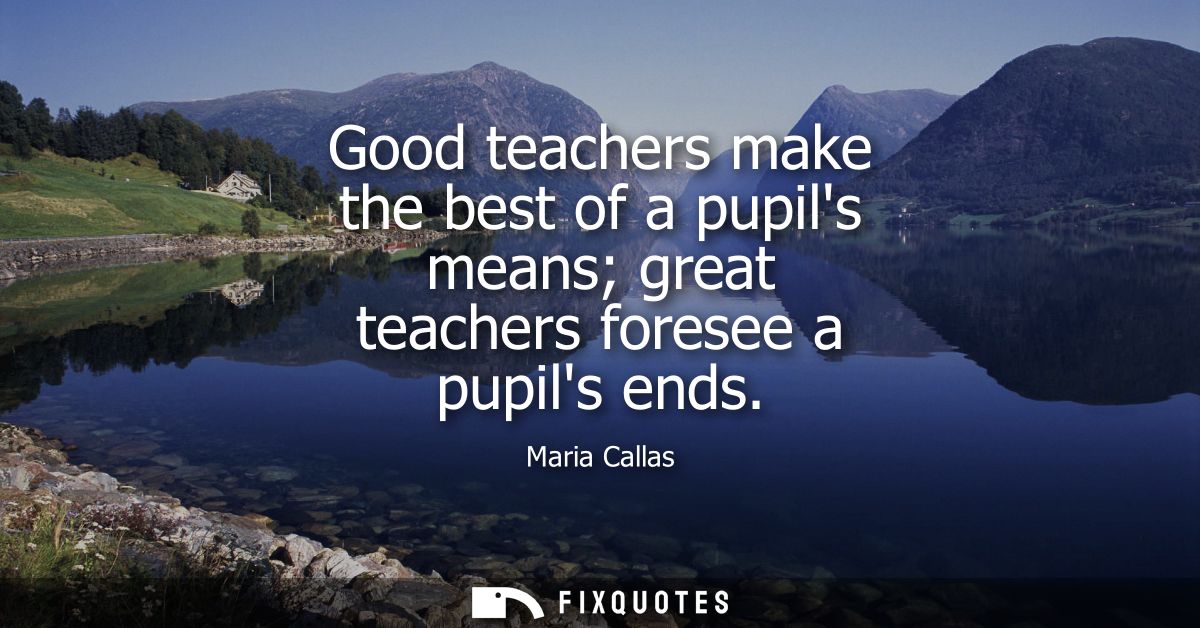
"Good teachers make the best of a pupil's means; great teachers foresee a pupil's ends"
About this Quote
Callas draws a ruthless line between competence and artistry, and it comes from someone who knew exactly how much of greatness is taught - and how much is demanded. A "good" teacher, in her telling, is adaptive: they work with the raw materials in front of them. That sounds benevolent, even modern. But Callas is too exacting to stop at nurture. "Great teachers foresee a pupil's ends" shifts the focus from present ability to future shape, from technique to destiny. The verb "foresee" matters: it's not just encouragement or guidance; it's judgment, bordering on prophecy. Great teaching, she implies, requires the nerve to name what a student is actually for.
In the world Callas inhabited - conservatories, masterclasses, the operatic pipeline - training is often confused with polishing. Plenty of instruction can improve what already exists: breath support, diction, phrasing, stamina. "Means" are the givens: voice type, temperament, limits. Callas suggests that real mentors look past those givens to an "end": the repertoire a singer should (and should not) attempt, the kind of artist they can become, the career they can survive. It's a protective idea and a controlling one.
The subtext is a warning against vanity and miscasting, the twin hazards of performance culture. A teacher who only "makes the best" may feed ambition without contouring it. Callas, famously shaped by demanding instruction and unforgiving stages, argues that the rare teacher doesn't merely improve you; they prevent you from becoming the wrong version of yourself.
In the world Callas inhabited - conservatories, masterclasses, the operatic pipeline - training is often confused with polishing. Plenty of instruction can improve what already exists: breath support, diction, phrasing, stamina. "Means" are the givens: voice type, temperament, limits. Callas suggests that real mentors look past those givens to an "end": the repertoire a singer should (and should not) attempt, the kind of artist they can become, the career they can survive. It's a protective idea and a controlling one.
The subtext is a warning against vanity and miscasting, the twin hazards of performance culture. A teacher who only "makes the best" may feed ambition without contouring it. Callas, famously shaped by demanding instruction and unforgiving stages, argues that the rare teacher doesn't merely improve you; they prevent you from becoming the wrong version of yourself.
Quote Details
| Topic | Teacher Appreciation |
|---|
More Quotes by Maria
Add to List