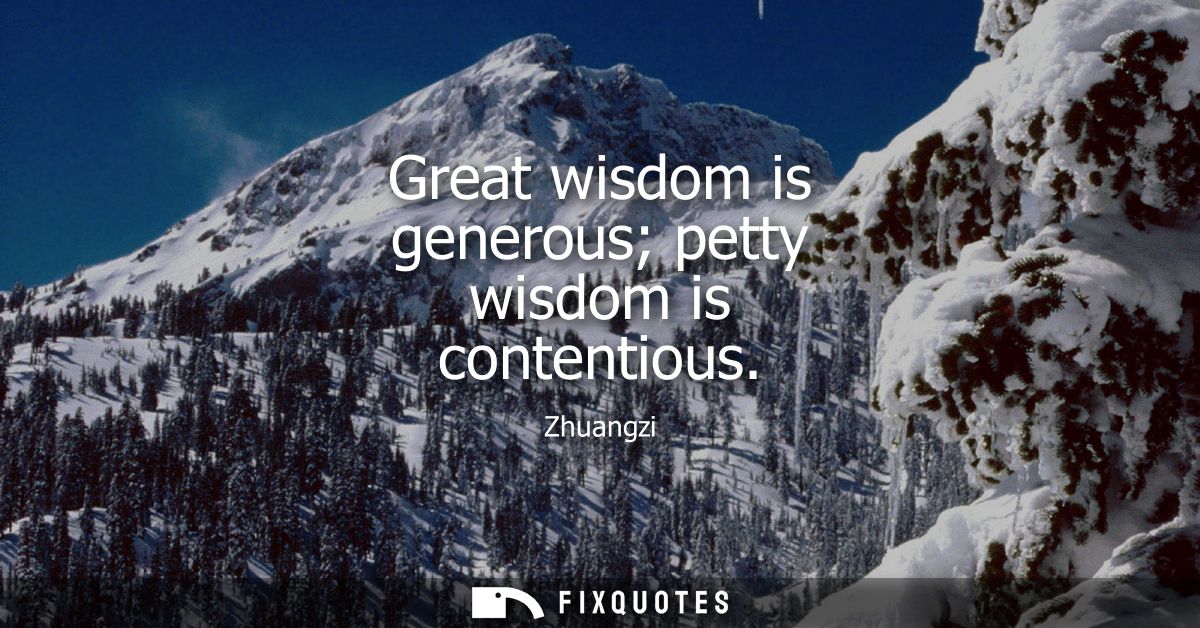
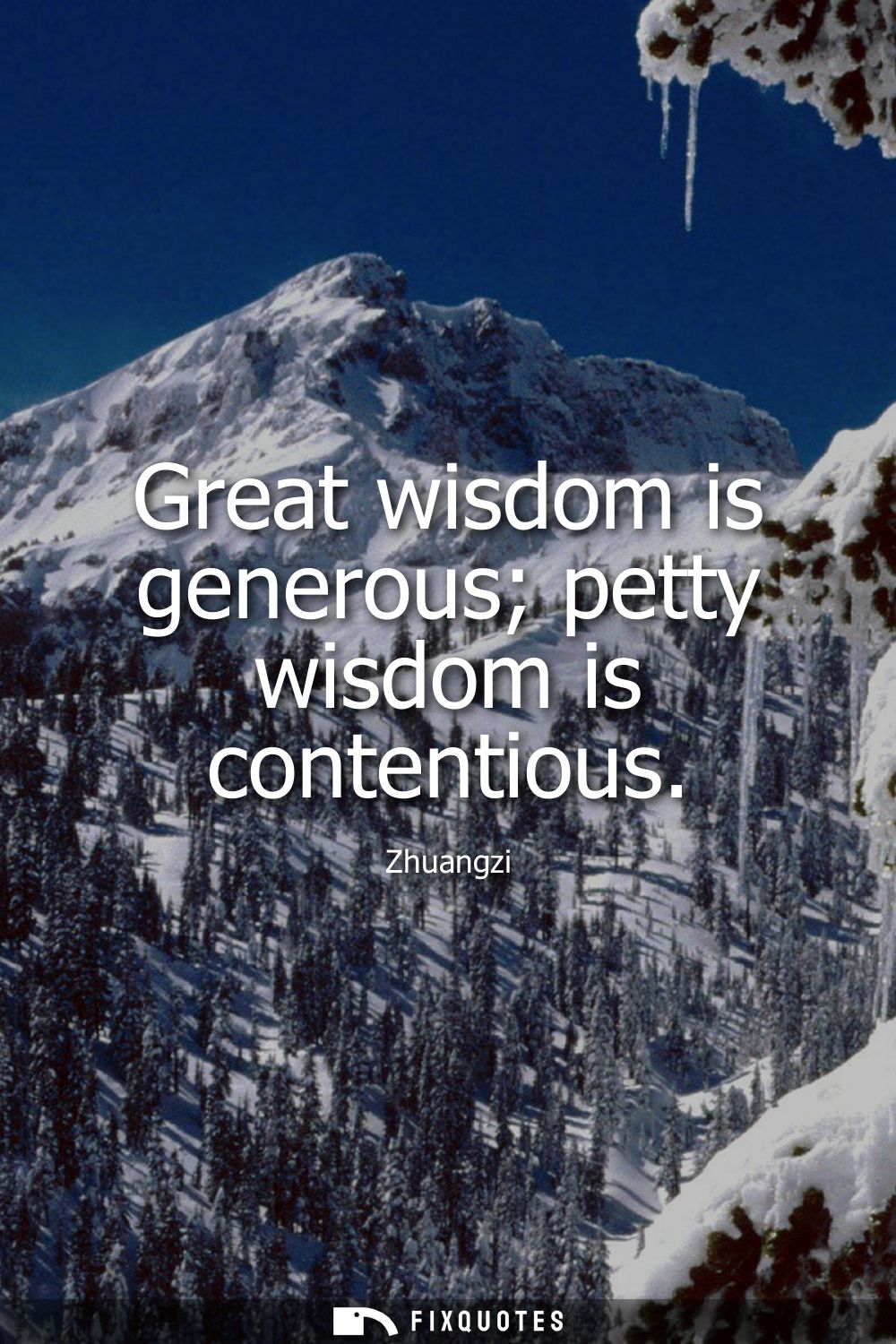
"Great wisdom is generous; petty wisdom is contentious"
About this Quote
Great wisdom has room; petty wisdom needs victory. Zhuangzi writes from the churning Warring States era, when rival schools fenced with definitions and policed the borders of right and wrong. He mocks that mood of intellectual combat, arguing that when vision is narrow the mind grows quarrelsome. Once you are invested in a single angle, every difference looks like an enemy; language becomes a blade, and success means scoring points.
By contrast, wisdom that has seen the breadth of things relaxes its grip. It is generous because it recognizes limits: perspectives are partial, names are makeshift, truths wear local colors. Zhuangzi delights in showing how what seems right from here looks wrong from there, how the big bird rides the wind while the little cicada clings to a twig and laughs. That recognition does not flatten distinctions; it softens the need to enforce them. The generous mind gives beings space to follow their own nature, trusts the current rather than forcing it, and can hold apparent contradictions without panic. He calls this ease wu wei, not inaction but unforced action.
His image of the fish trap captures the point. We build nets of words to catch meaning; once we have it, we can forget the net. Petty wisdom clings to the net and argues about its weave. Great wisdom lets go and moves with what is alive. It does not mean indifference or evasion. It means a patience that asks, What else might be true here? It practices charity of interpretation, lets complexity breathe, and is slow to condemn.
The line resonates now amid culture wars and endless threads. Contention multiplies heat; generosity multiplies light. When understanding is roomy, there is less to defend. When the ego is not at stake, conversation becomes discovery. The wisest answer is often not a refutation but a widening of sight.
By contrast, wisdom that has seen the breadth of things relaxes its grip. It is generous because it recognizes limits: perspectives are partial, names are makeshift, truths wear local colors. Zhuangzi delights in showing how what seems right from here looks wrong from there, how the big bird rides the wind while the little cicada clings to a twig and laughs. That recognition does not flatten distinctions; it softens the need to enforce them. The generous mind gives beings space to follow their own nature, trusts the current rather than forcing it, and can hold apparent contradictions without panic. He calls this ease wu wei, not inaction but unforced action.
His image of the fish trap captures the point. We build nets of words to catch meaning; once we have it, we can forget the net. Petty wisdom clings to the net and argues about its weave. Great wisdom lets go and moves with what is alive. It does not mean indifference or evasion. It means a patience that asks, What else might be true here? It practices charity of interpretation, lets complexity breathe, and is slow to condemn.
The line resonates now amid culture wars and endless threads. Contention multiplies heat; generosity multiplies light. When understanding is roomy, there is less to defend. When the ego is not at stake, conversation becomes discovery. The wisest answer is often not a refutation but a widening of sight.
Quote Details
| Topic | Wisdom |
|---|
More Quotes by Zhuangzi
Add to List