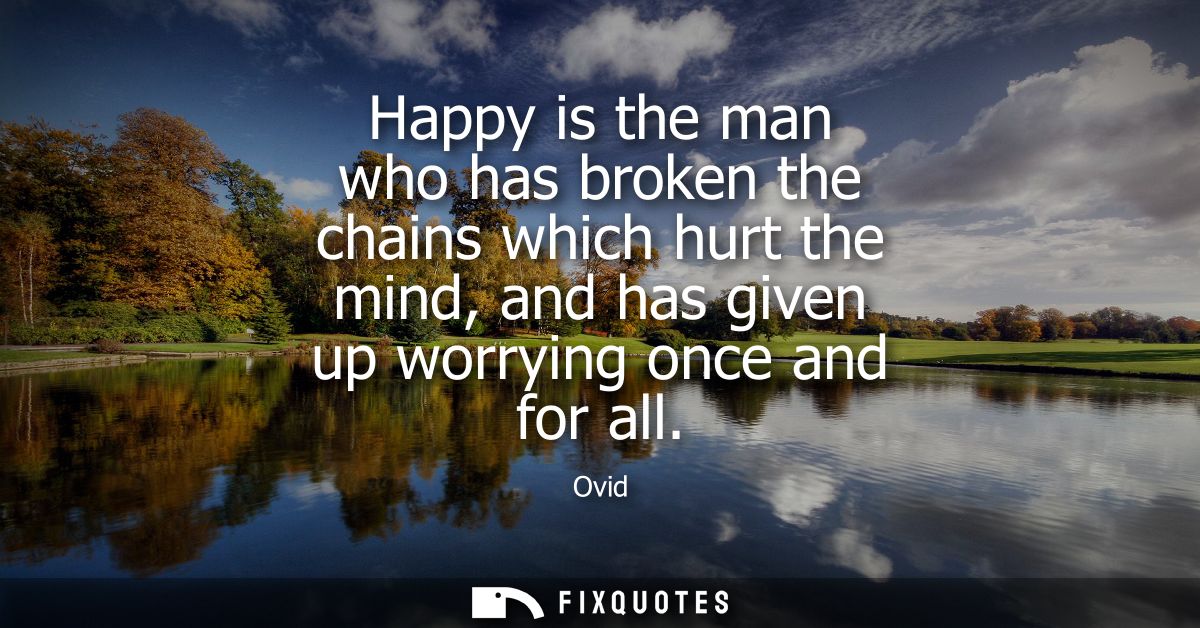
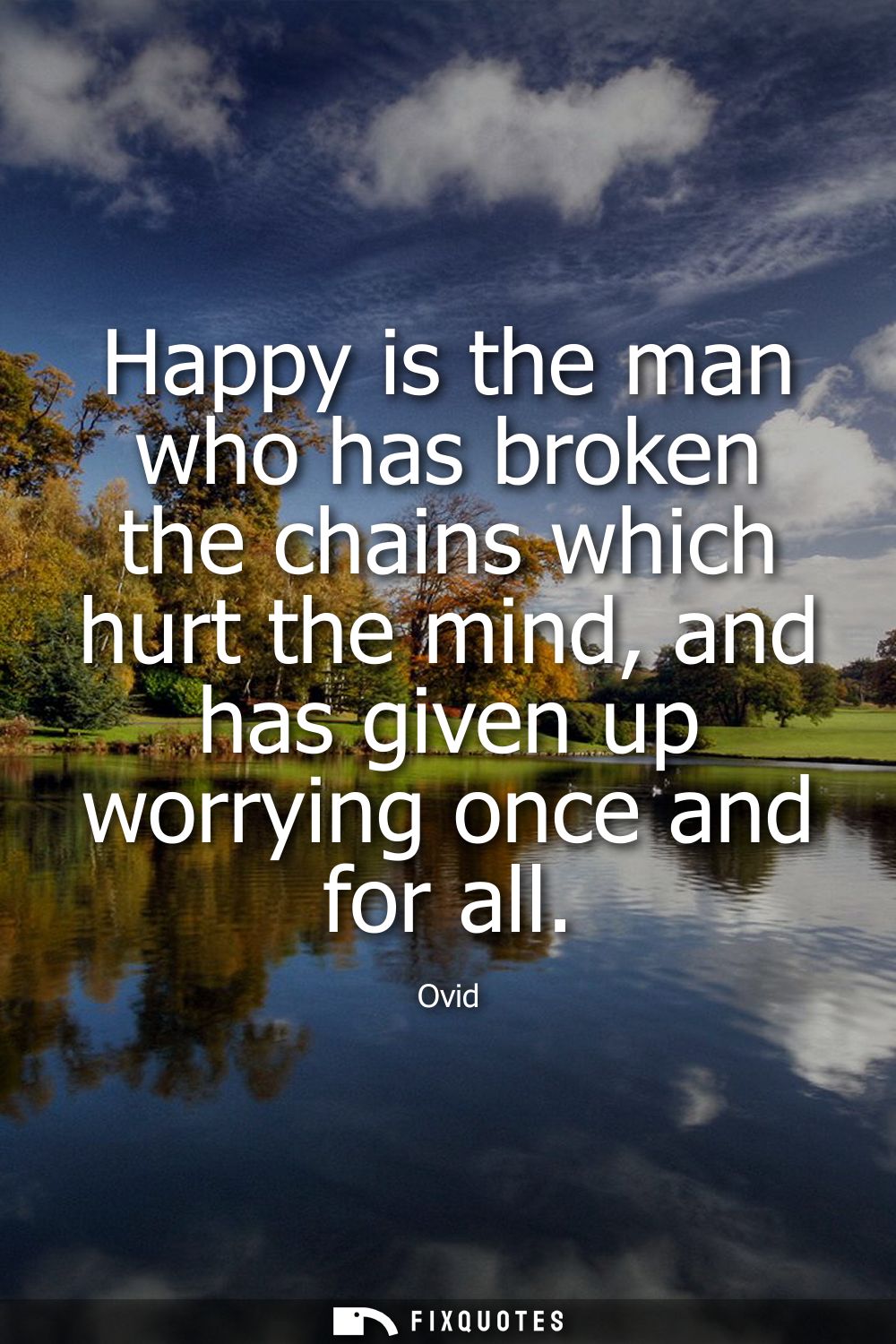
"Happy is the man who has broken the chains which hurt the mind, and has given up worrying once and for all"
About this Quote
Freedom, for Ovid, isn’t a civic condition; it’s a private jailbreak. “Chains which hurt the mind” frames anxiety as captivity - not an abstract mood, but a man-made restraint you can snap, renounce, walk away from. The line’s seduction is its decisiveness: “once and for all.” No incremental self-help, no careful management of stress. Just a clean break, a dramatic gesture worthy of a poet who understood how quickly the mind can turn into its own tyrant.
The intent is partly therapeutic, partly aesthetic. Ovid isn’t offering policy; he’s offering posture. The “happy man” is not the lucky man but the one who performs a radical edit of his inner life. That performance matters in Roman context, where happiness (felicitas) was often linked to fortune, status, and public standing. Ovid flips the axis: the real victory is internal. It’s also a sly rebuke to Rome’s obsession with control - legal, moral, imperial. If power can dominate bodies, worry dominates thought.
The subtext is more complicated than the calm surface. Ovid’s own biography (eventually exiled by Augustus) hangs behind any talk of liberation: when external freedom can be revoked overnight, cultivating mental detachment becomes a survival tactic. The quote sells serenity as an act of defiance. Break the mental chains, and the empire - or fate, or scandal, or gossip - loses its favorite leverage: your attention.
The intent is partly therapeutic, partly aesthetic. Ovid isn’t offering policy; he’s offering posture. The “happy man” is not the lucky man but the one who performs a radical edit of his inner life. That performance matters in Roman context, where happiness (felicitas) was often linked to fortune, status, and public standing. Ovid flips the axis: the real victory is internal. It’s also a sly rebuke to Rome’s obsession with control - legal, moral, imperial. If power can dominate bodies, worry dominates thought.
The subtext is more complicated than the calm surface. Ovid’s own biography (eventually exiled by Augustus) hangs behind any talk of liberation: when external freedom can be revoked overnight, cultivating mental detachment becomes a survival tactic. The quote sells serenity as an act of defiance. Break the mental chains, and the empire - or fate, or scandal, or gossip - loses its favorite leverage: your attention.
Quote Details
| Topic | Letting Go |
|---|
More Quotes by Ovid
Add to List