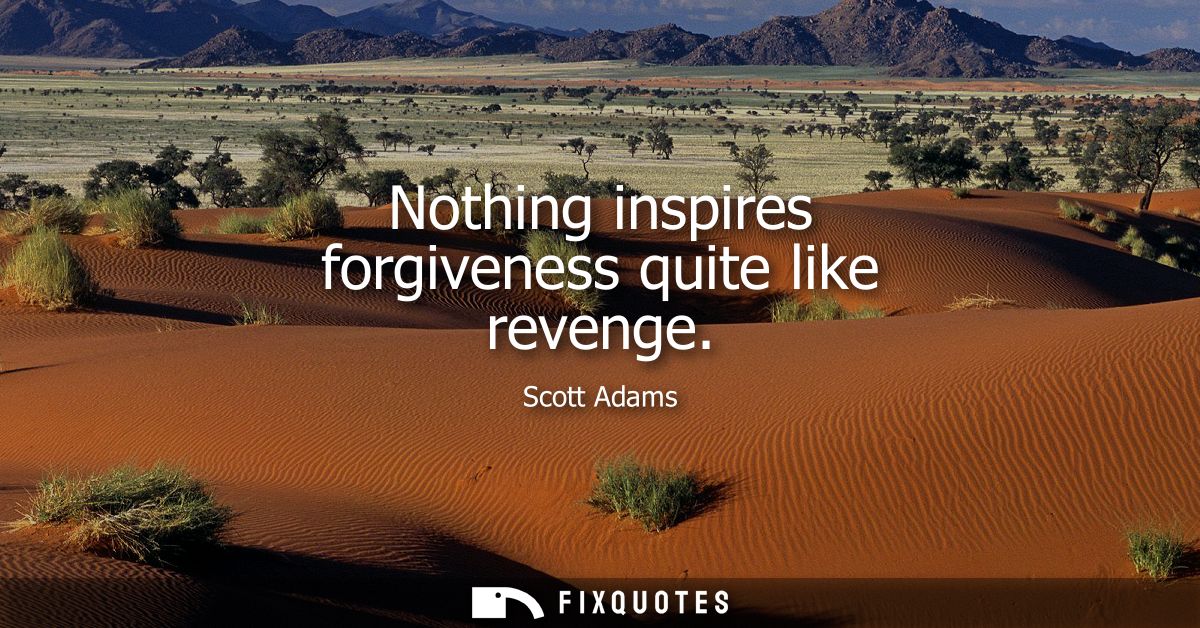
"Nothing inspires forgiveness quite like revenge"
About this Quote
Human emotions around wrongdoing and justice are often more complex than the simple binary of guilt and innocence. When someone is hurt, a primal urge for retaliation can arise, promising relief or closure through an act of revenge. Strangely, it is often in the planning, experiencing, or even fantasizing about this revenge that people come face-to-face with the true costs of retribution.
The prospect of causing someone else the pain that you have felt does not always bring the satisfaction one imagined. Instead, the thirst for vengeance may give way to self-reflection. The cycle of retaliation can begin to seem endless, hollow, and exhausting. Standing on the edge of enacting revenge, those who seek it may realize that inflicting pain does not restore what was lost or heal the original wound, but rather perpetuates an ongoing struggle. This recognition can kindle empathy; understanding your adversary’s humanity may rise unexpectedly amid thoughts of vengeance.
Moreover, the moral discomfort that often accompanies revenge can act as a turning point. True peace comes not from evening the score, but from transcending it. The very fantasies of getting even may clarify the futility and emotional cost involved. The anger that fuels revenge can lose its edge, replaced by compassion or even pity for the person who caused the original hurt. Sometimes, a person realizes that holding onto resentment is only prolonging their own suffering.
Thus, revenge can become the catalyst for forgiveness, shining a harsh light on the emptiness of payback. Choosing to forgive, after truly understanding the lure of revenge, is not about excusing the offense or forgetting the pain, but about moving forward with strength and integrity. In this way, the journey towards revenge may paradoxically lead to the softer but ultimately more liberating destination of forgiveness.
The prospect of causing someone else the pain that you have felt does not always bring the satisfaction one imagined. Instead, the thirst for vengeance may give way to self-reflection. The cycle of retaliation can begin to seem endless, hollow, and exhausting. Standing on the edge of enacting revenge, those who seek it may realize that inflicting pain does not restore what was lost or heal the original wound, but rather perpetuates an ongoing struggle. This recognition can kindle empathy; understanding your adversary’s humanity may rise unexpectedly amid thoughts of vengeance.
Moreover, the moral discomfort that often accompanies revenge can act as a turning point. True peace comes not from evening the score, but from transcending it. The very fantasies of getting even may clarify the futility and emotional cost involved. The anger that fuels revenge can lose its edge, replaced by compassion or even pity for the person who caused the original hurt. Sometimes, a person realizes that holding onto resentment is only prolonging their own suffering.
Thus, revenge can become the catalyst for forgiveness, shining a harsh light on the emptiness of payback. Choosing to forgive, after truly understanding the lure of revenge, is not about excusing the offense or forgetting the pain, but about moving forward with strength and integrity. In this way, the journey towards revenge may paradoxically lead to the softer but ultimately more liberating destination of forgiveness.
Quote Details
| Topic | Sarcastic |
|---|
More Quotes by Scott
Add to List