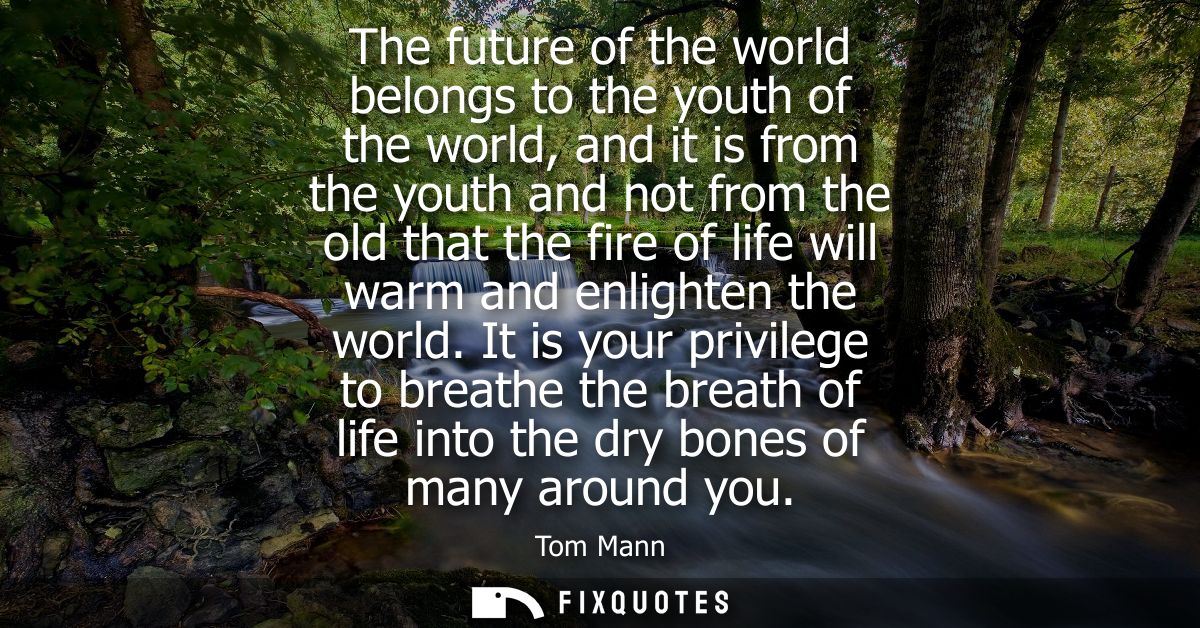
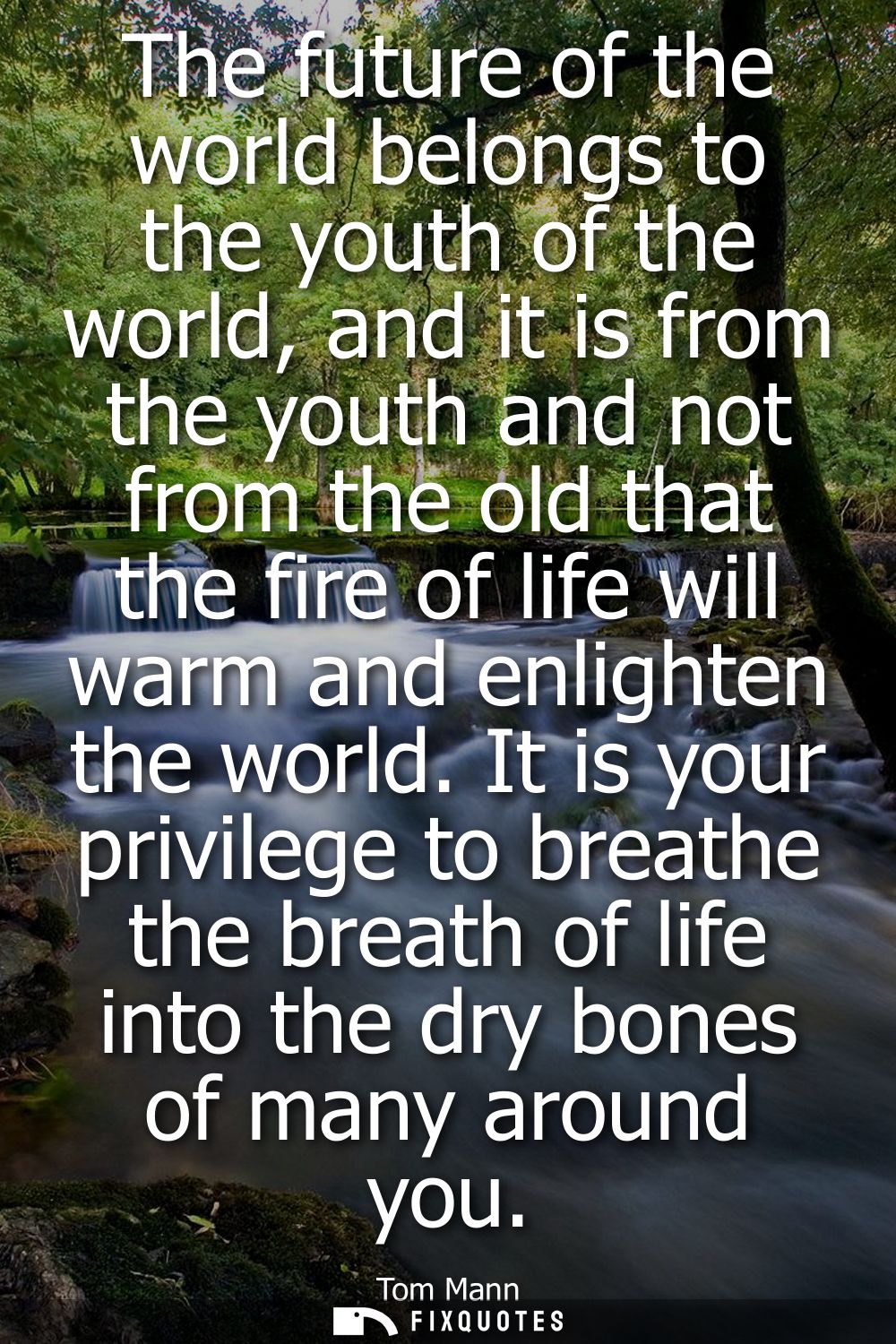
"The future of the world belongs to the youth of the world, and it is from the youth and not from the old that the fire of life will warm and enlighten the world. It is your privilege to breathe the breath of life into the dry bones of many around you"
About this Quote
Mann is selling an inheritance, but not the kind that comes with property deeds or stock certificates. He frames the future as something youth already owns, then turns that ownership into a duty: your “privilege” is to animate a world gone cold. The language is deliberately elemental. “Fire of life” doesn’t argue policy; it evokes heat, light, motion - a young body as an energy source for society. That’s a pitch as old as organizing itself: if the institutions feel dead, it’s because older custodians have turned them into dry storage, and you are the match.
The subtext is a quiet indictment of age, or at least of what Mann wants age to represent: caution calcified into complacency. He doesn’t call the old evil; he calls them “dry bones,” a biblical image that does a lot of work. It suggests not just stagnation but the possibility of resurrection, and it positions youth as the prophet with the breath to make it happen. That metaphor flatters the listener while also conscripting them. Inspiration and recruitment share a bloodstream here.
Context matters: Mann lived through industrial capitalism’s boom-and-bust rhythms, mass labor agitation, and world war - eras when “the old” often meant bosses, generals, and gatekeepers defending a brittle order. Casting youth as the rightful heir to “the future of the world” reframes generational conflict as moral urgency, not impatience. It works because it offers a role in a drama bigger than self-improvement: you aren’t just growing up; you’re re-animating a society that has forgotten how to live.
The subtext is a quiet indictment of age, or at least of what Mann wants age to represent: caution calcified into complacency. He doesn’t call the old evil; he calls them “dry bones,” a biblical image that does a lot of work. It suggests not just stagnation but the possibility of resurrection, and it positions youth as the prophet with the breath to make it happen. That metaphor flatters the listener while also conscripting them. Inspiration and recruitment share a bloodstream here.
Context matters: Mann lived through industrial capitalism’s boom-and-bust rhythms, mass labor agitation, and world war - eras when “the old” often meant bosses, generals, and gatekeepers defending a brittle order. Casting youth as the rightful heir to “the future of the world” reframes generational conflict as moral urgency, not impatience. It works because it offers a role in a drama bigger than self-improvement: you aren’t just growing up; you’re re-animating a society that has forgotten how to live.
Quote Details
| Topic | Youth |
|---|
More Quotes by Tom
Add to List