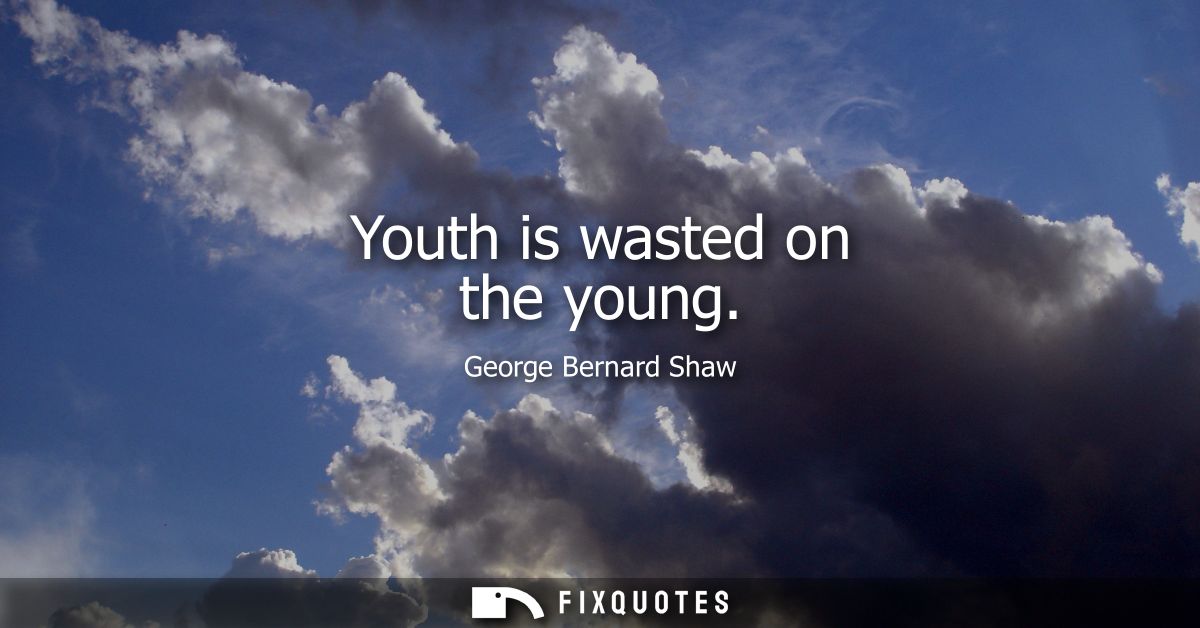
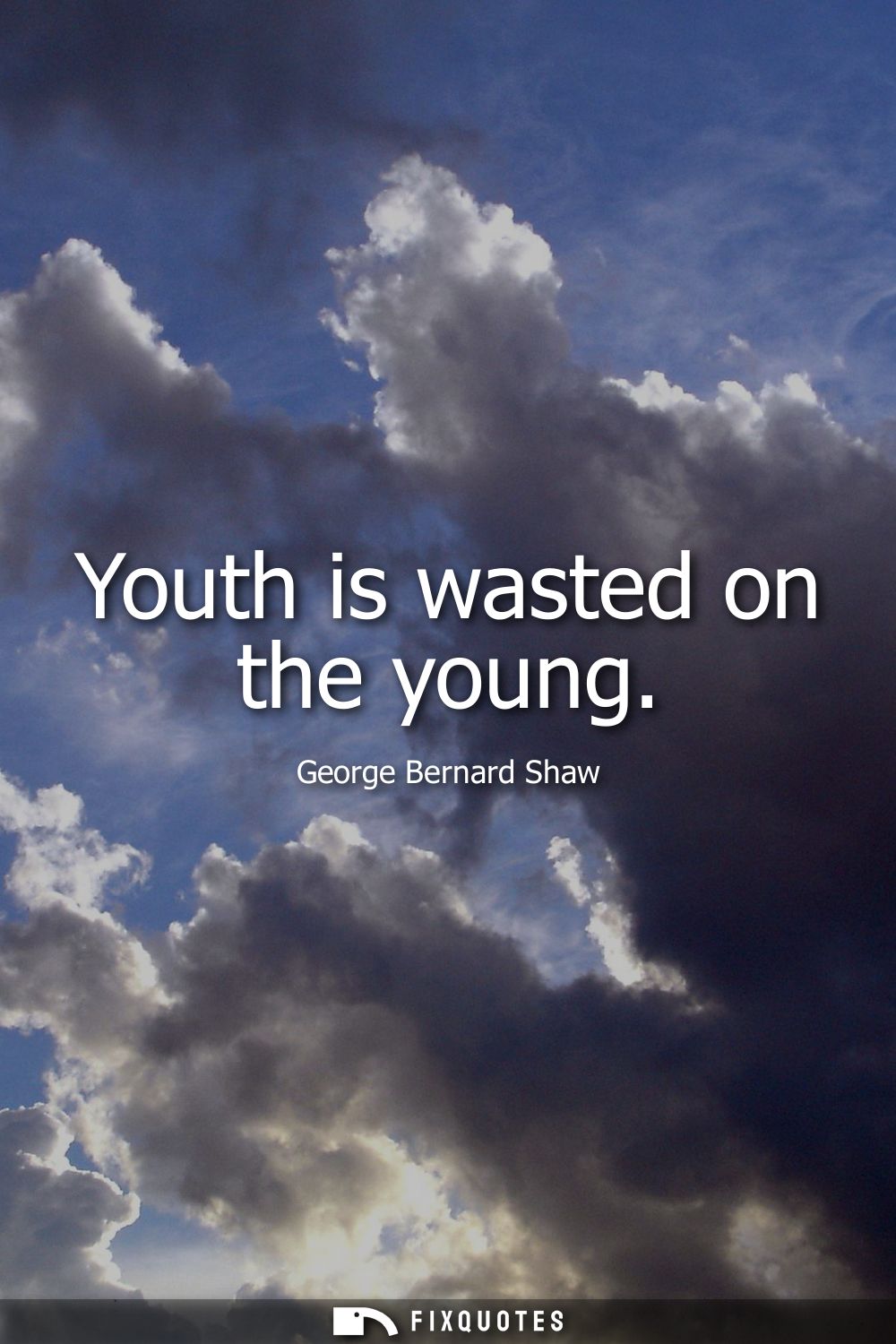
"Youth is wasted on the young"
About this Quote
Shaw’s line lands like a tiny slap: it turns the cultural worship of youth into an accusation against youth itself. The sting is in the reversal. We assume youth is a gift; Shaw frames it as misallocated capital, handed to people least equipped to invest it. That’s classic Shaw: a paradox that sounds like common sense only after it’s already insulted you.
The intent isn’t sentimental regret so much as social critique. Youth, in his worldview, isn’t merely a phase of smooth skin and high energy; it’s a short window of bodily advantage paired with an underdeveloped sense of consequence. The subtext is that the young are not to blame for being young, but society is to blame for romanticizing youth while refusing to give it meaningful agency, education, or purpose. If the young “waste” youth, it’s partly because the world trains them to treat their best years as rehearsal rather than authorship.
Context matters: Shaw wrote in a period obsessed with progress and “improvement,” yet rigidly stratified by class and convention. As a socialist-minded dramatist who loved puncturing bourgeois self-satisfaction, he’s also smuggling in a complaint about how experience accrues too late to be fully usable. By the time you know what to do with freedom, your body has started repossessing it.
The line endures because it’s portable: it flatters the old with rueful wisdom while quietly indicting them for hoarding power, then blaming the powerless for not using it well. That double edge is the mechanism, and the joke.
The intent isn’t sentimental regret so much as social critique. Youth, in his worldview, isn’t merely a phase of smooth skin and high energy; it’s a short window of bodily advantage paired with an underdeveloped sense of consequence. The subtext is that the young are not to blame for being young, but society is to blame for romanticizing youth while refusing to give it meaningful agency, education, or purpose. If the young “waste” youth, it’s partly because the world trains them to treat their best years as rehearsal rather than authorship.
Context matters: Shaw wrote in a period obsessed with progress and “improvement,” yet rigidly stratified by class and convention. As a socialist-minded dramatist who loved puncturing bourgeois self-satisfaction, he’s also smuggling in a complaint about how experience accrues too late to be fully usable. By the time you know what to do with freedom, your body has started repossessing it.
The line endures because it’s portable: it flatters the old with rueful wisdom while quietly indicting them for hoarding power, then blaming the powerless for not using it well. That double edge is the mechanism, and the joke.
Quote Details
| Topic | Youth |
|---|---|
| Source | Help us find the source |
| Cite |
Citation Formats
APA Style (7th ed.)
Shaw, George Bernard. (2026, January 15). Youth is wasted on the young. FixQuotes. https://fixquotes.com/quotes/youth-is-wasted-on-the-young-33217/
Chicago Style
Shaw, George Bernard. "Youth is wasted on the young." FixQuotes. January 15, 2026. https://fixquotes.com/quotes/youth-is-wasted-on-the-young-33217/.
MLA Style (9th ed.)
"Youth is wasted on the young." FixQuotes, 15 Jan. 2026, https://fixquotes.com/quotes/youth-is-wasted-on-the-young-33217/. Accessed 9 Feb. 2026.
More Quotes by George
Add to List