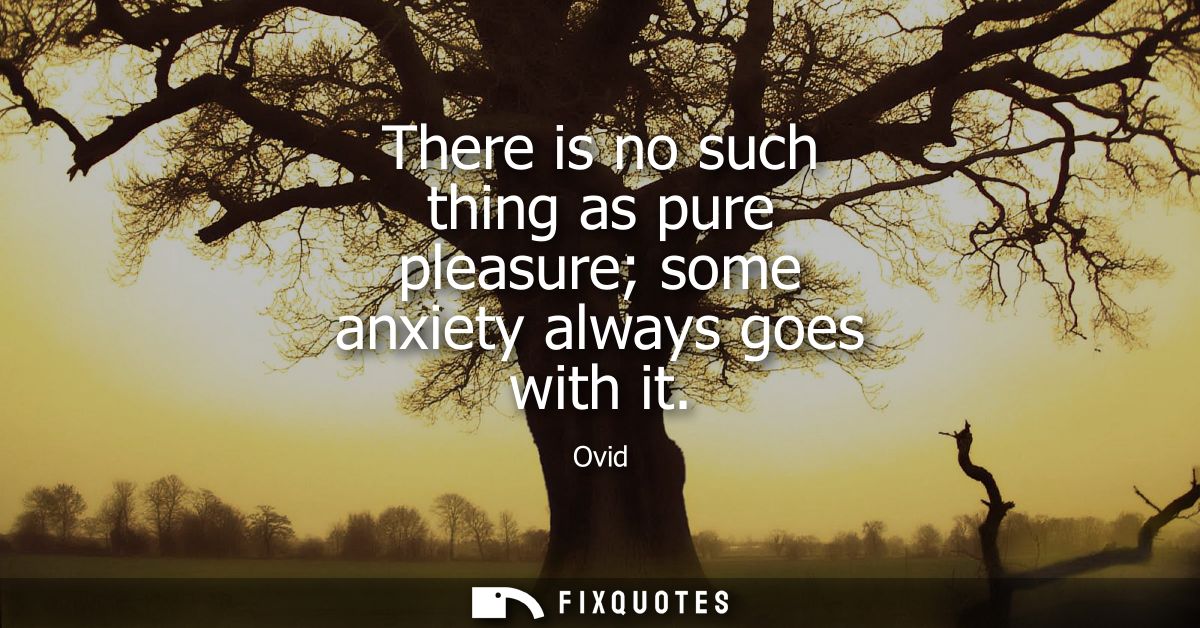
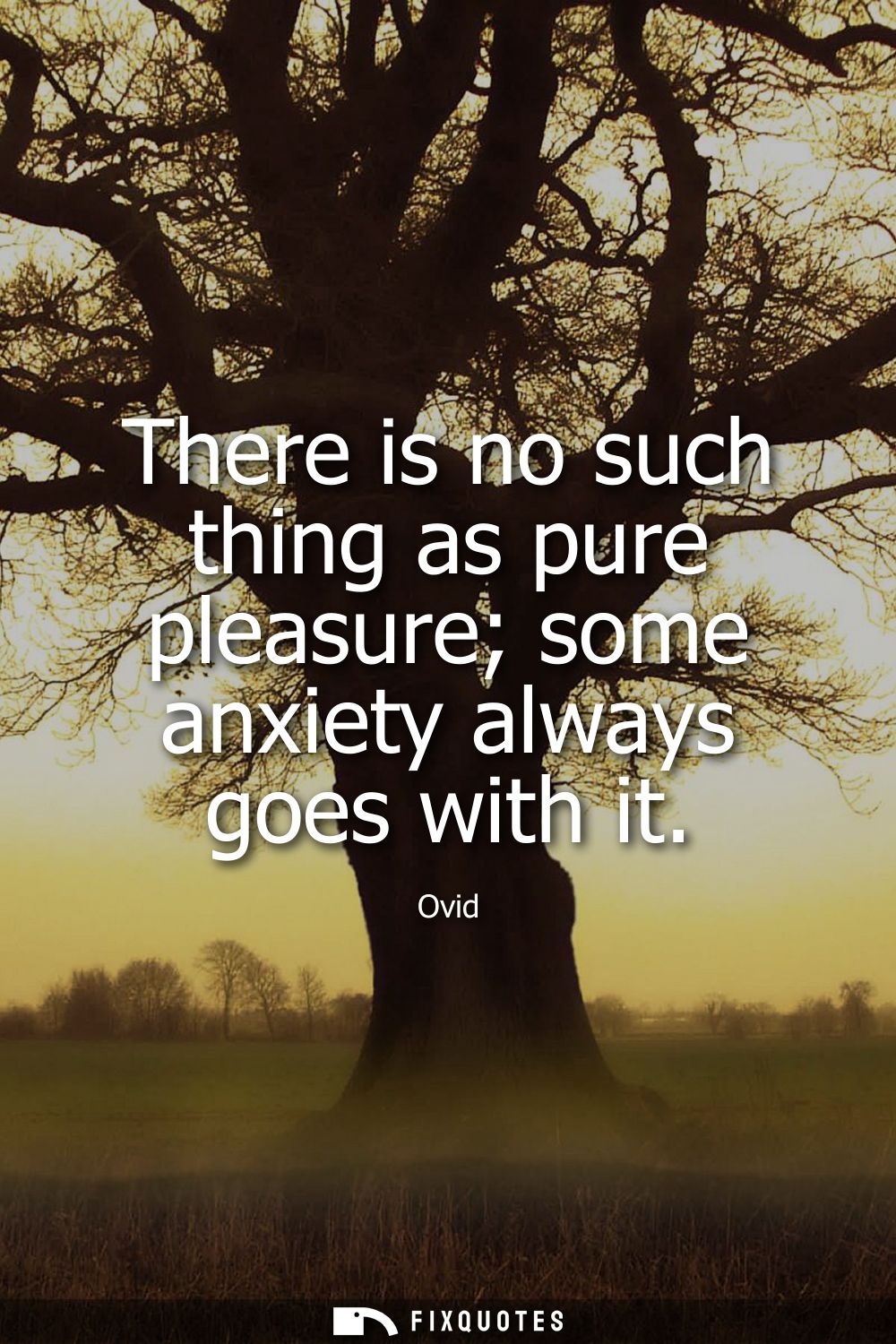
"There is no such thing as pure pleasure; some anxiety always goes with it"
About this Quote
Ovid’s observation taps into a deeply human paradox: the pursuit of pleasure is inherently laced with threads of anxiety. Moments of joy are rarely isolated from apprehension or fear, and the mind, anticipating future loss or complications, seldom allows itself to rest entirely in happiness. Even as one indulges in the delights of life, a feast, a lover’s embrace, the triumph of achievement, there lingers uncertainty. People may worry that the pleasure is fleeting, that it will invite envy or consequence, or that it stems from circumstances subject to change.
The nature of pleasure is to be ephemeral, contingent on both the situation and the state of mind. As we experience something enjoyable, a shadow often creeps in: What if it ends? What if it isn’t as fulfilling as hoped? The knowledge that joy cannot be possessed permanently may provoke the mind to rehearse its own loss, almost preemptively mourning. There is also the anxiety that pleasure, especially intense or illicit kinds, can invite retribution or guilt, an echo perhaps of moral codes or cultural values warning against overindulgence.
Some philosophical traditions suggest that this intermingling of sweetness and anxiety is not a flaw but an essential aspect of the human experience. The vulnerability that comes from caring about something deeply, whether it’s a person, a project, or a dream, means one’s happiness is at risk. To feel pleasure is to be open, and with openness comes exposure to unpredictability and pain.
Ovid’s line speaks to a universal tension: we crave delight, but part of us cannot relinquish caution. Instead of striving for an unattainable, anxiety-free pleasure, wisdom may lie in accepting the blend, in appreciating joy all the more deeply because it is fragile, aware that every pleasure’s edge is softened or sharpened by the anxieties that accompany it.
About the Author