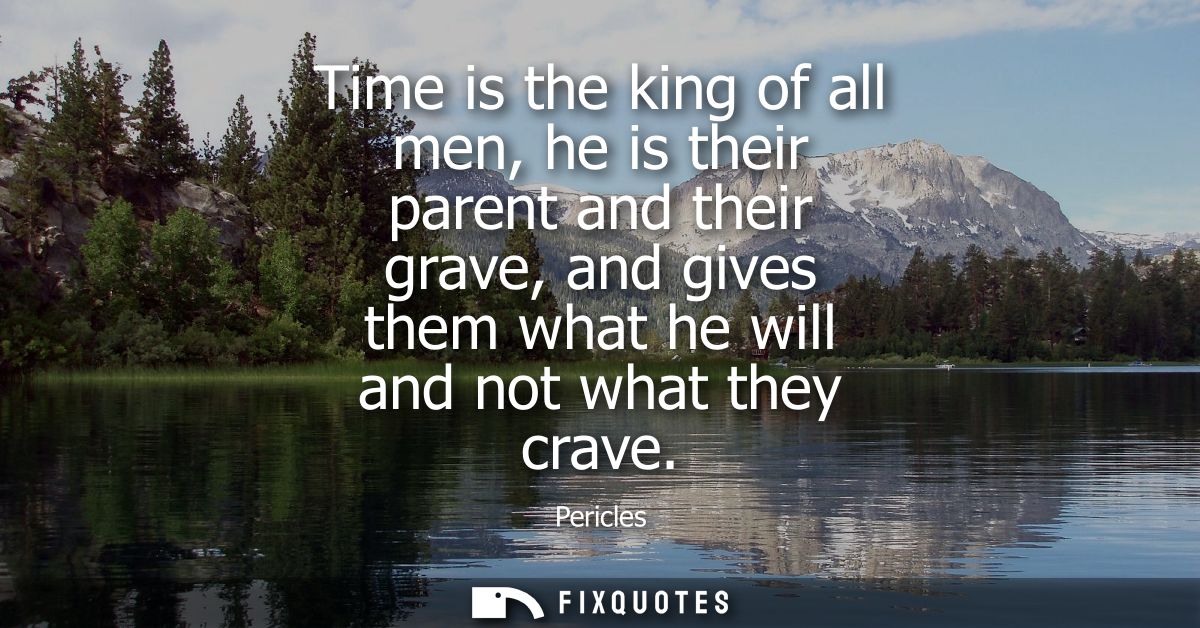
"Time is the king of all men, he is their parent and their grave, and gives them what he will and not what they crave"
About this Quote
Pericles puts Time on the throne and then dares you to argue with the succession. In a culture that prized human excellence and civic glory, this is a cold reminder that even the most meticulously earned reputation is a tenant, not an owner. Calling Time "the king of all men" isn’t decorative; it’s a political metaphor aimed at the proud. Kings distribute favors by whim, not by merit, and Pericles drags that uncomfortable truth into the moral universe: you don’t get what you deserve, you get what the calendar allows.
The line turns sharper with the double image of parent and grave. Time doesn’t merely end lives; it authorizes them. It produces generations, then erases them, a cycle that makes individual craving look almost childish. That word choice matters: "crave" suggests appetite, urgency, the hot demand of citizens who want victory, security, honor, immortality. Pericles answers with something like statesmanly discipline: desire is loud, Time is law.
The context is the Athenian moment Pericles helped define - democratic confidence, imperial ambition, war-shadowed reality. His rhetoric often praised Athens while tutoring it, and this feels like the tutoring: a warning against hubris, panic, and the belief that political will can bully fate. It also smuggles in a kind of consolation. If Time governs impartially, then loss and limitation aren’t personal humiliations; they’re the common tax of being human, paid by rulers and citizens alike.
The line turns sharper with the double image of parent and grave. Time doesn’t merely end lives; it authorizes them. It produces generations, then erases them, a cycle that makes individual craving look almost childish. That word choice matters: "crave" suggests appetite, urgency, the hot demand of citizens who want victory, security, honor, immortality. Pericles answers with something like statesmanly discipline: desire is loud, Time is law.
The context is the Athenian moment Pericles helped define - democratic confidence, imperial ambition, war-shadowed reality. His rhetoric often praised Athens while tutoring it, and this feels like the tutoring: a warning against hubris, panic, and the belief that political will can bully fate. It also smuggles in a kind of consolation. If Time governs impartially, then loss and limitation aren’t personal humiliations; they’re the common tax of being human, paid by rulers and citizens alike.
Quote Details
| Topic | Time |
|---|
More Quotes by Pericles
Add to List