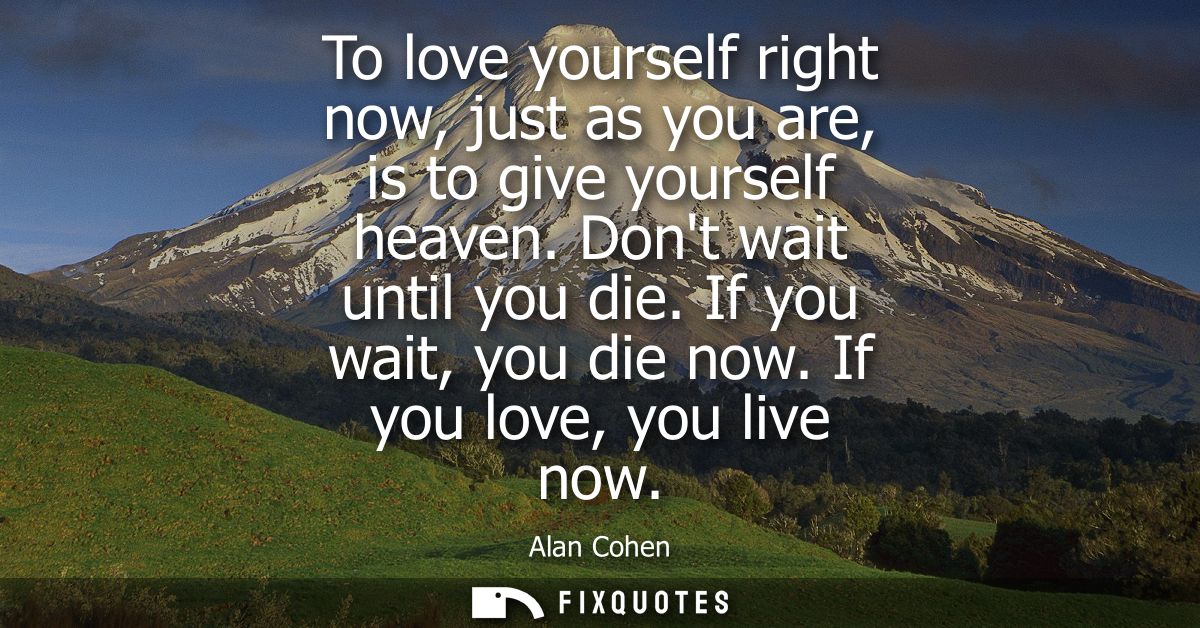
"To love yourself right now, just as you are, is to give yourself heaven. Don't wait until you die. If you wait, you die now. If you love, you live now"
About this Quote
This quote by Alan Cohen emphasizes the extensive impact of self-love on our well-being and presence. At its core, it recommends that accepting and liking ourselves in our present state is akin to experiencing paradise on earth. The phrase "to give yourself paradise" implies that self-love provides ultimate peace, joy, and satisfaction, much like the bliss connected with the concept of heaven.
The quote supporters versus the typical propensity to delay self-love till some ideal version of ourselves is accomplished or till our situations improve. By mentioning "Don't wait until you die", Cohen warns versus deferring self-acceptance and happiness to some long run or theoretical afterlife. This implies that the time to accept who we are is now, in this life, as it is the only sure time we have.
Cohen highlights the stark effects of postponing self-love with the assertion, "If you wait, you pass away now". This recommends that neglecting self-acceptance relates to a type of spiritual or psychological death. When we withhold love from ourselves, we deprive ourselves of vitality, contentment, and the real essence of living. Waiting suggests stagnancy, where we miss out on the richness life offers in the present moment.
Conversely, the quote provides a rejuvenating guarantee: "If you like, you live now". Embracing self-love initiates a dynamic, completely lived experience. Loving oneself promotes resilience, credibility, and a genuine connection with life. When we value ourselves wholly, we open the capacity for enriched relationships, creativity, and individual growth. This love fuels a life where we are not merely existing but genuinely living, prospering in each moment.
In summary, Alan Cohen's quote is an effective suggestion that the key to a satisfying life is self-love and approval in today moment, emphasizing that living totally stems from welcoming our real selves without delay.
More details
About the Author