
Poems by Emily Dickinson: Second Series
Overview
Published in 1891, Poems by Emily Dickinson: Second Series is the middle volume of the first posthumous trilogy that introduced Dickinson’s work to a wide audience. Edited by Mabel Loomis Todd and Thomas Wentworth Higginson from the cache of poems discovered after the poet’s death, it extends and deepens the portrait sketched by the 1890 First Series. The collection presents a fiercely interior lyric voice that moves with quicksilver shifts between homestead minutiae and cosmic reach, marrying New England exactness to metaphysical daring. Arranged for general readers of the late nineteenth century, the volume nonetheless preserves the dazzling compression, paradox, and intellectual voltage that make Dickinson singular.
Themes and Motifs
Mortality and the afterlife remain central, but the Second Series intensifies Dickinson’s ambivalence about immortality. Death appears by turns as a courteous emissary, a sudden shock, and a mundane fact woven into daily rhythms. Eternity is less a destination than an ongoing question, approached through riddles, conditional statements, and thought experiments. Faith and doubt spar in tight spaces: God is at times intimate and at times oblique, a presence measured by absence, a hypothesis tested against experience.
Nature furnishes both subject and instrument. Bees, birds, frost, and the slant of afternoon light become devices for gauging time, consciousness, and change. The scale is often small, petals, berries, a single feather, yet the poems leverage those particulars to pry open vastness. Love is explored less as narrative romance than as an inward tempest: desire, renunciation, loyalty, and the ache of separation are distilled to their volatile essences. Fame and the poet’s vocation flash in ironic glimpses, poised between ambition and recoil. Threading through all of this is Dickinson’s stubborn scrutiny of the mind’s operations, how perception constructs worlds, how astonishment arrests time, how language both reveals and betrays.
Form and Style
The signature Dickinson toolkit is on full display: hymn and ballad meters, abrupt shifts in vantage, slant rhymes that electrify rather than resolve, and a tensile diction that juxtaposes homely nouns with philosophical terms. Compressed syntax and gnomic turns invite active decoding. Personification abounds but rarely reassures; abstract forces gain faces only to dissolve again into thought. The dash, so crucial to her pacing, emphasis, and indeterminacy, was frequently softened by the editors, as were some of her idiosyncratic capitalizations and near rhymes. Even so, the poems retain their stop-start breath, their jagged edges of thought, their sense of meanings glinting just beyond articulation.
Structure and Editorial Framing
Like the First Series, the Second Series groups poems under broad headings, Life, Love, Nature, Time and Eternity, an arrangement meant to scaffold readers through a body of work that resists linear development. First lines generally serve as titles, since Dickinson seldom titled her poems. Todd and Higginson chose from multiple variants in Dickinson’s manuscripts, regularized punctuation, and here and there adjusted wording to conform to contemporary taste; these interventions shaped the early public image of Dickinson as a quaint, aphoristic recluse, even as the poems’ underlying strangeness kept breaking that frame.
Significance
The volume widens the range and risk of the poet first revealed in 1890, giving more room to irony, ferocity, and ontological play. It shows a mind that treats domestic detail as a lever for metaphysics, that tests hope against evidence, that refuses to settle the terms of soul and world. For many late nineteenth-century readers, the Second Series confirmed Dickinson as a unique American voice; for later generations, it offers an essential cross-section of her art before scholarly restorations returned her poems closer to manuscript form. Read together, these lyrics assemble a map of consciousness where the ordinary is a threshold, the finite is a provocation, and time itself is perpetually under review.
Citation Formats
APA Style (7th ed.)
Poems by emily dickinson: Second series. (2025, August 25). FixQuotes. https://fixquotes.com/works/poems-by-emily-dickinson-second-series/
Chicago Style
"Poems by Emily Dickinson: Second Series." FixQuotes. August 25, 2025. https://fixquotes.com/works/poems-by-emily-dickinson-second-series/.
MLA Style (9th ed.)
"Poems by Emily Dickinson: Second Series." FixQuotes, 25 Aug. 2025, https://fixquotes.com/works/poems-by-emily-dickinson-second-series/. Accessed 27 Mar. 2026.
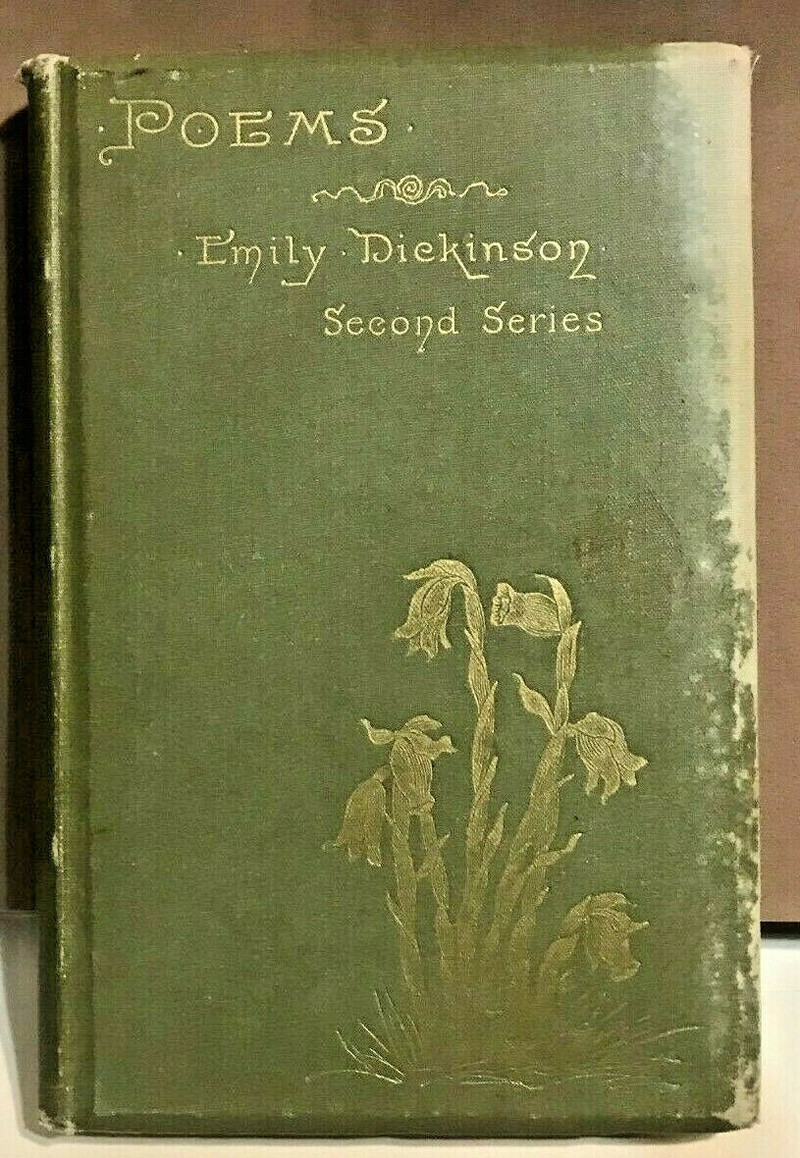
Poems by Emily Dickinson: Second Series
A second collection of Emily Dickinson's poetry, edited and published by Mabel Loomis Todd and T.W. Higginson.
- Published1891
- TypeBook
- GenrePoetry
- LanguageEnglish
About the Author

Emily Dickinson
Emily Dickinson, an innovative American poet known for her unique style and profound themes of death, nature, and spirituality.
View Profile