
Mock-Heroic Narrative Poem: The Dunciad
Overview
Alexander Pope’s The Dunciad (1728) is a mock-heroic narrative in heroic couplets that imagines the goddess Dulness enthroning a sovereign over the republic of letters. Taking aim at hack writers, venal publishers, pedants, and cultural opportunists, Pope turns the machinery of epic, invocation, council of gods, coronation, and prophetic vision, against the London print world. In the original three-book poem of 1728, Dulness chooses the Shakespeare editor Lewis Theobald as her champion, making him the anti-hero whose rise signals the eclipse of judgment and taste.
Book I: Coronation of the Hero of Dulness
The poem opens with the city under the pall of Dulness, the “mighty mother” whose chill influence stupefies wit. She surveys her brood of scribblers, critics, and impresarios, and selects Theobald, a figure of pedantic exactitude and mechanical scholarship, to lead them. The enthronement scene parodies epic investitures: where Virgil crowns a pious warrior, Pope’s goddess anoints a dullard who elevates trivia over sense. Courtiers of Dulness crowd the page, booksellers eager for anything saleable, actors who prefer noise to nuance, critics who mistake emendation for understanding, sketched in rapid satirical portraits. The result is a comic but menacing map of a literary ecosystem driven by profit, fashion, and obtuseness.
Book II: Games in Honor of Dulness
To celebrate her new monarch, Dulness hosts grotesque “games” that burlesque the athletic contests of epic. Instead of heroism, contestants display feats of lethargy, clamor, and bad taste. Scribblers compete to bore audiences into sleep; performers strain for applause with bombast and cacophony; booksellers and hacks plunge into noisome waters and mud, emblematic of the degraded channels through which popular literature circulates. The prizes, patronage, puffery, and quick sales, underscore a marketplace where mediocrity prospers. Pope delights in the physical comedy of these trials, but the deeper joke is moral: the very qualities that would disqualify a hero in classical epic are precisely those rewarded in a culture that confuses novelty with merit.
Book III: The Vision and Prophecy
At the climax, Dulness grants Theobald a visionary journey that fuses dream, prophecy, and nightmare. He beholds a future in which her dominion extends beyond Grub Street into schools, pulpits, theaters, and courts. Pedantry replaces learning; show replaces substance; discipline in the arts yields to fashion and gimmickry. Philosophy is reduced to jargon, criticism to spite, and religion to theatrical spectacle. The prophetic pageant gathers speed and scale until it darkens into an eschatological tableau. As the goddess spreads her mantle, faculties of reason and perception fail, and the world tends toward a blank inertia, a terminal yawn. The poem closes with the infamous extinguishing of light, the imaginative opposite of epic apotheosis.
Targets and Themes
The 1728 Dunciad is particular in its targets yet expansive in its diagnosis. Theobald embodies the triumph of narrow, mechanical cleverness over judgment; Edmund Curll and other book-trade figures represent mercenary diffusion; stage and opera personalities figure the seductions of spectacle. The central theme is the cultural economy of dullness: how institutions and incentives breed a counterfeit of excellence, how readers collude in their own stupefaction, and how wit and learning can be smothered not by censorship but by noise.
Style and Significance
Pope’s mock-epic style compresses Miltonic and Virgilian grandeur into couplets that sparkle with invective, learned allusion, and earthy comedy. The heroic apparatus, invocations, similes, catalogues, games, and a prophetic book, serves as an ironic frame that magnifies petty actors into cosmic agents of decline. First issued in 1728 and elaborated with “Variorum” notes the next year, the poem sparked immediate controversy. Its original version enthroning Theobald fixes a moment when Pope cast the battle for taste as a public drama and minted dullness as an enduring literary principle and satirical force.
Citation Formats
APA Style (7th ed.)
The dunciad. (2025, August 22). FixQuotes. https://fixquotes.com/works/the-dunciad/
Chicago Style
"The Dunciad." FixQuotes. August 22, 2025. https://fixquotes.com/works/the-dunciad/.
MLA Style (9th ed.)
"The Dunciad." FixQuotes, 22 Aug. 2025, https://fixquotes.com/works/the-dunciad/. Accessed 5 Mar. 2026.
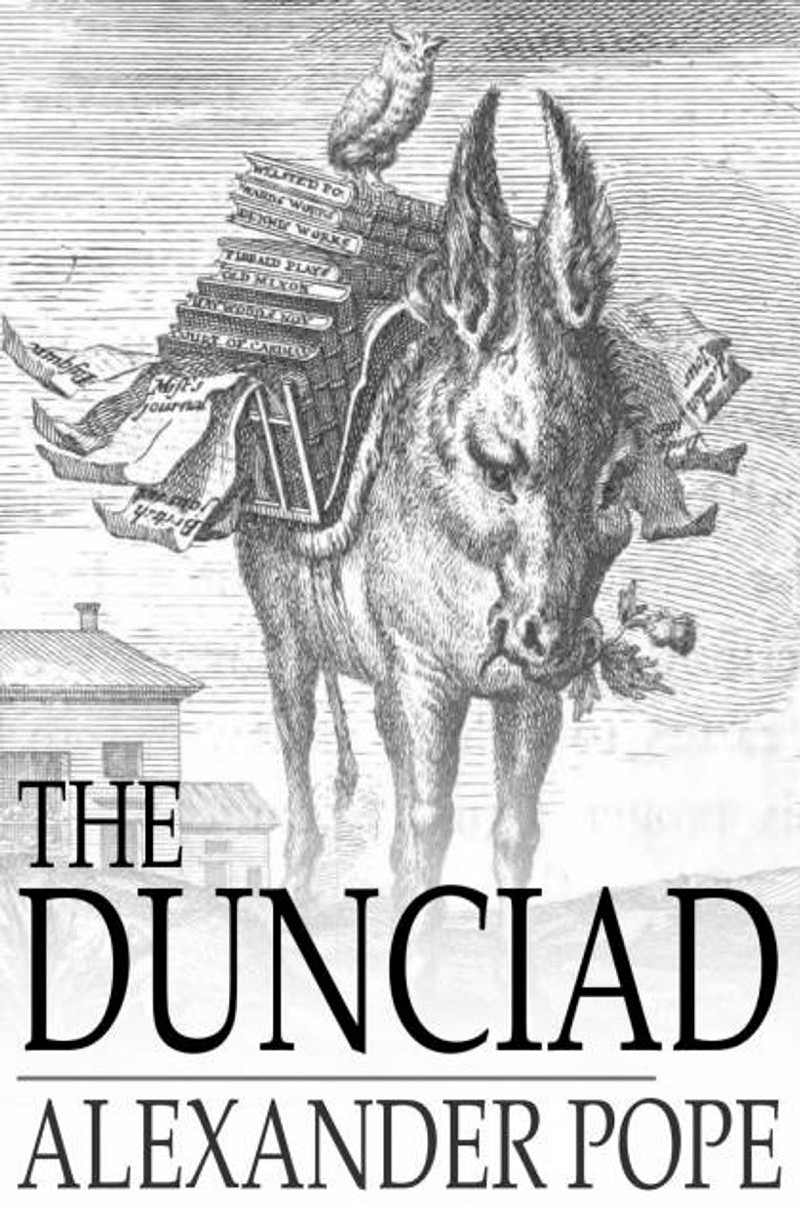
The Dunciad
A satirical work that lampoons the literary dunces of the time and offers a darker perspective on the ills of society.
About the Author

Alexander Pope
Alexander Pope, a leading English poet known for his wit and influential satirical and literary contributions.
View Profile- OccupationPoet
- FromEngland
-
Other Works
- An Essay on Criticism (1711)
- The Rape of the Lock (1712)
- Eloisa to Abelard (1717)
- The Works of Shakespear (1725)
- An Essay on Man (1733)