
The Supreme Philosophy of Man: The Laws of Life
Overview
Alfred A. Montapert’s The Supreme Philosophy of Man: The Laws of Life (1970) is a compact, aphoristic guide to living that argues human flourishing depends on aligning thought and conduct with enduring, objective laws. Drawing from common-sense morality, spiritual reflection, and practical psychology, Montapert presents a philosophy of responsibility: people are free to choose their actions but never free to escape the consequences. The book’s central promise is that character, happiness, and achievement are not accidents; they are the predictable harvest of mental discipline, ethical integrity, and purposeful work.
The Laws and Their Logic
Montapert frames life as a moral and causal order. Thoughts crystallize into habits, habits into character, and character into destiny. He maintains that mental focus and inner speech shape perception and behavior, so “mental housekeeping” is indispensable, expelling resentment, fear, and envy while cultivating gratitude, courage, and goodwill. Conscience serves as an inner compass, pointing toward truth even when convenience tempts otherwise. Time and again he insists that blame, excuses, and self-deception only delay inevitable outcomes; cause and effect governs the inner as surely as the outer world.
He links freedom to responsibility, urging readers to choose in accordance with universal principles rather than impulse or fashion. Truth, he argues, is not merely subjective preference but a standard against which actions are measured. Success becomes an ethical concept: the byproduct of usefulness, reliability, and service rather than a mere accumulation of status or possessions. Happiness follows the same arc, described less as a mood than a steady result of right living, meaningful work, and sound relationships.
Character, Work, and Practical Discipline
Montapert places special emphasis on the dignity of work. Mastery emerges from attention to detail, punctuality, promise-keeping, and perseverance. He warns against confusing activity with progress and urges clear priorities, steady practice, and the courage to complete what one begins. Money, status, and reputation are treated as secondary outcomes of value rendered; the real wealth is competence joined to integrity.
Relationships and citizenship receive similarly pragmatic treatment. Respect, honesty, and kindness stabilize family and community life, while duty to one’s word and to the common good keeps society coherent. He encourages generosity without naiveté, strong convictions without harshness, and forgiveness without surrendering standards. Throughout, he calls for self-control, governing appetites, emotions, and speech, as the keystone of freedom.
Faith, Order, and Meaning
The book’s spiritual current is quiet but firm. Montapert assumes a moral universe with God as its ground, and he sees prayer, reflection, and reverence as sources of clarity and resilience. Yet his counsel is ecumenical in application: any reader can test these laws in practice. He urges aligning finite plans with an infinite order, arguing that humility before truth enlarges human agency rather than shrinking it.
Style and Use
Written in brief entries and distilled maxims, the book reads like a manual to revisit rather than a treatise to pass through once. Its voice is sober, direct, and exhortative, favoring memorable lines and practical nudges over argument for argument’s sake. The cumulative effect is a blueprint: think cleanly, act steadily, serve reliably, and trust that the lawfulness of life will return what you sow.
Enduring Message
Montapert’s philosophy stands on a simple axis: choices are free, consequences are fixed. By respecting that structure, building character, telling the truth, doing excellent work, and serving others, people can convert aspiration into dependable results. The “laws of life” name both a moral reality and a method for living within it.
Citation Formats
APA Style (7th ed.)
The supreme philosophy of man: The laws of life. (2026, February 4). FixQuotes. https://fixquotes.com/works/the-supreme-philosophy-of-man-the-laws-of-life/
Chicago Style
"The Supreme Philosophy of Man: The Laws of Life." FixQuotes. February 4, 2026. https://fixquotes.com/works/the-supreme-philosophy-of-man-the-laws-of-life/.
MLA Style (9th ed.)
"The Supreme Philosophy of Man: The Laws of Life." FixQuotes, 4 Feb. 2026, https://fixquotes.com/works/the-supreme-philosophy-of-man-the-laws-of-life/. Accessed 12 Mar. 2026.
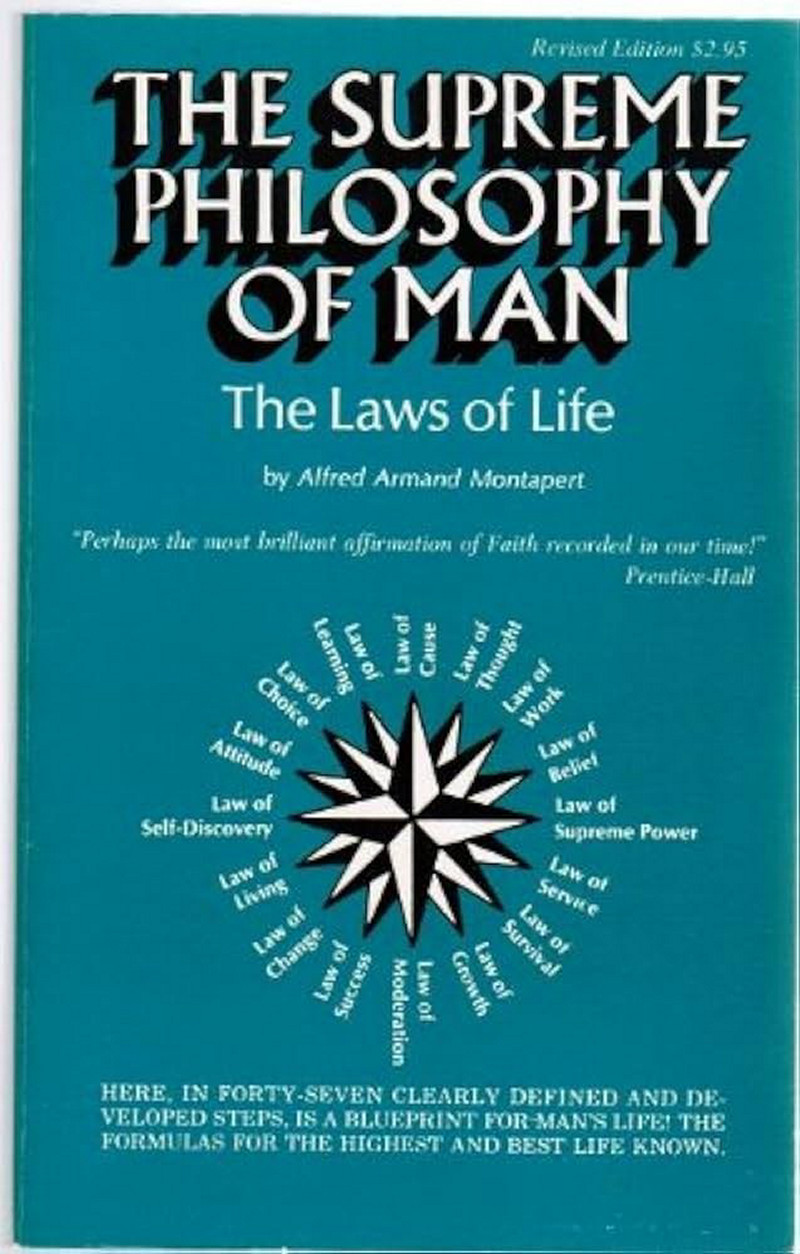
The Supreme Philosophy of Man: The Laws of Life
A thought-provoking work that explains the governing principles and rules of life, covering aspects such as the purpose of life, controlling thoughts, and achieving success.
- Published1970
- TypeBook
- GenrePhilosophy, Self-help
- LanguageEnglish
About the Author

Alfred A. Montapert
Explore the life, works, and motivational quotes of philosopher Alfred A Montapert, focusing on personal growth and self-help insights.
View Profile