
Christopher Lee Biography Quotes 2 Report mistakes
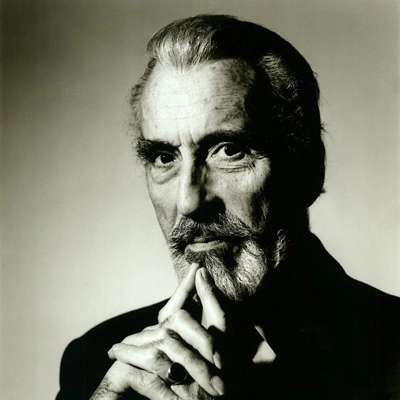
| 2 Quotes | |
| Occup. | Actor |
| From | England |
| Born | May 27, 1922 |
| Age | 103 years |
| Cite | |
Citation Formats
APA Style (7th ed.)
Christopher lee biography, facts and quotes. (2026, March 28). FixQuotes. https://fixquotes.com/actors/christopher-lee/
Chicago Style
"Christopher Lee biography, facts and quotes." FixQuotes. March 28, 2026. https://fixquotes.com/actors/christopher-lee/.
MLA Style (9th ed.)
"Christopher Lee biography, facts and quotes." FixQuotes, 28 Mar. 2026, https://fixquotes.com/actors/christopher-lee/. Accessed 1 Apr. 2026.
Early Life and Background
Christopher Frank Carandini Lee was born in London on May 27, 1922, into a family where aristocratic memory, military service, and instability mixed early. His father, Lieutenant Colonel Geoffrey Trollope Lee, served in the British Army; his mother, Countess Estelle Marie Carandini di Sarzano, came from an old Italian lineage that Lee later understood as part myth, part inheritance, but always psychologically potent. His parents separated when he was young, and the child who would one day embody kings, monsters, magicians, and villains grew up amid fractured domestic arrangements, changing schools, and an acute awareness of class performance. He spent part of his childhood in London and Switzerland, absorbing languages, accents, and the manners of different social worlds - gifts that later became professional tools.
Lee's height, severe features, and resonant voice gave the impression of destiny, but his youth was less assured than legend suggests. He lived through the aftermath of the First World War and reached adulthood under the gathering shadow of the Second. Before fame, he worked ordinary jobs, including office work, and then entered wartime service. During World War II he joined the Royal Air Force and served in intelligence and liaison-related duties after being unable to continue as a pilot because of health issues. He was often discreet, even evasive, about aspects of his service, and that reserve was characteristic: he cultivated mystery not merely as image but as habit. Violence, bureaucracy, and continental politics were not abstractions to him; they helped form the disciplined, darkly ironic temperament that later gave his screen presence unusual authority.
Education and Formative Influences
Lee attended schools including Wagner's private school and Wellington College, though his formal education was less important than the informal one supplied by war, travel, reading, music, and observation. He spoke several languages or used them with confidence, read widely in history and literature, and developed a lifelong seriousness about craft that distinguished him from actors who treated genre as disposable. His background gave him access to high culture, but his ambition was self-made. After the war he entered the Rank Organisation's "Charm School" and began the long apprenticeship of bit parts, learning camera discipline, diction, swordsmanship, and the practical difference between theatricality and truth. He also became close to people connected with J.R.R. Tolkien's circle and held a rare mixture of fan devotion and scholarly respect for the material that would later shape some of his greatest roles.
Career, Major Works, and Turning Points
Lee's film career began in the late 1940s and took nearly a decade to ignite. Early appearances in films such as Corridor of Mirrors and Scott of the Antarctic led to the break that defined him: Hammer Films. Beginning with The Curse of Frankenstein (1957), in which he played the Creature opposite Peter Cushing, and then Dracula (1958), he transformed horror acting through physical command rather than dialogue alone. Tall, predatory, and sexually charged, his Dracula replaced drawing-room quaintness with feral aristocracy. Hammer made him internationally famous, but also threatened to trap him; he fought typecasting even while deepening it in films like The Mummy and The Devil Rides Out. His partnership with Cushing became one of British cinema's great duos, built on technical precision and genuine affection. Beyond horror he amassed a staggering range: Sherlock Holmes, Fu Manchu, Francisco Scaramanga in The Man with the Golden Gun, and later a late-career renaissance as Count Dooku in Star Wars and Saruman in The Lord of the Rings and The Hobbit. He also recorded narration and heavy metal albums, proving that his voice itself was an artistic instrument. His career's turning point was not merely fame at Hammer, but his refusal to remain there in spirit; he spent decades turning an iconic mask into a many-sided career.
Philosophy, Style, and Themes
Lee approached acting with the seriousness of a historian and the instincts of a soldier. He understood evil not as pantomime but as conviction, breeding characters who seemed to possess biographies beyond the frame. That inner density came from preparation: he read source texts, studied period behavior, and objected when writing violated character logic. “There was a gap of seven years between the first and second Dracula movies. In the second one, as everybody knows, I didn't speak, because I said I couldn't say the lines”. That remark reveals both his stubbornness and his standards. He was not being difficult for vanity's sake; he believed that even in commercial horror, falsity weakened terror. Silence, in his hands, could be more articulate than speech.
His psychology was marked by gratitude without sentimentality and by a deep need to dignify genres that critics once treated as low. “I've always acknowledged my debt to Hammer. I've always said I'm very grateful to them. They gave me this great opportunity, made me a well known face all over the world for which I am profoundly grateful”. He never disowned the studio that made him, yet he insisted that horror could carry tragedy, eroticism, and metaphysical dread. His style depended on restraint - the held gaze, the exact gesture, the unhurried line - because he knew that excess dissipates fear. Offscreen he projected patrician wit and discipline, but beneath that polish was a performer drawn to outsiders, tyrants, occultists, and fallen nobles: figures whose authority concealed loneliness, fanaticism, or spiritual vacancy. He made monstrosity legible as a human condition.
Legacy and Influence
Christopher Lee died in 2015, but his influence remains unusually broad because he bridged worlds that often stay apart: classic British theater values and cult cinema, mid-century gothic horror and global franchise filmmaking, aristocratic bearing and pop-cultural immortality. He helped define the modern screen villain by proving that menace could be intelligent, elegant, and wounded rather than merely loud. Actors across horror, fantasy, and genre cinema owe him a model of taking improbable material seriously enough to elevate it. For audiences, he remains Dracula, Saruman, Scaramanga, Dooku - yet the deeper legacy is his insistence that an actor's dignity lies not in avoiding popular art but in bringing rigor to it. Few careers were so long, so self-renewing, or so shaped by the tension between typecasting and transcendence.
Our collection contains 2 quotes written by Christopher, under the main topics: Movie - Gratitude.
Other people related to Christopher: Jimmy Sangster (Screenwriter), Hayden Christensen (Actor), Britt Ekland (Actress), Diane Cilento (Actress), John Gilling (Director), Guy Hamilton (Director), Richard Lester (Director)
Source / external links