
Alice Walker Biography Quotes 38 Report mistakes
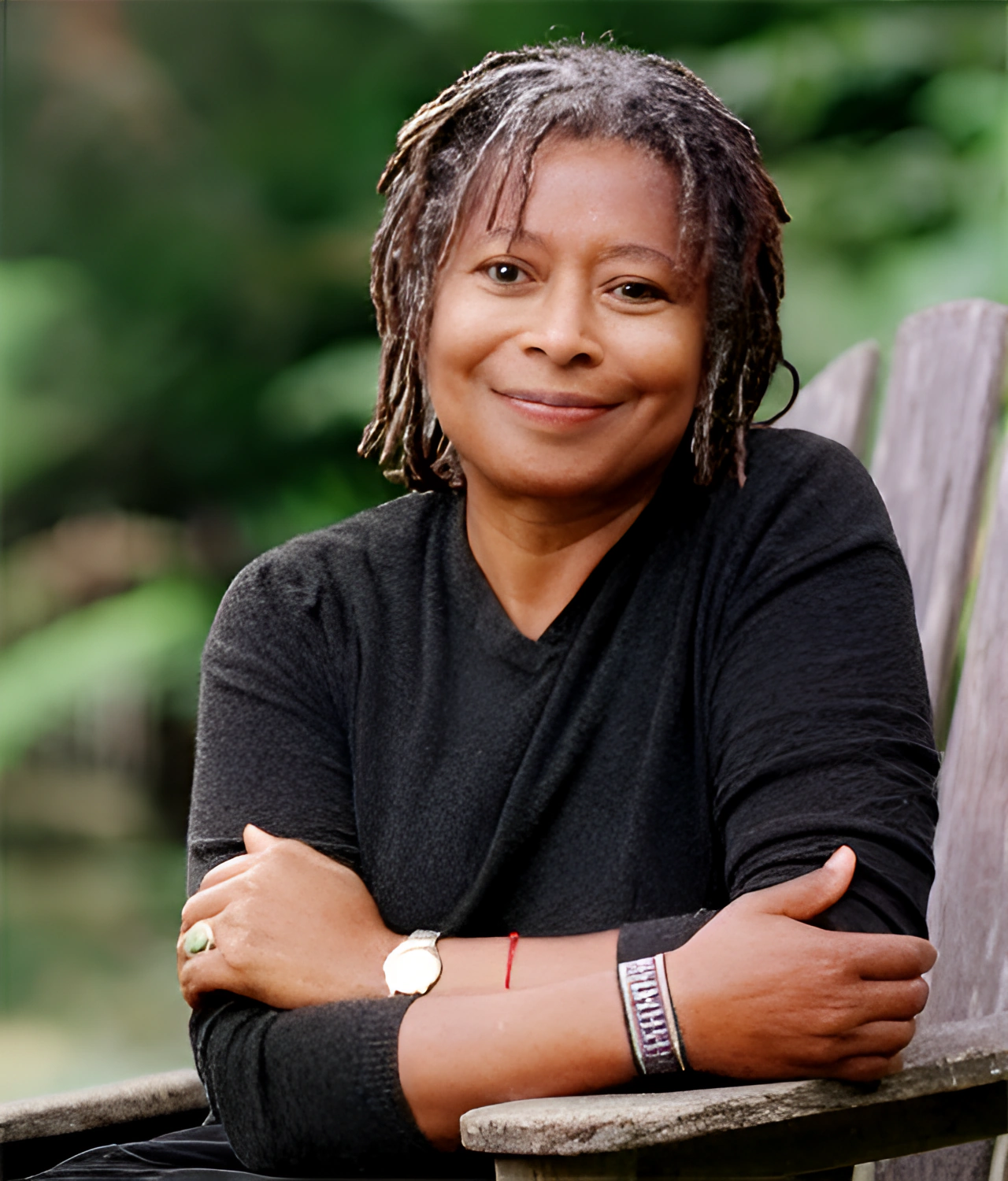
| 38 Quotes | |
| Occup. | Author |
| From | USA |
| Born | February 9, 1944 |
| Age | 82 years |
| Cite | |
Citation Formats
APA Style (7th ed.)
Alice walker biography, facts and quotes. (2026, February 11). FixQuotes. https://fixquotes.com/authors/alice-walker/
Chicago Style
"Alice Walker biography, facts and quotes." FixQuotes. February 11, 2026. https://fixquotes.com/authors/alice-walker/.
MLA Style (9th ed.)
"Alice Walker biography, facts and quotes." FixQuotes, 11 Feb. 2026, https://fixquotes.com/authors/alice-walker/. Accessed 12 Feb. 2026.
Early Life and Background
Alice Malsenior Walker was born February 9, 1944, in Eatonton, Georgia, the youngest of eight children in a sharecropping family. Her parents, Willie Lee Walker and Minnie Lou Tallulah Grant Walker, worked the land in the long aftershock of Jim Crow, when poverty was structural and violence was both threat and weather. That rural world - red clay, church music, field labor, porch talk - gave her an ear for oral storytelling and a lifelong attention to how black Southern women carried history in their bodies and speech.At eight, a childhood accident left her blind in one eye, a wound that became private training in solitude and observation. She later described the period as marked by shame, withdrawal, and the compensatory intensity of reading and writing; the injury sharpened her sense of being both inside and outside the room, a stance that would define her narrators. In the early 1950s, as civil rights struggle accelerated across the South, Walker was already learning the price of visibility and the uses of quiet endurance.
Education and Formative Influences
A standout student, Walker left Eatonton for Spelman College in Atlanta on scholarship in 1961, then transferred to Sarah Lawrence College in New York, graduating in 1965. The move from segregated Georgia to northern campuses placed her directly in the era's converging currents: civil rights activism, antiwar protest, the rise of black arts, and emerging feminist arguments that often ignored black womens lives. Mentors and models ranged from southern black educators to writers such as Zora Neale Hurston, whose work Walker later helped return to national attention, and whose example of vernacular artistry and cultural autonomy validated Walkers own literary instincts.Career, Major Works, and Turning Points
After college Walker worked in the movement world and in community education, then built a career that moved between poetry, essays, and fiction, always in conversation with political life. Her early novels, including The Third Life of Grange Copeland (1970) and Meridian (1976), confronted racism, patriarchy, and the moral costs of activism. Her major turning point came with The Color Purple (1982), an epistolary novel centered on Celie, a poor black Southern woman who survives incest, marital abuse, and economic deprivation through voice, friendship, and a reimagined spirituality; the book won the Pulitzer Prize for Fiction and the National Book Award. The novel's global reach, amplified by later screen and stage adaptations, made Walker a cultural touchstone and a lightning rod, praised for centering black female interiority and criticized at times for portrayals of black men - tensions she engaged through essays, interviews, and continued work across genres.Philosophy, Style, and Themes
Walkers work is driven by a psychological insistence that power is first a perception and then a practice - a lesson learned in a childhood shaped by injury, poverty, and racial hierarchy. Her characters often begin in enforced silence, then inch toward language as self-possession, echoing her belief that "The most common way people give up their power is by thinking they don't have any". That sentence is less a slogan than a diagnosis: oppression succeeds when it colonizes imagination, persuading the wounded to misname resignation as fate. In The Color Purple, Celie's letters function as therapy, prayer, and testimony, turning private pain into a narrative that can hold change.Her signature intervention in late-20th-century letters was to name a tradition rather than merely join one: "Womanist is to feminist as purple is to lavender". The comparison clarifies scale and saturation - a fuller hue that includes race, class, family, sexuality, the sacred, and the everyday labor of survival. Walker writes with plainspoken lyricism, biblical cadence, and the intimacy of confession, but she aims that intimacy outward, toward repair. In her essays she presses for moral perception across inherited divisions: "I think we have to own the fears that we have of each other, and then, in some practical way, some daily way, figure out how to see people differently than the way we were brought up to". That is her recurring thematic arc: fear acknowledged, language regained, relationship reimagined - not as sentiment, but as a daily discipline.
Legacy and Influence
Walker endures as a central architect of modern African American literature and black feminist thought, a writer who expanded the novel's moral vocabulary to include battered lives without reducing them to victimhood. By elevating Hurston, insisting on womanist frameworks, and placing poor Southern black women at the center of serious art, she altered syllabi, publishing priorities, and the very sense of whose interior life counts as universal. Her influence is visible in generations of writers who treat family trauma, sexuality, spirituality, and political history as inseparable, and who understand, as Walker does, that liberation is not only public legislation but also the private work of seeing and naming oneself truly.Our collection contains 38 quotes written by Alice, under the main topics: Wisdom - Art - Justice - Love - Nature.
Other people related to Alice: Adrienne Rich (Poet), Howard Zinn (Historian), Marsha Norman (Dramatist)
Alice Walker Famous Works
- 2004 Now is the Time to Open Your Heart (Novel)
- 1998 By the Light of My Father's Smile (Novel)
- 1992 Possessing the Secret of Joy (Novel)
- 1989 The Temple of My Familiar (Novel)
- 1982 The Color Purple (Novel)
- 1976 Meridian (Novel)
- 1973 Revolutionary Petunias & Other Poems (Poetry Collection)
- 1973 In Love & Trouble: Stories of Black Women (Short Stories Collection)
- 1970 The Third Life of Grange Copeland (Novel)
Source / external links